Tag Archives: Ajax

EREDIVISIE REPORT: WEEK 2

Header-EredivisieReport

WEEK TWO – 14TH-16TH AUGUST 2015

Ajax and Feyenoord lead the way as PSV picked up their first win of the new campaign and Will Burns is on hand to give you the lowdown of all this weekend’s action.

Ajax sit top of the pile and are yet to concede a goal with their second 3-0 win in two weeks, this time over Willem II on Saturday evening at the Amsterdam ArenA. Anwar El Ghazi shined the brightest of them all, adding another two goals to his tally, but again like last Sunday against AZ Alkmaar, the score flattered the Amsterdammers as they did not seem to be at full tempo as of yet this early into the season.

Polish striker Arek Milik opened the scoring on 18 minutes after some sloppy passing from Willem II defender Stijn Wuytens. Jurgen Streppel’s side, throughout the game, played the ball from the back and on this occasion, Wuytens laid the ball straight into the path of Ajax midfielder Nemanja Gudelj. The Serbian spotted Davy Klaassen sitting on the right of the attack and played the ball into the playmaker. Klaassen whipped a ball into the back post where the unmarked Milik headed home to give Ajax the advantage.

Ajax went in at half-time a goal up and the second-half began slowly and very cagey as never team looked like they wished to take the risk to go for the next goal. After hitting an effort from close range on the post minutes later, El Ghazi finally brought the second goal for the hosts on the 67th minute lashing a powerful curling shot into the net from the edge of the area.

Frank de Boer’s men looked comfortable and the game seemed wrapped up, so he handed a debut to Czech Republic youth international Václav Černý with 15 minutes remaining. The 17-year-old winger appeared only twice last season for Jong Ajax in the Eerste Divisie but notched an impressive two goals in those outings.

In added time, Ajax put the cherry on top of the cake with El Ghazi’s second goal with a clinical counter attacking move. Arsenal loanee Yaya Sanogo, whom came on late in the second-half, held the ball up well in the middle of the pitch as Černý sprinted down the right-wing. The young Czech collected the ball and hit a first time pass into the path of Lasse Schöne. The Danish international fired the ball across the edge of the area to find El Ghazi who powered a shot at goal and the effort was far too strong for Willem II stopper Kostas Lamprou to keep out. El Ghazi (number #9 in the TDF Top 50), has four goals in just two appearances and looks to be the Amsterdammers’ main man in this year’s title charge.

Ajax and their bitter rivals Feyenoord are the only two teams with back-to-back wins as the Rotterdammers made a successful trip to SC Cambuur on Sunday afternoon. Marking his arrival with a goal was Michiel Kramer, who replaced Colin-Kazim Richards just after the hour mark. The €1.5m signing from ADO Den Haag netted with a diving header after a cross from the right from Bilal Başaçıkoğlu. The result finished 2-0 to Giovanni van Bronckhorst’s men after Dirk Kuyt, took his tally to two in two and doubled the lead deep into stoppage time.

Also on Sunday, defending champions PSV easily dispatched FC Groningen with a 2-0 triumph. After a wonderful deep through ball from Maxime Lestienne, fellow winger Luciano Narsingh breached Groningen’s offside trap to finish coolly after just six minutes of play to put the Eindhoven side in front. Philip Cocu’s side pressed for a second goal and looked comfortable throughout with Groningen failing to break down the PSV midfield, commanded by the industrious Andrés Guardado.

After being spoilt rotten last year with the championship-winning performances, the Philips Stadion was fairly silent until Narsingh hit the winning goal deep into the second-half. It was a run-of-the-mill outing for PSV and their upcoming match with Feyenoord on August 30th is a mouth-watering prospect, and could be a real thriller in the title race.

Vitesse opened up the weekend’s festivities thrashing ten-man Roda JC by 3-0 after Ard van Peppen was dismissed on the stroke of half-time for a handball on the line. Lewis Baker, on-loan from feeder club Chelsea, converted the penalty. The visitors fought and had chances to claw back the game, however on 68 minutes, after a wonderful through ball from teenage full-back Kevin Diks (TDF Top 50 #33), Nigerian striker Abiola Dauda slotted home first-time to double the lead. The third and final goal was sublime and a beautiful effort from another Chelsea loanee, Nathan. The young Brazilian cut inside from the left wing and curled the perfect shot past Roda stopper Benjamin van Leer.

FC Twente suffered a heavy 4-1 defeat at home to ADO Den Haag to leave head coach Alfred Schreuder under immense pressure this early into the season. ADO debutant Mike Havanaar got the ball rolling just 12 minutes in. Ruben Schaken made it 2-0 on 27 minutes before Hakim Ziyech gave the home fans hope on a comeback after notching just before the hour mark. ADO central defender Vito Wormgoor cemented the points before French striker Edouard Duplan added a fourth with ten minutes remaining to add insult to injury for Twente.

Excelsior held AZ Alkmaar to a 2-2 draw in the late Saturday night game in a very even contest that could have went either way. Jeff Stans opened the scoring for the hosts however, the lead only lasted five minutes as Norwegian midfielder Markus Henriksen levelled the game up with an excellent counter attack goal. Tom van Weert put the Rotterdam outfit back in front just after the half hour mark. Substitute Robert Mühren nabbed an equaliser on 64 minutes as AZ pressed for a winner. However, never side could find that all important winner as the sides shared the points with Excelsior boss Fons Groenendijk was the happier of the two manager at the full-time whistle.

PEC Zwolle swept past De Graafschap on Saturday with three goals in sixteen second-half minutes to win 3-0 in Doetinchem. Wouter Marinus, Bart van Hintum and Sheraldo Becker scored the goals in a comfortable victory for Ron Jans’ men.

FC Utrecht and sc Heerenveen drew 1-1 with Luciano Slagveer scoring with just ten minutes to go to cancel out Sébastien Haller’s opener.

Finally, in their first game inside the brand-new Polman Stadion, Heracles handed N.E.C. Nijmegen a 3-0 defeat after the Eredivisie newcomers were reduced to ten-man as Marcel Appiah was dismissed before the hour mark. Oussama Tannane scored an early goal five minutes in to give the Almelo outfit the lead with Thomas Bruns adding a second before Appiah’s sending off. Wout Weghorst wrapped up the win and gave John Stegeman a boost after last weekend’s appalling defeat at the hands of Roda JC.

RESULTS

Friday 14th August

Vitesse 3-0 Roda JC

Saturday 15th August

De Graafschap 0-3 PEC Zwolle

Ajax 3-0 Willem II

FC Twente 1-4 ADO Den Haag

Excelsior 2-2 AZ Alkmaar

Sunday 16th August

PSV 2-0 FC Groningen

FC Utrecht 1-1 sc Heerenveen

SC Cambuur 0-2 Feyenoord

Heracles 3-0 N.E.C. Nijmegen

Name-WillBurns

Click the name above to follow Will on Twitter.

TotalDutchFootball.com    WorldFootballWeekly.com

Player Spotlight: Arkadiusz Milik

In his debut piece, Ethan Gore looks at Ajax’s Polish striker Arek Milik and ponders whether or not he could have an impact for the Amsterdam giants this season…

Milik had been on loan from Bundesliga side Bayer Leverkusen in the 2014/15 season but Ajax had a clause in the loan deal that allowed them to purchase the striker permanently for €2.5m at any time during the loan deal. On 1st April, the deal was confirmed and Ajax had signed Milik permanently and it was revealed he would take the number nine shirt for the new season, replacing Kolbeinn Sigthorsson who had previously wore it.

Milik’s first season for Ajax was a huge success – hence, why they wished for his permanent signature. The 21-year-old scored 23 goals in total in 33 appearances for Ajax – 11 in the Eredivisie – making him an instant fan-favourite. He has the capability of replicating his form from last season once again, and with the players around him such as Davy Klaassen, Anwar El Ghazi, Riechedly Bazoer and Lasse Schone – he’ll have no problem with delivery. Milik has already scored one so far this season in the Champions League, however, unfortunately for Ajax they are out of the competition after being defeated by Rapid Wien over two legs.

Milik’s got a great eye for goal and has proved his ability up-top, he’s very clinical and when given the opportunity, he takes it very well. His hold-up play and ability to shoot from distance make him the perfect, all-rounded striker along with his work-rate on and off the ball. Milik has the perfect pedigree for a striker and definitely has the ability to perform to high levels yet again this season.

If he stays fit for the whole season then he will undoubtedly play a huge part in Ajax’s title charge but he cannot do it alone as other players will obviously have to contribute. Although the young Pole is the key-man upfront and should he contribute the goals then he will be accredited as one of the huge factors for a potential title win.

Name-EthanGore

Click on Ethan’s name above to follow him on Twitter.

Eredivisie Team Of The Week – Round 1

Header-TeamOfTheWeek

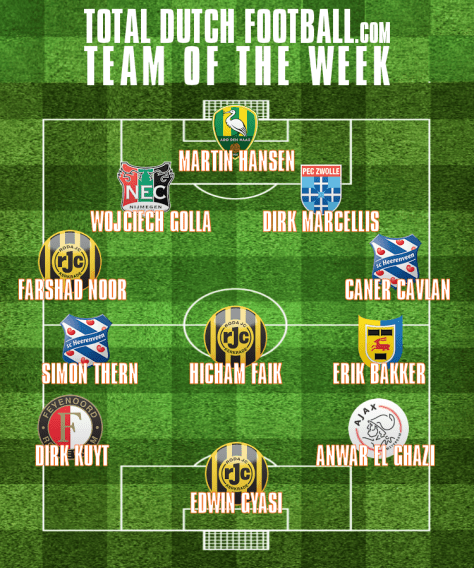
Welcome to week one of our Eredivisie Team of the Week which leads into our Eredivisie ‘Player of the Season’ competition.  All players have performed so well this weekend that Martijn Hilhorst and Will Burns have decided they should be in our team of the week.  Each player in the eleven receives one point and whichever player is declared ‘Player of the Week’, he receives an extra point.

TeamOfTheWeek-1

GOALKEEPER

MARTIN HANSEN – ADO DEN HAAG: The back-heeling goalkeeper makes the team of the week for obvious reasons.

DEFENDERS

FARSHAD NOOR – RODA JC: The first of many debutants for his club, displaying a great first outing for his new club. Topping it off by providing the assist for Faik’s late goal.

WOJCIECH GOLLA – N.E.C. NIJMEGEN: The big Polish defender displayed great qualities at the back to keep Excelsior at bay and clinch a clean sheet for N.E.C.

DIRK MARCELLIS – PEC ZWOLLE: A goal scoring return for the big defender and beast of a outing, even though he was let down by fellow defenders to allow SC Cambuur perform a two-goal comeback.

CANER CAVLAN – SC HEERENVEEN: The young left-back had a great debut that kept De Graafschap’s attacks at bay.

MIDFIELDERS

SIMON THERN – SC HEERENVEEN: An excellent two-goal performance from midfielder in Heerenveen 3-1 win over new boys De Graafschap, that makes the Swedish midfielder our PLAYER OF THE WEEK.

HICHAM FAIK – RODA JC: The midfielder capped a strong performance off with a wonderful goal to clinch a 3-1 over Heracles.

ERIK BAKKER – SC CAMBUUR: Great leadership from the midfielder, whose goal inspired his side to back from two goals down to clinch a draw against PEC Zwolle.

ATTACKERS

DIRK KUYT – FEYENOORD: He’s back. The veteran lead his side to a fantastic ten-man performance with a 3-2 win over Utrecht, which he capped off with a penalty goal. An inspirational asset to Giovanni van Bronckhorst’s side.

EDWIN GYASI – RODA JC: Grabbed the equalising goal in the 3-1 victory over Heracles and was a constant threat to the Almelo defence.

ANWAR EL GHAZI – AJAX: Scorer of two of Ajax’s three goals in the 3-0 win over AZ Alkmaar including a stunning 30-yard dipping strike that sent the travelling Amsterdammers into raptures.

Click here to see the ‘Player of the Season’ standings.

Name-WillBurns

Click the name above to follow Will on Twitter.

TotalDutchFootball.com    WorldFootballWeekly.com

EREDIVISIE REPORT: WEEK 1… Part Two

Header-EredivisieReport

WEEK ONE (PART TWO) – 11TH AND 12TH AUGUST 2015

So a goalkeeper scored an equaliser in the dying seconds with an outstanding back-heeled flick in the Eredivisie this week – Will Burns is here to report on the remaining five games in the Dutch top flight from week one.

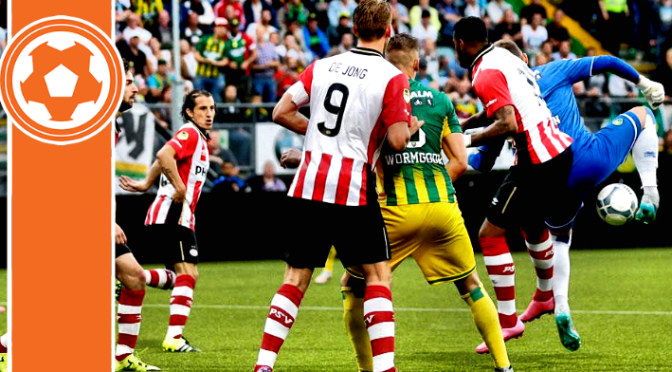
Danish goalkeeper Martin Hansen was the toast of The Hague this past Tuesday after scoring an injury-time winner for ADO Den Haag in their opening day clash with defending champions PSV. Now anytime a keeper sprints up the pitch for a last minute set piece, it is always an exciting time to see if the big man can rise above all others to smash a header home past his opposite number.

However, this was no header – a poor free-kick from Kenji Gorre gave Hansen the option of instinctively flicking his boot up for a back-heel, which he connected perfectly with to skim the ball past Jeroen Zoet for the draw.

PSV had started well and took the lead, dubiously, through their new number ten, Adam Maher. Replays of the goal showed that Maher was offside when he received the ball on 23 minutes to put PSV in front. However, minutes later the score was all level. Colombian right-back Santiago Arias bundled over Aaron Meijers which looked outside the penalty area, but referee Richard Liesveld pointed to the spot and Ronald Alberg converted.

Luuk de Jong opened his account for the season just after the hour mark, simply pushing a header past Hansen after the ADO defence left the big striker unmarked until Hansen clinched a point with his dramatic leveller. A disappointing start for PSV’s looking to retain their Eredivisie title.

In Tuesday’s late game, Heerenveen were impressive in their 3-1 win over newly promoted De Graafschap. The Eredivisie new boys found themselves two goals down by half-time after Simon Thern took advantage of a defensive mix-up by Lion Kaak to slot past Hidde Jurjus in the De Graafschap goal. Debutant Mitchell te Vrede, a signing this week from Feyenoord, notching the second after some great work down the wing from the industrious Luciano Narsingh.

It was more of the same after the break and Thern headed home on 53 minutes for his second and Heerenveen’s third. A Vincent Vermeij header was just a consolation for the visitors and they look to turn things around on Saturday as they host PEC Zwolle.

Wednesday’s games began with a poor game in Groningen, as Edwin van der Looi’s side faced FC Twente which ended all square at 1-1. Twente took the lead when Renato Tapia was left alone at the front post and headed home a Hakim Ziyech corner just before the break. However, Groningen replied in the 83rd minute to salvage a point through a Michael de Leeuw goal after being played through on goal by substitute Danny Hoesen.

SC Cambuur battled back from two goals down to a 2-2 draw away at PEC Zwolle. Zwolle’s new defender Dirk Marcellis grabbed the opening goal on 31 minutes after some great footwork evading the Cambuur defence by fellow new signing Lars Veldwijk (on loan from Nottingham Forest). Minutes later, the hosts doubled their lead with a tremendous left-footed long drive from Sheraldo Becker giving Leonard Nienhuis no chance in goal. The Leeuwarden-outfit fought hard and clinched a lifeline with twenty minutes to go through Erik Bakker and seven minutes later the scores were level. Sjoerd Overgoor finished beautifully after Bakker laid it on a plate for the midfielder to secure a point.

In the final game of the week, N.E.C. Nijmegen left it late to defeat Excelsior. It was a uneventful and un-entertaining affair that ended with a Navarone Foor goal with just minutes remaining.

RESULTS

Tuesday 11th August

ADO Den Haag 2-2 PSV

sc Heerenveen 3-1 De Graafschap

Wednesday 12th August

FC Groningen 1-1 FC Twente

PEC Zwolle 2-2 SC Cambuur

N.E.C. 1-0 Excelsior

Name-WillBurns

Click the name above to follow Will on Twitter.

TotalDutchFootball.com    WorldFootballWeekly.com

EREDIVISIE REPORT: WEEK 1… Part One

Header-EredivisieReport

WEEK ONE (PART ONE) – 8TH AND 9TH AUGUST 2015

The opening weekend of the Dutch league season was severely affected by police strike action, and due to this, the nine Eredivisie games are to be spread across the majority of the week. Will Burns is on hand to give you a rundown of all the action from the first four matches.

In an amazing contrast on Sunday morning, after watching the European performances of the past fortnight, the disappointing Ajax travelled to Alkmaar to face the promising AZ and the tables were turned. The Amsterdammers left the AFAS Stadion with a 3-0 win after an Anwar El Ghazi brace followed by Nemanja Gudelj notching against the club he left in the summer.

Ajax scored all three inside the first-half with El Ghazi opening the scoring on 14 minutes with a sublime effort after some quick thinking from Mitchell Dijks. A quickly took free-kick allowed El Ghazi some space some 30 yards out and El Ghazi, after meeting his hero in the summer, hit a Ronaldo-like dipping shot giving AZ stopper Sergio Rochet no chance of saving.

It was a close affair with AZ hitman Vincent Janssen look the most likely to threaten for the John van der Brom’s side but it was his goalkeeper Rochet that handed the game to Frank de Boer’s outfit. El Ghazi got his head on the end of a whipping Gudelj free-kick and Rochet, although the Uruguayan stopped the effort, he failed to control and ended up fumbling the ball into the net to make it 2-0.

The third and final goal by Gudelj was also another that Rochet would not like to watch in the highlights that evening, after parrying the Serbian’s long range effort into the top corner of his goal.

AZ coach Van der Brom stated he felt sorry for his supporters that sold out the stadium for this match, but will look to make amends next weekend in Rotterdam against Excelsior. For De Boer, his side showed no Euro hangover as they look to challenge to regain the Eredivisie crown taken from them by PSV last season.

In the opening game of the season, Roda JC made a return to the Eredivisie with a hefty 3-1 win over Heracles even though the Almelo outfit went ahead after the half-hour mark through Iliass Bel Hassani. Although, the lead did not last long as four minutes later, Edwin Gyasi managed to weave his through to equalise. Early in the second half, Roda took the advantage with Tom van Hyfte scrambling the ball home after Gyasi’s header hit the post. Heracles pressed to level the game up but in the final moments, Hicham Faik smashed home a long range effort to cement all three points.

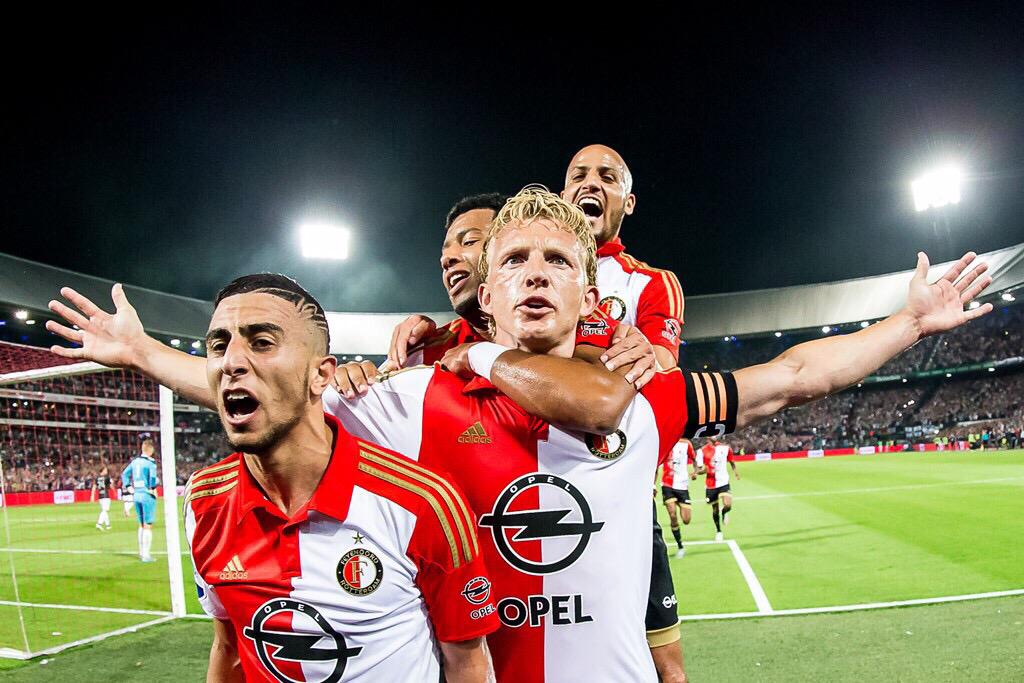
Dirk Kuyt also made his return to the Dutch top flight leading Feyenoord to a 3-2 victory over FC Utrecht at De Kuip on Saturday evening. Even though the Rotterdammers were reduced to ten-man after young right-back Rick Karsdorp was harshly dismissed by referee Kevin Blom early in the second-half. Turkish striker Colin-Kazim Richards gave Giovanni van Bronckhorst a great start to his managerial career heading home debutant Marko Vejinovic’s free-kick to make it 1-0.

After Karsdorp was shown his marching orders for his hard tackle on Christian Kum, Utrecht levelled the scoring through French striker Sébastien Haller, whom signed permanently from Auxerre last month on 75 minutes, however the score was only 1-1 for a few moments.

The equaliser fired up Van Bronckhorst’s side and they regained the lead two minutes later when substitute Tonny Vilhena, rumoured to be leaving the club, was at the back post to knock home Karim El-Ahmadi’s cross. With the De Kuip faithful in full force, Feyenoord pressed to kill the game off and Bilal Başaçıkoğlu was tripped in the area by Yannick Cortie, and Kuyt marked his return with a successful penalty conversion. Haller nabbed an injury-time consolation through a penalty kick of his own but it was Feyenoord that ended as the victors by three goals to two.

Looking to build on a successful campaign last season, Willem II boss Jurgen Streppel lead his team out full of confidence on Sunday afternoon against Peter Bosz’ Vitesse in a game that ended tied at a goal apiece. The Tilburg side took the lead just after the hour mark through new recruit Erik Falkenburg before Ukrainian midfielder Denis Oliynyk.

A further five contests will make up week one of the Eredivisie to take place Tuesday and Wednesday this week… if the police do not decide on another strike?!

Check back later this week for ‘Part Two’ of the Eredivisie report.

RESULTS

Saturday 8th August

Roda JC 3-1 Heracles

Feyenoord 3-2 FC Utrecht

Sunday 9th August

AZ 0-3 Ajax

Willem II 1-1 Vitesse

FIXTURES

Tuesday 11th August

ADO Den Haag vs. PSV

sc Heerenveen vs. De Graafschap

Wednesday 12th August

FC Groningen vs. FC Twente

PEC Zwolle vs. SC Cambuur

N.E.C. vs. Excelsior

Name-WillBurns

Click the name above to follow Will on Twitter.

TotalDutchFootball.com    WorldFootballWeekly.com

UEFA CHAMPIONS LEAGUE PREVIEW: Rapid Vienna vs. Ajax

Ajax open up their 2015/16 Champions League campaign tonight against the Austrian Bundesliga runners-up Rapid Vienna and Will Burns thinks the Amsterdammers would be pleased to take the Austrian side back to the Amsterdam Arena next week on level terms.

RapidVienna-Ajax

RAPID VIENNA vs. AJAX (20:05 BST)

UEFA CHAMPIONS LEAGUE – THIRD ROUND QUALIFYING FIRST LEG

Usually qualification has been automatic for Ajax the past few seasons, however after PSV Eindhoven ran away with the Eredivisie title last year, Frank de Boer must take his men through two sets of qualifying rounds before entering the first group stages.

Their opponents, Rapid Vienna enter the competition for the first time in nine seasons and have already begun their season with two comfortable wins.  Firstly, starting off with a thumping 5-1 victory over Weiz in the Austrian Cup then followed that up with a 3-0 win over Ried in the Bundesliga days later. As reading the past two scores suggest, the Austrians can score goals.

Their star man, Slovenian striker Robert Beric notched an impressive total of 28 goals in 37 league starts last year and Ajax’s young defensive pairing of Joel Veltman and Jairo Riedewald will have to be very wary of him.

Thus why I am thinking about tonight’s solid bet of Ajax ‘Draw No Bet’ at a generous 2.37 at Bet365. De Boer and his men would be very happy in keeping this game tight, keeping Beric and company at bay and taking the Austrians back to Holland next week with the tie all level. However, with talents like Davy Klaassen, Anwar El Ghazi, Lasse Schone and Arek Milik all capable of causing problems in front of goal, Ajax could very well steal an away goal or even take a lead back to Amsterdam.

INFORMATION

Date: 30-7-2015 (20.05PM UK Time)

UK TV: None

DUTCH TV: SBS6

Stadium: Ernst Happel Stadion, Vienna

Referee: William Collum (SCO)

Assistants: Francis Connor (SCO)/Damien MacGraith (IRE)

Fourth Official: John Beaton (SCO)

PROBABLE LINE-UPS

Rapid Vienna (4-2-3-1): Novota; Auer, M. Hofmann, Sonnleitner, Stangl; Petsos, Schwab; Schobesberger, S.Hofman, Kainz; Beric.

Ajax (4-3-3): Cillessen; Tete, Veltman, Riedewald, Dijks; Bazoer, Sinkgraven, Klaassen; El Ghazi, Schone, Milik.

PREDICTION

Ajax DRAW NO BET at 2.37 (BET365)

Name-WillBurns

Click the name above to follow Will on Twitter.

TotalDutchFootball.com    WorldFootballWeekly.com

As Mitchell Dijks returns… is the Ajax system failing?

On 28th August 2014, 21-year-old left back, Mitchell Dijks, having been told that his first team options would be extremely limited in the upcoming 2014/15 Eredivisie campaign by Ajax coach, Frank De Boer, signed for newly promoted Willem II on a two year contract. Another young footballer, who, despite representing the Netherlands at U16, U18, U19 and U21 level, had slipped through the metaphorical cracks on the footbridge over the s111, which divides De Toekomst (AFC Ajax’s world famous academy) and the Amsterdam ArenA.

Born in Purmerend, Dijks was initially recruited into the youth ranks of former AFC Ajax partner club, FC Volendam in 2009 before progressing through the grades in Amsterdam and going on to make his first team debut on 5th August 2012 in the Johan Cruijff-schaal against PSV; his league debut followed a few weeks later against NEC on 19th August 2012.

In all, Dijks appeared eight times for ‘de Godenzonen’ at first team level during the 2012/13 campaign, helping the club to its 32nd Eredivisie triumph. A season-long loan at sc Heerenveen followed, where, despite an ignominious debut, which saw Dijks sent off after 71 minutes for a rash challenge, the young defender went on to have a solid season in Friesland, making 27 appearances.       

Upon his return to Amsterdam, many expected Dijks to press his claim for a regular place in the Ajax first team in 2014/15. However, this was not to be the case writes Steven Davies…

Competition for Dijks’ preferred left back position was incredibly fierce; with the injury plagued but fit-again Danish international, Nicolai Boilesen, rising seventeen-year-old starlet, Jairo Riedewald, and versatile new signing, Nick Viergever, all jostling for position in the first IX.

Bizarrely for the 21-year-old, age counted against him, the club’s hierarchy reasoning that by this age he should either be a first team regular or be making way for the next generation of graduates from the Amsterdam clubs’ famed academy.

With the writing seemingly on the wall, Dijks packed his bags and left Amsterdam; heading down the A2 to Tilburg with a point to prove.

Newly promoted and widely predicted to struggle to survive in the Dutch top flight; Willem II, under coach, Jurgen Streppel, who, along with the newly recruited Dijks, was armed with an eclectic blend of youthful players who had failed to make the grade elsewhere and journeymen, set about confounding the critics week after week. A 3-0 home win over AZ Alkmaar at the end of August, was followed a few weeks later by a surprise 2-1 away success in De Kuip against Feyenoord in early September. The Tilburg outfit also posted creditable home draws against both Ajax, in February, and Feyenoord, towards the end of the campaign. By season’s end, the only disappointment the club, its players, fans and coaching staff would feel was that of missing out on the UEFA Europa League playoffs by four points as they finished a remarkable 9th.

Dijks himself made 30 appearances for the Tricolores; in the process becoming not only a first team regular but a key man for the Tilburg side. It came as little surprise that when the curtain fell on the 2014/15 season, a host of would-be suiters were lining up to make a play for the now 22-year-old’s signature.

Amongst their number was former club, Ajax.

Less than a year after having let their former academy graduate leave the club due to a lack of first team opportunities and having tried a host of players in Dijks’ favoured left back slot, the club had realised their folly in allowing the 22-year-old to depart.

In case of such an eventuality, the club had inserted a clause into the deal struck between themselves and Willem II the previous August; the Amsterdam giants would be entitled to 50% of any future sell-on fee. A drawn out game of brinksmanship followed between the two clubs and other interested party, Scottish heavyweights, Celtic; with the Glasgow giants willing to pay more than twice the £700,000 that Ajax were offering to secure the services of Dijks, whose preference for a return to his native Amsterdam for 2015/16, was well publicised.

On 19th June 2015, De Telegraaf announced that Mitchell Dijks would indeed be re-joining Ajax, with a three year deal agreed and Willem II receiving a trio of Ajax youngsters: 23-year-old defender, Ruben Ligeon, highly rated 18-year-old striker, Richairo Zivkovic and 22-year-old winger, Lesly de Sa, on year-long loan deals.

When speaking to De Telegraaf, Willem II coach, Jurgen Streppel could not speak highly enough of the 22-year-old left back, saying, ‘Apart from Jetro Willems, I feel that there are none better than him in the Netherlands.”

Streppel said that Dijks was a player who thrived on confidence and as such needed to be playing week-in-week-out, something he didn’t receive in his first spell in Amsterdam.

“As a player he needs confidence and therefore, I advise him to move to a club where he will play in most of their games in the next two seasons.”

“If he gets the stability then he will make great strides.”     

Irrespective of the young Dutchman’s decision, the question remains, how could Ajax have allowed a player of such calibre to very nearly slip through their fingers?

Not the First

This situation is not an unusual one. The combination of the sheer volume of talented young players coming through the Ajax youth system on an annual basis coupled with the influx of players brought in from outside the club means that Mitchell Dijks is simply the latest in a line of academy graduates deemed ‘surplus to requirements’ in Amsterdam, only to be welcomed back with open arms (and cheque books) later in their career. Here are two notable recent examples:

Niklas Moisander

Finnish international defender, Niklas Moisander was a graduate of the Ajax Academy but failed to make a first team appearance before being allowed to join PEC Zwolle in 2006. Moisander would go on to establish himself at both club and international level and, in 2012, Ajax repurchased their own youth product from then-employers, AZ Alkmaar for a fee of €3million. After enjoying a number of successful seasons at the heart of the Ajax rear guard, twice lifting the Eredivisie crown, Moisander, whose contract was expiring, agreed to join Italian side, U.C. Sampdoria on a free transfer at the end of the 2014/15 season; effectively losing the club €3million in the process for a product of their own youth academy.

Derk Boerrigter

Born in Oldenzaal, young winger, Derk Boerrigter was scouted by FC Twente while playing for Quick’20 at twelve years of age. A part of FC Twente’s A1 squad, he impressed scouts from AFC Ajax and in the summer of 2005 signed a two-year contract with the Amsterdam giants. Despite being named on the bench on several occasions, Boerrigter failed to make his full first team debut. A loan spell at HFC Haarlem followed before, his contract having expired, Boerrigter left Amsterdam for Zwolle in 2007 in search of the first team opportunities that had eluded him at the ArenA. Eleven goals in 63 appearances between 2007 and 2009 brought the admiration of a host of big clubs. Despite the attention, Boerrigter opted to join newly promoted RKC Waalwijk for the 2009/10 Eredivisie season and over the course of the following two seasons would further enhance his burgeoning reputation by netting 25 times in 64 appearances as the club followed the disappointment of relegation by winning the 2010/11 Eerste Divisie and promotion back to the top flight of Dutch football in the process.

In the summer of 2011, Boerrigter returned to Amsterdam, signing for AFC Ajax on a three year contract with Ajax paying a reported €550,000 to recapture their former youth product. Over the course of the following two seasons the winger helped ‘de Godenzonen’ to back to back Eredivisie titles as well as the Johan Cruijff-schaal in 2013, notching 12 goals in 47 appearances. Off the back of scintillating club form that had taken Boerrigter into contention for the Oranje in November 2011 (a back injury meaning that he missed out on representing his country) a big money €3.5m move to Scottish heavyweights, Celtic, followed in July 2013; meaning that Ajax came out roughly €3m ahead in the end.

The process of developing and releasing players as talented as the likes of Moisander and Boerrigter at a young age only to re-acquire them later in their careers is a costly process and one the club has worked hard over the past four years to arrest.

Slipping Through the Cracks?

Having relinquished their grip on the Eredivisie crown for the first time in five seasons to rivals, PSV, with a largely inexperienced squad struggling to fill the gaps left by the departure of a host of established first team players in that time, could Ajax be rueing allowing some of their youthful starlets to depart during that period?

Here are just a few players released since Frank De Boer took the reins at the ArenA to have gone on to prove their worth both domestically and abroad in positions in which the Amsterdam giants struggled to adequately fill in 2014/15:

Jan-Arie van der Heijden

A talented centre back or defensive midfielder; 27-year-old van der Heijden made his league debut for Ajax on 4th November 2007 against Roda JC and represented the Netherlands at both U20 and U21 level. In August 2009, van der Heijden was sent out on a season-long loan to Willem II where he became a key man operating as a controlling midfielder or as a libero. After spending a second season on loan in Tilburg, van der Heijden left Amsterdam for good in 2011, signing for Vitesse for just €300,000. In Arnhem he also became a key figure; appearing 150 times for Vitesse and scoring eight goals between 2011 and 2015. He is currently a free agent.

Lorenzo Ebecilio

A 23-year-old left winger; Ebecilio was handed his Ajax debut by Frank De Boer on 10th December 2010 against Vitesse. Ebecilio, who represented the Netherlands at U17, U19 and U21 level, went on to make 38 appearances for ‘de Godenzonen’ between 2010 and 2013, scoring 9 times, before, in January 2013, frustrated at a lack of playing time, Ebecilio opted to leave Amsterdam; signing for Ukrainian club, Metalurh Donetsk for a mere €100,000. He has since embarked on somewhat of an odyssey, with loan spells in Azerbaijan with Gabala in 2013/14 and Russia with Mordovia Saransk in 2014/15 where he fractured his tibia on 2nd August 2014 and missed around six months of action before returning to the field towards the end of the campaign, notching 2 goals in his last five games.

Stefano Denswil

A 22-year-old centre back; Denswil made his first team debut on the 31st October 2012 in the third round of the KNVB Beker against ONS Sneek, adding the second goal in a 2-0 victory. Having represented the Netherlands at U15,U16,U17,U18,U19,U20 as well as U21 level, Denswil went on to make 39 appearances for Ajax between 2012 and January 2015 when he was surprisingly sold to Belgian side, Club Brugge.

Talent Development at AFC Ajax

So what does it take to make the grade in the famed youth system at AFC Ajax?

Those selected to enter the youth ranks of the Amsterdam club are primarily chosen according to four criteria: Technique, Intelligence, Personality and Speed – more commonly known as TIPS.

For each, there are ten criteria. P and S are innate properties while I and T can be developed. With this in mind, Ajax coaching sessions consist of eight important football ingredients. Together with TIPS, they form the core to the Ajax philosophy:  coordination training, kicking, passing and throw-in, moves to beat an opponent, heading, finishing, positional play, positional game play and small-sided games.

Interestingly, height and strength are not important in the selection process as they are worked on later in the training process; with scouts instead, mainly focusing on players’ creative and technical actions.

Central within the club is the style of play (4-3-3), training, behaviour and house rules. Ajax strives to keep its way of playing football recognizable; attractive, offensive-minded, creative, fast, fair and as far away from your own goal as possible

The young talents at Ajax are characterised by two key components: technique and tactics.

After the age of 10 the 1-4-3-3 formation is implemented (11 players including a goalkeeper). Prior to this, in training and matches, younger age groups play a 1-3-3 formation (7 players), a 1-3-1-3 formation (8 players) and a 1-3-2-3 formation (9 players).

The concept of playing for Ajax consists of four features: helping each other, the central defender also pushing forward, when in the opponent’s half one-on-one situations are deliberately sought and when in those one-on-one situations players look for chances to score.

The playing philosophy of AFC Ajax is based upon possession which in turn creates pitch mastery of which there are five key features: fast ball circulation, a passing and dribbling speed that is adapted to individual teammates, a clear passing direction, security as well as timely situation anticipation and coordination.

When the opposing team is in possession, youngsters schooled in the Ajax system are taught to adhere to four key principles: reduce the distance to the opponent, keep the pitch small, think about an opposing player’s options when they are in possession of the ball and to apply pressure both individually and collectively.

Perception and anticipation are key values at Ajax where young players are encouraged to: choose their best position, know when the time is right to transfer possession of the ball, know what to do after possession is lost, be able to take an overview of a given situation and make a decision based upon what they see in front of them.

Talent development is structured in terms of age. Technique is the prime focus between the ages of 8 and 12 with tactics taking precedence between the ages of 12 and 18; the development of a young player’s physique and mentality are ongoing throughout.

The above feeds into three stages of development: 1st stage – ages 8-12: positional play and technique, 2nd stage – ages 12-14: team play and the 3rd stage – ages 15-18: team tactics and learning to win.

The chosen few who progress through the different age groups at De Toekomst are amongst the most highly educated young footballers in the world and thus, it is little wonder why so many go on to succeed in the professional game; be it at AFC Ajax or elsewhere.

Assessing the Current Crop of Talent

Clearly, with such a high volume of young talent passing through De Toekomst on an annual basis, mistakes and oversights will be made; young players, after all, develop at differing rates. Some players bloom later in their careers after the experience of a prolonged period at first team level. However, few are afforded such a luxury in the first team in Amsterdam where pressure, expectancy and standards are astronomical and those failing to make the grade leaving the club as they reach their early twenties.

Ajax hope that instances of players ‘slipping through the cracks’ will be reduced by the dual pronged approach of loaning out a number of young players who are ready for regular first team football to fellow Eredivisie clubs and the elevation of Jong Ajax to the Eerste Divisie; meaning that players fresh from progressing through the academy are exposed to an environment akin to playing first team football on loan at a second tier club week-in-week-out while still remaining a part of the club as their footballing education continues.

However, is this system truly effective?

On Thursday 26th February 2015, The Guardian revealed that Ajax were the most prolific producers of talent to Europe’s top leagues. In 2014/15, it was said that 77 players who were trained at Ajax now play in the highest tier of Europe’s 31 best leagues, three ahead of Partizan Belgrade who themselves contributed 74. Barcelona’s famed La Masia academy came in third place with 57, while Dinamo Zagreb of Croatia and Ukraine’s Shakhtar Donetsk completed the top five, contributing 50 players apiece.

These figures go some way to backing claims that the Ajax system is, in fact, alive and well and that the Cruijff blueprint is bearing fruit both in terms of the volume of talent being produced from within, coupled with success on the field; Frank De Boer and his charges secured four successive Eredivisie crowns in: 2010/11, 2011/12, 2012/13 and 2013/14.

But in 2014/15, the cracks began to show; De Boer, weary of having to rebuild a squad stripped of its most prized talents year after year, had, it seemed, simply lost too many key figures in the wake of the departures of both Siem de Jong and Daley Blind to keep pace with a rampant PSV Eindhoven who cantered to their first Eredivisie title since 2008.

During a turbulent and ultimately disappointing campaign, Frank De Boer regularly bemoaned his players’ performances and took the opportunity to recruit, when and where he could, players from outside the club. In came: Arkadiusz Milik (Bayer 04 Leverkusen – loan), Niki Zimling (1. FSV Mainz 04 – loan), Richairo Zivkovic (FC Groningen – €2.5m), Nick Viergever (AZ Alkmaar – €2m), Diederik Boer (PEC Zwolle – €750,000), James Fofana (PSV) and Robert Muric (Dinamo Zagreb) in the summer transfer window while the club added: Daley Sinkgraven (sc Heerenveen – €7m) and Andre Onana (FC Barcelona – €200,000) when the window reopened in January 2015.

With Arkadiusz Milik’s season-long loan proving to be a success (netting 11 times in 21 appearances) the Polish international was signed permanently for a reported €2.5m at the start of April 2015, taking the former champions’ overall spending for 2014/15 to around €12.45m; which, for a Dutch club, whose television and sponsorship revenue is limited when compared to their counterparts in Spain, England and Germany, is akin to a fortune. This exorbitant expenditure was mitigated only by the fact that the club recouped around €29.72m during the summer transfer window which included the big money sales of de Jong (Newcastle United – €7.5m) and Blind (Manchester United €17.5m) as well as the frustrating loss of the highly rated 16-year-old forward, Mink Peeters to Spanish giants, Real Madrid for a paltry €110,000.

Were De Boer and Ajax correct to look further afield? Results on the field of play in 2014/15 would suggest probably not; but the likes of Zivkovic and Sinkgraven can hardly be said to have been given an adequate opportunity to showcase their talents at first team level and both have youth on their side.

Meanwhile, De Boer had much publicised disagreements with a number of young players including Zivkovic and the precocious but undoubtedly talented, Ricardo Kishna, with both paying the price of their transgressions by sitting idly on the bench or in exile playing for Jong Ajax; while in their way stood the likes of Milik.

Was this situation not exactly the scenario that Cruijff and his supporters fought so hard to ensure never happened again back in 2011?

Had Cruijff’s blueprint failed?

Cruijff vs Ajax – A velvet revolution, civil war and a blueprint for the future

This isn’t Ajax anymore. Let me get to the point: this Ajax is even worse than the team from before Rinus Michels’s arrival in 1965.

Johan Cruijff was as outspoken as ever his De Telegraaf column after watching Martin Jol’s Ajax wilt in the Estadio Santiago Bernabéu against Real Madrid in the group stages of the UEFA Champions League in 2010.

The score might have only been 2-0 on the night but the gulf in class and the ease in which the Spanish giants cruised to victory over the four time European Champions led Cruijff to act.

A so-called ‘Velvet Revolution’ was set in motion with Cruijff calling for the replacement of the Ajax Board of Directors including general director, Rik van den Boog and chairman, Uri Coronel, saying that in their place should stand former Ajax players and enlisting the likes of Wim Jonk and Dennis Bergkamp to be his hands-on advocates on the training fields in Amsterdam.

Cruijff believed a club like Ajax could not hope to compete with the biggest clubs in Europe for players; paying exorbitant transfer fees, wages and dealing with unscrupulous agents for players in their mid to late twenties and early thirties was a fool’s errand. Instead, the road back to the summit of European football for Ajax was to stop signing overrated foreign players and build a team around youth that was developed from within.

In Cruijff’s vision, Wim Jonk, Dennis Bergkamp, Marc Overmars and coach, Frank De Boer would be afforded complete control in terms of both personnel and implementation.

Yet, the Ajax Board of Directors were not about to go down without a fight, and, by appointing Louis van Gaal as general director behind Cruijff’s back in November 2011, they ensured a public and bloody battle through the courts ensued; the acrimonious war of words eventually being resolved in February 2012 with a judge ruling that van Gaal’s appointment had been illegitimate.

In the wake of this monumental ruling, the old order was replaced by the new; Cruijff had won.

Coach, Frank De Boer and Director of Football, Marc Overmars, now no longer allowed to purchase players for large sums of money, had to identify replacements from within when key players were sold.

In an era of domestic dominance for ‘de Godenzonen’, European club success has become the barometer of progress. Three years on from that monumental court ruling, has Cruijff’s blueprint delivered on European club football’s biggest stage?

The 2010/11 UEFA Champions League campaign included not only that much maligned 2-0 defeat to Real Madrid in the Bernabéu but also a comprehensive 4-0 thrashing in the reverse fixture at the ArenA in addition to a poor 2-1 loss to Auxerre in France. However, the club did prove to be competitive elsewhere, holding the mighty AC Milan 1-1 in the ArenA, where they also beat Auxerre 2-1, before, now under the guidance of Frank De Boer, they upset Milan 2-0 at the San Siro.

All in all, three defeats, two wins and one draw meant that Ajax finished just a point behind Milan who qualified for the latter stages of the competition in second place in Group G behind Real who posted an unbeaten group campaign; winning five and drawing just one.

A short run in the UEFA Europa League followed in the New Year, with the Amsterdam giants dispatching Belgian side, Anderlecht 5-0 on aggregate in the round of 32 before being dumped out by Spartak Moscow 4-0 on aggregate in the round of 16.

A frustrating campaign in 2011/12 culminated in another third place finish; this time on goal difference with Lyon progressing to the latter stages from Group D.

Drawn in a far more favourable group than in 2010/11, Ajax could only manage two wins, both coming at the expense of Croatian side, Dinamo Zagreb and two goalless draws with Lyon. In the remaining fixtures, the Dutch champions endured two more thrashings at the hands of eventual group winners, Real Madrid for the second season in succession.

Another foray into the UEFA Europa League followed, where, despite exiting the competition in the round of 32 at the hands of Manchester United, Frank De Boer’s men posted a memorable 2-1 victory in the second leg at Old Trafford.

The draw did Ajax few favours in 2012/13 as the Dutch champions were placed in a true ‘group of death’ which included: Borussia Dortmund, Manchester City and, for the third season in succession, Real Madrid.

Ajax struggled to gain any traction in the group, managing only a single victory, a 3-1 home success against Manchester City and a draw in the reverse fixture in Manchester. Four defeats home and away to both Dortmund and Real rounded out a dismal campaign and left the Amsterdam club lagging behind in a distant third place.

The club found little solace in the UEFA Europa League where they were eliminated in the round of 32 on penalties after their tie with Steaua Bucharest ended all square on aggregate.

Ajax were again drawn into another ‘group of death’ in 2013/14, or a group more appropriately dubbed the ‘group of champions’ with: Barcelona, AC Milan and Celtic, like Ajax, all boasting UEFA Champions League success in their respective illustrious histories.

A close campaign ensued with qualification coming down to the wire between Ajax and Milan once more. This time just a single point separated the two European giants; Ajax’s record of two wins, two draws and two defeats just losing out to Milan’s record of two wins, three draws and one loss.

The 2013/14 UEFA Champions League campaign proved to be Ajax’s strongest thus far in the De Boer reign, with the Dutch champions holding the Italian’s both home and away in addition to posting victories over Celtic and humbling the mighty Barcelona at the ArenA.

In the end though, a disappointing 2-1 reverse in Glasgow and an inability inflict the killing blow in either match against the Rossoneri left the Amsterdam giants once more facing a UEFA Europa League campaign in the New Year.

But their interest in the competition would be short-lived; Red Bull Salzburg inflicting a resounding 6-1 aggregate defeat over two legs in the round of 32.

Another tough draw followed in 2014/15 with Ajax, drawn in Group F alongside: PSG, APOEL and, for the second season in succession, Spanish giants, Barcelona.

The club could only muster a single victory; a 4-0 success at the ArenA against APOEL on 10th December 2014, the Cypriotes having surprisingly held the Dutch champions 1-1 in Cyprus at the end of September. Ajax also posted a creditable home draw with PSG but fell apart in the other three games, losing home and away to Barcelona as well as in Paris; ending up a massive eight point behind second placed PSG in the group.

The club progressed beyond the round of 32 in the UEFA Europa League for the first time since 2010/11, overcoming Legia Warsaw 4-0 on aggregate before being eliminated by eventual finalists Dnipro on the away goals rule despite beating the Ukrainians 2-1 in the ArenA following a 1-0 loss in the first leg in Kiev.

It can be clearly seen that the club, whilst not consistently able to hold its own against the elite in European club football season in and season out, has, on occasion, been able to bridge the gulf in finances and personnel to give these clubs a run for their money; most notably in 2010/11, 2011/12 and 2013/14.

Similarly though it must be noted that the club has failed to progress out of the group stages of the UEFA Champions League in each of the last five seasons while also fizzling out in the UEFA Europa League in each of those five campaigns.

The reality is that in 2014/15, the Amsterdam giants actually found themselves in a far worse position compared to the much lamented 2010/11 UEFA Champions League campaign. In 2014/15 Ajax posted a record of just one win, two draws and three defeats, scoring 8 goals whilst conceding 10 and amassing just five points. In 2010/11 they posted a more competitive record of two wins, one draw and three defeats, scoring 6 goals and conceding 10; amassing seven points in a group that, it could be argued, was far more difficult to qualify out of than its 2014/15 equivalent.

In fact, it could be argued that Cruijff’s ‘Velvet Revolution’ has actually made little difference in terms of the personnel on the field.

If we compare the Ajax match day squad named by Martin Jol that was dispatched 2-0 on 15th September 2010 at the Bernabéu in the UEFA Champions League to the one selected to face PSG at the ArenA by Frank De Boer on 17th September 2014 in the same competition, it is interesting to note how many players were actually products of the Amsterdam clubs’ academy and how many were brought in from outside the club.

Ajax team (vs Real Madrid 15/09/10): Stekelenburg (Zandvoort ‘75/ Schoten/ Ajax) , Van der Wiel (HFC Haarlem/ Ajax), Alderweireld (Germinal Beerschot/ Ajax), Ooijer (SDW/ SDZ/ Ajax), Anita ( CVV Willemstad/ VV Maarssen/ Ajax), Enoh (Little Foot FC), Sulejmani (Partizan), El Hamdaoui (Excelsior) , de Jong ( DeGraafschap/ Ajax) , Emanuelson (Voorland/ Ajax), de Zeeuw (AGOVV). Subs: Verhoeven (BFC/ Ajax), Eriksen (Middlefart G&BK/ OB/ Ajax), Blind (AFC/ Ajax), Lindgren (Landskrona BoIS/ Ajax), Tainio (TP-47), Oleguer (Gramenet), Jozefzoon (Ajax).

Ajax team (vs PSG 17/09/14): Cillessen (NEC/ De Treffers), van Rhijn ( RKSV DoCoS/ Ajax), Veltman (VV Ijmuiden/ Ajax ), Moisander (TPS/ Ajax), Boilesen (Skovlunde/ Brondby/ Ajax), Sigþórsson (Vikingur/ HK/ AZ Alkmaar), Klaassen (HVV de Zebra’s/HSV Wasmeer/ Ajax), Andersen (Aalborg Freja/ AaB), Schone (Lyngby/ sc Heerenveen), Serero (Senaoane Gunners/ Ajax Cape Town), Viergever (Sparta Rotterdam). Subs: Boer (Flevo Boys), Hoorn (SC Buitenboys/ FC Omniworld/ FC Utrecht), Duarte (Sparta Rotterdam), Milik (Rozwój Katowice), El Ghazi (BVV Barendrecht/ Feyenoord/ Spartaan ‘20/ Sparta Rotterdam/ Ajax), Denswil ( Hellas Sport/ Ajax), Zimling (AB 70/ Tarnby/ Fremad Amager/ KB).      

Twelve players selected in the match day squad to face Real Madrid on 15th September 2010 were products of the Ajax youth system, while only eight (seven if you discount Ajax’s association with Ajax Cape Town) who came through the Amsterdam clubs’ famed academy were selected to face PSG on 17th September 2014.

If anything, in terms of the promotion of young talent from within, Ajax appears to be going backwards.

In 2014/15, Cruijff’s blueprint apparently discarded, the club fell back into old habits in terms of transfer policy due to the constant selling of key players and a lack of faith shown by key decision makers in those coming through De Toekomst.
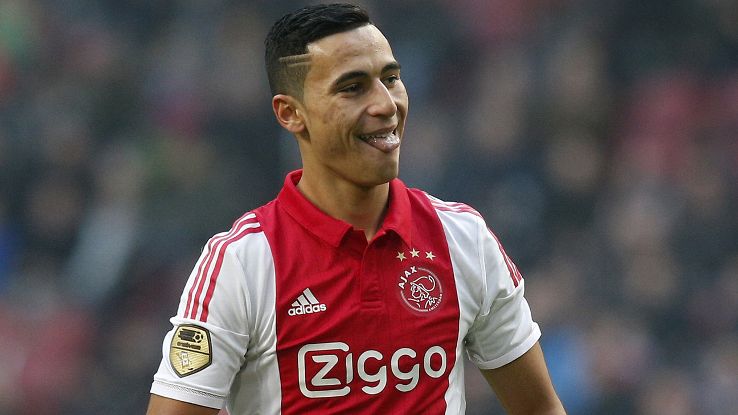
The Future

So, what of the future?

With preparations for the 2015/16 Eredivisie season well underway; AFC Ajax stands at a crossroads in terms of recruitment and overall transfer policy once more.

Surely, for Ajax, another summer transfer window like that of 2014 cannot be allowed to repeat itself in 2015. With the club not even assured of competing in the lucrative group stages of the UEFA Champions League in 2015/16, having finished runners up to PSV in 2014/15 and thus having to compete in the qualifying rounds coupled with a lack of big money sales; money is tight in Amsterdam.

Aside from the €1m spent repurchasing Mitchell Dijks, Ajax have been more reserved in the transfer market this time around recruiting: Nemanja Gudelj (AZ Alkmaar – €6m), Francesco Antonucci (RSC Anderlecht – €500,000), John Heitinga (Hertha BSC – Free transfer), Dragisa Gudelj (NAC Breda – Free transfer) and Kaspar Dolberg (Silkeborg IF – Free transfer); spending €7.5m in total.

They have also recouped over half of this outlay by selling Icelandic marksman, Kolbeinn Sigþórsson to FC Nantes for a fee of €3.5m.

Will this more modest transfer policy see the club adhere more closely to Cruijff’s blueprint?

2014/15 saw the emergence of Anwar El Ghazi, Ricardo Kishna, Jairo Riedewald and Riechedly Bazoer into the first team squad; but who is most likely to follow in their footsteps in 2015/16?

To answer this question, we must look at the current Jong Ajax squad; those players expected to cross over the s111 and into first team contention.

As with any crop of talent to come through the famed Ajax youth system, the current Jong Ajax squad is filled with a host of promising young players. But who will make the grade?

Mickey van der Hart

A 21-year-old goalkeeper; van der Hart has represented the Netherlands at U17, U18 as well as U21 level. Having made 27 appearances for Jong Ajax in 2013/14, van der Hart was sent out to Go Ahead Eagles on a season-long loan to gain first team experience in 2014/15. He made 22 appearances for the Deventer club, remaining number one choice between the posts for much of the season before falling out of favour towards the end of the campaign as the club spiralled towards relegation via the promotion/relegation playoffs.

Andre Onana

Born in Nkol Ngok; the 19-year-old Cameroonian goalkeeper was signed from the youth ranks of FC Barcelona in January 2015. After making his professional debut on 9th February 2015 against Achilles ’29, Onana played much of the second half of Jong Ajax’s 2014/15 Eerste Divisie campaign, making 13 appearances.

Stan van Bladeren

A 17-year-old goalkeeper; Van Bladeren made his professional debut on 6th February 2015 against FC Volendam in his only appearance of the 2014/15 season for Jong Ajax.

Peter Leeuwenburgh

A 21-year-old goalkeeper, Leeuwenburgh has represented the Netherlands at U17, U19 and U20 level. Having made 7 appearances for Jong Ajax in 2014/15; Leeuwenburgh will continue his professional development by spending the entire 2015/16 campaign with FC Dordrecht on a season-long loan.

Norbert Alblas

A 20-year-old goalkeeper; Alblas made eight appearances for Jong Ajax in 2014/15. A Netherlands U20 international, the young shot-stopper made his professional debut against Fortuna Sittard on 16th August 2014 and signed a new contract on 30th June 2015, tying him to the club until 30th June 2016.

Xavier Mous

A 19-year-old goalkeeper; Mous made his professional debut on 16th January 2015 against SC Telstar, going on to notch 4 appearances for Jong Ajax in 2014/15. Mous will spend the 2015/16 campaign at FC Oss on a season-long loan.

Indy Groothuizen

An 18-year-old goalkeeper; Groothuizen made his professional debut for Jong Ajax on 8th December 2014 against RKC Waalwijk. A Netherlands U17 and U18 international; Groothuizen went on to make 4 appearances for Jong Ajax in 2014/15.

Leeroy Owusu

An 18-year-old defender; Owusu has represented the Netherlands at U17, U18 and U19 level. He made his professional debut on 14th August 2014 in a match against SC Telstar, making 19 appearances for Jong Ajax in 2014/15. Having signed a new contract which runs until 2019, defender Owusu is a highly rated prospect in Amsterdam.

Mauro Savastano

An 18-year-old left back; Savastano made his professional debut on 16th March 2015 against Fortuna Sittard and made a total of 2 appearances in 2014/15.

Damon Mirani

A 19-year-old defender; Mirani was named ‘Talent van De Toekomst’ in 2012/13. Mirani, who has represented the Netherlands at U17, U18 and U19 level, made 2 appearances for Jong Ajax in 2014/15 and is contracted until 2016.

Ruben Ligeon

An experienced right back who has represented the Netherlands at U17, U19, U20 and U21 level; Ligeon made his debut for the first team in a match against AZ Alkmaar as far back as the 15th October 2011. Now 23-years-of-age, with Ricardo van Rhijn firmly ensconced as first choice right back and having spent part of 2014/15 on loan at NAC Breda; Ligeon is set to spend the 2015/16 campaign in Tilburg on a season-long loan at Willem II.

Kenny Tete

A 19-year-old defender who has represented the Netherlands at U17,U19,U20 and U21 level; Tete made his first team debut against AZ Alkmaar on the 5th February 2015, going on to make 5 appearances in total in 2014/15. The young defender, who has notched 50 appearances for Jong Ajax over the past two seasons, is now considered part of the first team picture in Amsterdam.

Damien van Bruggen

A 19-year-old defender who made his professional debut for Jong Ajax on the 16th August 2014 in a match against Fortuna Sittard; van Bruggen has represented the Netherlands at U17, U18 and U19 level. Having made 22 appearances and scored 3 goals over the course of 2014/15 Eerste Divisie campaign; the Utrecht-born defender will be looking to push his way into the first team picture in 2015/16.

Terry Lartey Sanniez

An 18-year-old right back who has represented the Netherlands at U17,U18 and U19 level; Lartey Sanniez made his professional debut for Jong Ajax on 25th January 2015 against Sparta Rotterdam, making a total of 6 appearances in the Eerste Divisie in 2014/15.

Danny Bakker

A 20-year-old midfielder; Bakker made his professional debut for Jong Ajax on 11th August 2014 against SC Telstar. A fixture in the Jong Ajax midfield, Bakker made 26 appearances in 2014/15 and scored 1 goal.

Abdel Malek El Hasnaoui

A 21-year-old midfielder of duel Dutch and Moroccan citizenship; El Hasnaoui, who has represented the Netherlands at U19 level, made 5 appearances for Jong Ajax in 2014/15.

Milan Vissie

Born in Hoorn; Vissie, a 20-year-old midfielder, made 3 appearances for Jong Ajax in 2014/15.

Abdelhak Nouri

An 18-year-old midfielder; Nouri made his professional debut on 13th March 2015 against VVV Venlo in his only appearance for Jong Ajax in 2014/15.

Django Warmerdam

A 19-year-old midfielder; Warmerdam made his professional debut for Jong Ajax against NEC on 24th November 2014 and went on to make 12 appearances in the Eerste Divisie in 2014/15, netting on two occasions.

Václav Černý

A 17-year-old winger; Cerny, born in Pribram, has represented his native Czech Republic at U16, U17 and U19 level. Cerny made his professional debut for Jong Ajax against VVV Venlo on 13th March 2015; his only appearance of 2014/15.

Sheraldo Becker

A 20-year-old winger; Becker was discovered during a talent day in 2004 and recruited shortly thereafter to the Ajax Youth Academy. Becker later signed his first professional contract on 6th June 2011. Having represented the Netherlands at U17, U18, U19 and U20 level as well as having played 30 games over the course of two seasons with Jong Ajax, Becker was sent out on loan in January 2015 to PEC Zwolle and will return to the club for the 2015/16 campaign on a season-long loan. Becker’s contract at Ajax runs out on June 30, 2017 and the forward will be looking to prove himself to both his parent club and any prospective buyers in 2015/16.

Donny van der Beek

An 18-year-old midfielder; van der Beek, who made 5 appearances for Jong Ajax in the Eerste Divisie in 2014/15, was named ‘Talent van Der Toekomst’ in 2014/15 and given a first team squad number, although he did not appear for the first team.

Robert Muric

A 19-year-old Croatian striker; Muric, having represented a number of teams at youth level in his native Croatia, signed a four year contract with Ajax which began on 1st July 2014. Muric, who has represented Croatia at both U17 and U19 level was awarded a first team squad number for 2014/15 but spent the entire season with Jong Ajax, making 12 appearances and scoring on four occasions.

Elton Acolaste

A 19-year-old winger who has represented the Netherlands at U17, U19 and U20 level; Acolaste made 26 appearances for Jong Ajax in the Eerste Divisie in 2014/15, netting on 6 occasions.

Lesly de Sa

A 22-year-old right winger; de Sa has represented the Netherlands at U15, U16, U17, U18, U19, U20 as well as U21 level. He made his first team debut all the way back on 21st September 2011 in the KNVB Beker against amateur side, VV Noordwijk; featuring at first team level on 18 occasions and registering a single goal. The diminutive winger had a solid campaign for Jong Ajax in 2013/14, scoring 7 goals in 17 appearances, before being sent on a season-long loan to Go Ahead Eagles in 2014/15. Despite featuring on 17 occasions, de Sa scored just the one goal as the Deventer club were relegated via the promotion/relegation playoffs at the hands of De Graafschap. In June 2015 it was announced that de Sa would join Willem II on a season-long loan deal in 2014/15.

Sam Hendriks

Born in Doetinchem; 20-year-old striker Hendriks made one appearance for hometown club De Graafschap on the 26th April 2013 in an Eerste Divisie match against SC Telstar before making the switch to Amsterdam; signing a four year contract on 24th June 2013. Hendriks has represented the Netherlands at U18, U19 and U20 level and made 19 appearances in 2014/15 for Jong Ajax, scoring on three occasions.

Queensy Menig

A 19-year-old winger; Menig was prolific in front of goal for Jong Ajax in 2014/15, scoring 11 times in 30 appearances. Having represented the Netherlands at U17, U19, U20 and U21 level; Menig made his first team debut in the KNVB Beker in the first official Amsterdam derby since 1983 and scored against JOS Watergraafsmeer in a 9-0 victory at the Olympic Stadium. In October 2014, Menig extended his contract with Ajax until 2019 and made three first team appearances in 2014/15.

Damil Dankerlui

An 18-year-old forward; Dankerlui made 8 appearances for Jong Ajax in 2014/15 and recently signed a new contract with the Amsterdam giants, tying him to the club until 30th June 2018.

Richairo Zivkovic

An 18-year-old striker; Zivkovic was signed to great fanfare in the summer of 2014 after a stellar 2013/14 for hometown club, FC Groningen where he netted 11 times in 35 appearances. Capped at both U18 and U19 level by the Netherlands; Zivkovic had to wait to make his first team debut and instead lined up for Jong Ajax in their 2014/15 Eerste Divisie season opener against SC Telstar. Zivkovic cut a swathe through the Dutch second tier; scoring 18 goals in 25 appearances. Despite this, he was used sparingly in the first team after belatedly making his debut and marking it with a goal against amateurs, SV Urk in the third round of the KNVB Beker. Zivkovic made just 9 appearances and notched 2 goals in all competitions in 2014/15. In June 2015, it was announced that Zivkovic would embark on a season-long loan deal with Willem II, along with fellow Ajax players, Ruben Ligeon and Lesly de Sa.

Dejan Meleg

A 20-year-old attacking midfielder; Meleg has represented his native Serbia at both U17 and U19 level. Following a prolific 2013/14 season with Jong Ajax, in which he netted 12 times in 27 appearances; the Serbian was loaned to SC Cambuur in July 2014 on a season-long loan for whom he made 10 appearances and hit the back of the net on one occasion before his loan spell was terminated on 6th March 2015 after Meleg fell out of favour at the Leeuwarden club.

These names, while not of the household variety at this moment in time, surely represent the best hope the fallen Amsterdam giants’ have of reviving their ailing fortunes both home and abroad in 2015/16.

Name-StevenDavies

Click on Steven’s name above to follow him on Twitter

Rafael van der Vaart: The Dutch Enigma

Battle weary, deadlocked in combat, two goals apiece on aggregate and deep into extra time at the Wildparkstadion, Karlsruher; after a draining 209 minutes over two legs of football, the two teams couldn’t be separated.

Both traditional names in the German game; one, Karlsruher SC, absent from the top flight for six seasons, now seemingly in the ascendency, riding the on the crest of a wave created by an emotive home crowd and most people’s favourites to finally consign the once mighty but now struggling, Hamburger SV, the only Bundesliga club to have never been relegated, to the drop for the first time in 52 years. 

With 115 minutes on the clock, the ball was drilled across the home team’s penalty box and found an unmarked, Nicolai Muller who simply couldn’t miss; Hamburger SV were safe for another year as Muller jubilantly charged through the police cordon to celebrate with the delirious travelling support.

Or were they?

If not for a last minute penalty save from German international, Rene Adler, Rafael van der Vaart’s final match for HSV, where he made 152 appearances and scored 45 goals over two spells, could yet have ended on a bitter note writes Steven Davies.

For Van der Vaart, once touted as being amongst the most creative players in the world, the past few months had been a challenging period for both the ailing Bundesliga giants and their iconic Dutchman who had been informed in March 2015 that he would not be offered a contract extension.

Thoughts immediately turned to the 32-year-old’s future destination; Spain, Turkey, Scotland, the USA, even a return to his native Netherlands with boyhood club, Ajax, were all mooted, while talk of unfulfilled potential remained, as ever, a constant companion.

Like his career, the story of the man himself is an unusual one.

Born in Heemskerk to a Dutch father and Spanish mother; Rafael van der Vaart grew up on a trailer park in Beverwijk near the banks of the North Sea which backed onto De Kennemers, his first club before he joined the famed AFC Ajax Academy at the age of 10.

Reminiscing of his childhood while a Tottenham Hotspur player in 2011, Van der Vaart told the Sunday Mail: “I had a fantastic time as a child. I like to go back there when I can.”

Playing football was always the most important thing to me. I always wanted to be a striker, to have a role as one of the stars in the team. When you want to play in that area of the pitch you need to work hard to become a top player.

“When I was growing up the ball was my best friend. I didn’t have an interest in toy cars or fire engines, computers or playing cowboys, it was only a football. It’s the way it had to be.”

“It was also a benefit to grow up living in a caravan. We had so many people near to us and many kids the same age.”

“We played football on the street and would be out there kicking a ball for hours and hours.”

Named AFC Ajax Talent of the Future in 1999, it was only a matter of time before Van der Vaart made his breakthrough at first team level and on 19th April 2000, aged just 17, he made his first team debut in a 1-1 draw against FC Den Bosch. Later, he was awarded both AFC Ajax Talent of the Year 2000 and Amsterdam Talent of the Year 2000.

The following season, Van der Vaart’s playing time increased and so too did this precocious young talent’s notoriety; being awarded AFC Ajax Player of the Year 2001, Amsterdam Sportsman of the Year 2001 as well as receiving the prestigious Dutch Football Talent of the Year (Young Player) 2001.

In spite of missing a great deal of the following season with two serious knee injuries, the latter of which requiring the removal of his entire meniscus, Van der Vaart, who netted 17 times in just 27 appearances, was named European Talent of the Year 2002 as the club completed the domestic double, winning both the Eredivisie Championship and the KNVB Beker with a 3-2 victory over FC Utrecht. Injury again limited his appearances the following season but did not diminish his effectiveness when on the field of play as he notched 22 goals in 30 appearances in all competitions. Although 2002/03 was a trophy-less season for the Amsterdam giants, save for success in the season opening, Johan Cruijff-schaal, Van der Vaart was on hand to fire the club into the knockout stages of the UEFA Champions League with a crucial strike against Olympique Lyonnais.

Having represented his country at U17, U19 and U21 levels, an 18-year-old Van der Vaart was handed his full international debut against Andorra on 6th October 2001. He would go on to amass over 100 caps for the Netherlands and was a part of the Dutch squads selected for Euro 2004, 2006 FIFA World Cup, Euro 2008, 2010 FIFA World Cup and Euro 2012; being named vice-captain in 2010 and 2012 behind Giovanni van Bronckhorst and later Mark van Bommel.

As was often the case at club level, luck frequently deserted Van der Vaart on the international stage when it came to the big tournaments, playing a bit part role at both Euro 2004 and the 2006 FIFA World Cup; as first, Dick Advocaat and then Marco van Basten, failed to successfully accommodate Van der Vaart in their respective formations. Although the latter did manage to find a role for Van der Vaart two years later as the Netherlands put together an impressive run to the quarter finals of Euro 2008 in Austria and Switzerland before being surprisingly eliminated by Russia.

Despite a turbulent time off the field, where his relationship with The Music Factory VJ, Sylvie Meis, to whom he was married in 2005, celebrity lifestyle and physical fitness all dominated the headlines, Van der Vaart was influential in leading Ajax to another Eredivisie crown in 2003/04.

The following season, Ajax coach, Ronald Koeman named Van der Vaart team captain but he was stripped of the honour a few months later following a high profile fall out with Ajax teammate, Zlatan Ibrahimovic, which led to the Swede’s exit from the Amsterdam Arena and Van der Vaart’s later refusal to play out of position in a UEFA Champions League match in December 2004. Incessant injury problems, a deteriorating relationship with Koeman as well as his successor Danny Blind, coupled with abuse from opposing fans regarding his relationship with Meis, led Van der Vaart to announce that he would leave the club in the summer of 2005.

Compared to David and Victoria Beckham, Van der Vaart and in particular, Meis, became the focus of anti-Semitic chants and unfounded verbal assaults from rival supporters. Such were the veracity of these that a match against ADO Den Haag in September 2004 was stopped by the referee with the crowd being warned via the stadium announcer, that the match could be abandoned if the abuse persisted. Such was the furore, the issue was even discussed in the Dutch parliament.

Instead of joining one of Europe’s leading clubs, such as Manchester United, Real Madrid or AC Milan, Van der Vaart opted instead to pen a deal with German side, Hamburger SV for a bargain fee of €5.5m.  Two years removed from being touted as one of the world’s brightest young stars who heralded the rejuvenation of the famed Ajax youth system, the Dutch starlet found himself making an inauspicious debut for his new club in the second round of the UEFA Intertoto Cup.

Dutch legend, Johan Cruijff echoed the confusion of many at the time in his column in De Telegraaf: “I don’t know what to say about it or what Rafael van der Vaart is doing in Hamburg. This would not have been thinkable two years ago, obviously things have not gone well for Van der Vaart.”

Despite having never been relegated in the history of the Bundesliga, Hamburger SV’s glory days were fading fast; the ‘Red Shorts’ having last tasted success in 1983, when the club secured both the Bundesliga crown and the UEFA European Cup – the year Van der Vaart was born.

Speaking to German news website Netzeitung shortly after his arrival in north Germany, Van der Vaart shed some light on his unusual choice of relocation: “When I came to Hamburg I was welcomed with open arms and the atmosphere just felt right. I don’t want people to think this is just a stepping stone for me, I want to achieve things with Hamburg.”

With a point to prove, Van der Vaart played a central role in Hamburger SV’s third place finish and 2005 UEFA Intertoto Cup triumph, scoring 16 goals in 35 appearances in his first season at the club. The following season saw Van der Vaart awarded the captaincy but also the return of his injury woes. Struggling for much of the season in the bottom half of the table, the club eventually attained a seventh place finish following the arrival of fellow Dutchman, Huub Stevens as coach.

The final season of what would become his first spell with HSV was Van der Vaart’s most prolific for the club, netting 21 times in 44 appearances. Inevitably, as his contract with Hamburger SV wound down with the mercurial Dutchman opting out of signing an extension, rumours began to circulate as to where Van der Vaart would be playing in 2008/09, with many of European football’s biggest clubs being lined up as potential suitors.

Arguably, it was the biggest club of them all who eventually won the race to Van der Vaart’s much sought after signature, when Real Madrid agreed to pay a fee of €13m to Hamburger SV for the Dutch international’s services. Real’s only summer signing in 2008, Van der Vaart, who agreed a five year contract with the Spanish giants, scored on his league debut, a 4-3 victory over CD Numancia and was nominated for the prestigious Ballon d’Or in October 2008.

However, the Dutchman netted only five times in 42 appearances and, amid rumours of a fall out with coach, Juande Ramos, was largely used as a substitute towards the end of a disappointing campaign. The following season began with a reported fall out with Ramos’ successor, Manuel Pellegrini; Van der Vaart even found himself without a squad number in preseason as his preferred number 23 was handed to Esteban Granero. An agreement was eventually reached between player and club; Van der Vaart was awarded his preferred number and Granero, the number 24 shirt instead.

Despite his troubles at club level, Dutch Coach, Bert van Marwijk instilled Van der Vaart as an important first team player at international level and on the 12th August 2009 he was even given the captain’s armband for the Oranje in a friendly against England, scoring a goal in a game that ended 2-2. Later, Van der Vaart helped the Netherlands to an appearance in the FIFA World Cup Final in 2010 in South Africa where a strike by Spain’s, Andres Iniesta broke Dutch hearts.

In spite of Van der Vaart reiterating an intention to see out his contract with Real, an £8m bid by Tottenham Hotspur on 31st August 2010 was accepted and the Dutchman signed a four year deal with the London club. After which, speaking to Marca, Van der Vaart shed some light on his decision, sighting the fact that Los Blancos had wanted to offload him a year earlier after the arrival of Cristiano Ronaldo and Kaka but that he had refused as his wife was undergoing treatment for breast cancer at the time: “She had a very serious illness and it is true that she had to be treated at the Clinica Quiron. Last season, they wanted me to leave but I couldn’t leave for that reason.”

Opening his account with three goals in four Premier League games in addition to a goal and an assist in two UEFA Champions League games, Van der Vaart was named Premier League Player of the Month for October 2010.

The Dutchman ended a stellar debut season with 15 goals in 36 appearances; finishing as the club’s top scorer in the Premier League with 13, almost a quarter of the club’s overall total for the season, as well as recording nine assists.

The following season, Van der Vaart equalled a club record when he scored the second in a 3-1 victory over Queen’s Park Rangers on 30th October 2011, scoring in five successive Premier League games and would end a consistent season with 13 goals in 40 appearances.

On the international stage however, it would be disappointment once more, despite scoring a goal in the third and final group game against Portugal at Euro 2012, it proved too little to save a disappointing campaign for van Marwijk’s Netherands, which ended with a Cristiano Ronaldo double sending Van der Vaart and the Dutch home early from the tournament.

Rumours of renewed interest from the Bundesliga surfaced as the transfer window drew to a close in August 2012, with former club Hamburger SV and Schalke 04 interested in securing the Dutch international. Eventually, Van der Vaart would opt for a return to the familiar and re-joined Hamburger SV for a second time; being unveiled initially as the club’s new vice-captain before being appointed captain once more in April 2013, succeeding Heiko Westermann.

However, Van der Vaart’s second spell with HSV would be a disappointing one when compared to his first. With the club in decline, a slew of managers came and went, each failing to turn around the club’s ailing fortunes; with Thorsten Fink, Rodolfo Esteban Cardoso, Bert van Marwijk, Mirko Slomko, Josef Zinnnauer, Peter Knabel and Bruno Labbadia all spending time in the hot seat at the Imtech Arena between Van der Vaart’s return to the club and his departure at the end of his contract in the summer of 2015.

Things were little better away from the field. On New Year’s Eve 2012, Van der Vaart’s personal life unravelled once more as he and wife Sylvie, separated amid accusations of domestic abuse which Van der Vaart publically refuted and of his wife having had an affair. But, speaking in January 2013 to German newspaper, Bild, Van der Vaart publically apologised for his actions: ‘It was very foolish of me. I’m an idiot. I’m very sorry. It should never have happened.”

His wife responded by telling the same newspaper that they had resolved their differences: ‘‘I ​​have forgiven him already.”

Despite being on more amicable terms; the couple, whose only child, Damien Rafael was born on 28th May 2006, separated shortly thereafter.

On the field, a seventh place finish in 2012/13 was followed by an alarming slide the following season which saw the club finish 16th and have to scrape through a promotion/relegation playoff with Sp Vgg Greuther Furth on away goals to retain their Bundesliga status.

Meanwhile, any hopes Van der Vaart may have harboured of making Louis van Gaal’s Dutch squad for the 2014 FIFA World Cup were dashed when a calf injury forced him to withdraw after having been named in the provisional 30-man squad; seemingly bringing his international career to an ignominious end.

The 2014/15 Bundesliga campaign was little better and history repeated itself with Hamburger SV’s 16th place finish and the club coming through the promotion/ relegation playoffs by the skin of its teeth once more, this time beating Karsruher SC 3-2 on aggregate.

In his second spell with Hamburger SV, Van der Vaart was far less effective on the field; scoring 16 goals in 78 appearances over three seasons between August 2012 and June 2015. It is this record of diminishing returns on HSV’s substantial investment that led the fallen Bundesliga giants to opt against renewing the Dutchman’s contract.

It is also his recent record which has led potential suitors to harbour doubts about taking the plunge on the 32-year-old.

In late March 2015, soon after Hamburger SV announced that they and their enigmatic Dutch playmaking would be parting ways at the end of the 2014/15 Bundesliga season, reports surfaced of a potential move to Major League Soccer; with Sporting Kansas City CEO, Robb Heineman tweeting that the club had held talks with the player.

Asked about the prospect of heading to America, Van der Vaart told Kicker in March 2015, “Everything’s open at the moment, but I can imagine playing in America. I want to keep playing at a good level for a few years.”

But, a few weeks later, Sporting Kansas City coach, Peter Vermes revealed to the Kansas City Star that the Dutchman’s wage demands had put a halt on any potential move stateside, “It wouldn’t make sense for us. No disrespect to him, but it doesn’t make sense for the kind of numbers we’re talking.”

At the beginning of May 2015, Bild reported that a sentimental return to boyhood club, Ajax was on the cards with the club attempting to force Van der Vaart’s hand, issuing their former captain an ultimatum; the Amsterdam giants reportedly offering Van der Vaart a yearly salary of €1 million, plus a signing-on fee of another million.

At the time, Ajax coach, Frank De Boer urged Van der Vaart to make a decision on his future, telling Dutch TV AT5: “I understand that Rafael can’t immediately say yes. But we have issued an ultimatum to him. It’s about how he sees his future. Rafa also has to want [a return home]. I think that Rafael can be a good reinforcement.”

But by the end of the month, speaking to Voetbal International, Robert Geerlings, Van der Vaart’s agent, dismissed the option of a return home in favour of exploring other options including those from clubs in Spain, Turkey, Scotland and Italy, “Rafael has yet to decide his future. Ajax have waited long enough and it’s courtesy that we inform the club.”

His ambition as strong as ever, despite falling out of favour with Bondscoach, Guus Hiddink, Van der Vaart has stated he has no intention of retiring from international football and still harbours hopes of being selected should the Netherlands qualify for Euro 2016. Speaking to Kicker in March 2015, the Dutchman reiterated, “I will never retire, because I believe that it’s a great honour to play for your country. Should I find a good club and play well there, I can still be of value for the national team.”

This ambition, driven by a desire to leave a legacy, to not merely play a part but instead be the focal point at both club and international level became clear as Van der Vaart made his final decision; a decision every bit as unconventional as his career to date.

At the beginning of June 2015, after much speculation, Van der Vaart confirmed his intention to link up with newly promoted La Liga club, Real Betis; confirming to De Telegraaf that a discussion with sporting director, Eduardo Macia sold him on a move to Andalucía.

“Eduardo Macia told me Betis want to be the fourth best team in Spain; that in a short space of time the club will return to the upper echelons of La Liga. It’s a wonderful project.”

Having reportedly taken a pay cut, the move will see him relocate closer to family in nearby Chiclana, in the neighbouring Cadiz province, My roots are also here, so I want to make my contribution.”

The chance to be the fulcrum of this “wonderful project” clearly swayed the Dutchman’s thinking as he reportedly turned down Ajax’s much more lucrative offer to take up the challenge with Los Verdiblancos; a club whose one and only La Liga triumph to date occurred in 1935, last tasted Copa del Rey success in 2005 and have spent recent seasons yo-yo-ing between Spain’s top two divisions.

Unconventional, unpredictable and as enigmatic as ever; Rafael Van der Vaart will relish the prospect of being the man to take the expectancy of an ambitious but unfashionable club upon his shoulders for one more “wonderful project” in an eventful career.

Name-StevenDavies

Click on Steven’s name above to follow him on Twitter

The Dwindling Dutch UEFA Coefficient

On 24th May 2015 AFC Ajax Amsterdam celebrated the 20 year anniversary of their last European success.  It was on that date in 1995, at the Ernst-Happel-Stadion, Vienna, against the mighty AC Milan, a solitary goal, scored by substitute, Patrick Kluivert, who remains the youngest goal scorer in Champions League Final history at 18 years, 10 months and 23 days, secured the fourth and final UEFA European Cup in the Amsterdam club’s decorated history. Louis van Gaal’s ‘golden generation’ of: Kluivert,  Edgar Davids, Edwin van der Sar, Frank and Ronald de Boer, Michael Reiziger, Winston Bogarde, Nwankwo Kanu, Marc Overmars, Finidi George and Finnish international, Jari Litmanen, minus the retired, Frank Rijkaard and the departed, Clarence Seedorf, would make it to the final again a year later, losing on penalties at the Stadio Olimpico in Rome to another Italian side, Juventus.

The last Dutch continental success came seven years later in 2002 in the shape of their fierce rivals, Feyenoord, who lifted the old UEFA Cup after a 3-2 victory over Borussia Dortmund in De Kuip.  A brace (including a penalty) from Pierre van Hooijdonk and a third by Danish striker, Jon Dahl Tomasson finally saw off the German side allowing the Rotterdam giants to celebrate in front of a partisan and predominantly Dutch crowd.

That was thirteen years ago.

In the years since, FC Twente’s success in the 2006 edition of the long forgotten and much lamented UEFA Intertoto Cup is all Dutch club football has had to shout about in terms of glory in European club competition and is why their current UEFA Coefficient is under threat writes Steven Davies.

UEFA Coefficients

In European football the UEFA Coefficients are statistics used for ranking and seeding teams in both club and international competitions. There are three different sets of coefficients calculated by UEFA: National Team Coefficient: used to rank and seed national teams for European competition and finals tournaments, Country Coefficient: used to evaluate the collective performance of the clubs of each member association, assigning the number of places and at what stage clubs enter the UEFA Champions League and UEFA Europa League and finally, Club Coefficient: used to rank individual clubs for seeding in the UEFA Champions League and UEFA Europa League.

In the National Team Coefficient calculated on 12th December 2013 which would decide the seeding and pot placements for the UEFA Euro 2016 qualification groups, the Netherlands found themselves sitting in third behind leaders, Spain and second placed, Germany. The coefficients were calculated by averaging: 40% of the average ranking points per game earned in the 2014 FIFA World Cup qualifying stage, 40% of the average ranking points per game earned in the Euro 2012 qualifying stage and final tournament and 20% of the average ranking points per game earned in the 2010 FIFA World Cup qualifying stage and final tournament.

In terms of Country Coefficient however, which takes into account each association’s performance in European competitions from 2010-11 to 2014-15, with the ranking at the end of 2014-15 determining the number of places each association receives in the 2016-17 UEFA Champions League and UEFA Europa League, the Netherlands were recently overtaken by Ukraine leaving them languishing in a disappointing ninth place with neighbours Belgium, whose clubs have collectively outperformed their Dutch counterparts in each of the last three seasons, breathing down their proverbial necks.

In 2014/15 the Netherlands had six European places up for grabs (two entrants to the UEFA Champions League and four to the UEFA Europa League) which will be reduced from 2015-16 with only three teams entering the UEFA Europa League from the countries ranked 7th to 9th (Although Go Ahead Eagles will make it four as they have been awarded a place via UEFA Fair Play); should the Netherlands fall down to 13th they would be stripped of automatic qualification for one team to the group stages of the UEFA Champions League while the remainder would have to fight through numerous qualifying rounds to reach the lucrative UEFA Europa League group stages. An unthinkable fall out of the top 15 would result in only one Dutch team being eligible to enter the qualifying rounds of the UEFA Champions League while the rest would have a very short summer break indeed before having to compete in the early qualifying rounds of the UEFA Europa League.

Next season, 2014/15 Eredivisie Champions, PSV Eindhoven will be seeded in the draw for the 2015/16 edition of the UEFA Champions League by virtue of the fact that Real Madrid, the only side that could have prevented PSV’s seeding, lost out to Barcelona for the 2014/15 La Liga crown.

A change to the rules next season means the champions of the top seven leagues as ranked by UEFA will be seeded along with the holders of the competition; Barceona, Bayern Munich, Chelsea, Juventus, Benfica, Paris-Saint Germain and Zenit St. Petersburg are thus automatically seeded. With Barcelona and Juventus contesting this year’s UEFA Champions League Final and both already seeded, the extra seeding is awarded to the league ranked eighth in the UEFA Coefficients – the Eredivisie and its current champions, PSV. This will change the in 2016/17 however as the list for the 2015/16 competition is based on coefficient rankings from the 2013/14 season when the Netherlands was ranked eighth. But with Ukraine having now moved ahead of the Dutch, if the scenario were repeated, it would be the Ukrainian champions who would stand to benefit.

Club Coefficient makes even grimmer reading as no Dutch club appears in the top 25 clubs in terms of UEFA team ranking. As of 27th May 2015, Ajax find themselves just outside the top 25 in 26th place, PSV Eindhoven are 30th, AZ Alkmaar 44th just ahead of FC Twente who find themselves in 45th whilst Feyenoord only just crack the top 100 in 95th. Meanwhile, across the border in tenth place Belgium, Anderlecht occupy 41st, Club Brugge, who made it all the way to the quarter finals of the 2014-15 UEFA Europa League, are 51st, Racing Genk 57th and Standard Liege 80th.

An Illustrious History

Over the course of the 40 years prior to Feyenoord’s 2002 UEFA Cup triumph, Dutch clubs had been not only a mainstay in the latter stages of European club competitions but had proved ultimately successful on 16 occasions; be it in the European Cup (UEFA Champions League), UEFA Cup (UEFA Europa League), UEFA Cup Winners Cup, European Super Cup, UEFA Intertoto Cup or the Intercontinental Cup, Dutch clubs were always, at the very least, contenders.

Ajax was the first Dutch club to put its mark on European club competition when the club lifted the inaugural International (Intertoto) Football Cup in 1961-62. Their opponents were Feyenoord, with the Amsterdam club prevailing 4-2 over two legs. The competition comprised 32 clubs and was created for those clubs that would otherwise not have had a European competition to compete in.

Seven years later, Ajax appeared in their first UEFA European Cup final; their opponents were AC Milan and the venue, the Bernabeu in Madrid. Although the Dutch side would ultimately succumb to their Italian opponents 4-1, the Dutch club’s appearance began a run of five successive years where Dutch teams contested the final of Europe’s elite club competition with the initial loss to Milan being the only time a Dutch team failed to capture the trophy. The 1969 final would be the first for the likes of: Johan Cruijff, Piet Keizer, Sjaak Swart and Wim Suurbier and the coach, Rinus Michels; but not their last.

The following year it was Feyenoord, who graced the final beating Scottish giants, Celtic 2-1 at the San Siro in Milan through goals from Rinus Israel, who cancelled out Archie Gemmell’s thirtieth minute strike before Swede, Ove Kindvall pounced in extra time to secure the Rotterdam club’s only UEFA European Cup triumph in its illustrious history.

Rivals Ajax returned to the final in each of the following three seasons, taking home European club football’s biggest prize on every occasion; goals from Dick van Dijk and substitute, Arie Haan seeing off Panathinaikos got the ball rolling at Wembley Stadium in 1971. The following year a brace from Johan Cruijff secured a 2-0 victory over Internazionale at De Kuip in Rotterdam in what has often been dubbed Total Football’s greatest moment. Ajax’s third successive victory a year later meant that the club was able to keep the trophy permanently as a single goal from Johnny Rep was enough to see off the challenge of Juventus at the Red Star Stadium in Belgrade in front of nearly 90,000 spectators. The original ‘golden generation’ of Cruijff, Keizer, Swart, Suurbier, Rep, Neeskens, Muhren and Krol didn’t stop there, collecting the Intercontinental Cup in 1972 and the European Super Cup in 1974 before going their separate ways.

But the end of Ajax’s dominance did not spell the end for Dutch clubs in general; Feyenoord took home a major European honour in 1974 as they won the UEFA Cup beating Tottenham Hotspur 4-2 over two legs and the trophy very nearly remained in Dutch hands the following year with FC Twente coming up short against Borussia Monchengladbach. Three years later the UEFA Cup would be back in Dutch possession however, as PSV Eindhoven stepped out of the shadows of the Netherlands’ ‘big two’, beating Bastia 3-0 in the second leg through goals from Willy van de Kerkhof, Gerrie Deykers and captain, Willy van der Kuijlen; the first having ended goalless.

With the Netherlands, under the leadership of Rinus Michels and later Austrian, Ernst Happel, including the likes of: Cruijff (1974 only), Suurbier, Haan, Krol, Jansen, Neeskens, van Hanegem (1974 only), Rep and Keizer (1974 only), reaching the final of back to back FIFA World Cup’s, in West Germany in 1974 and again four years later in Argentina, where they lost to the hosts on both occasions, the 1970’s, it could be argued, belonged to Dutch football; at the very least, this small, football-mad nation, its players, coaches and clubs produced many of the great footballing moments of the decade.

By comparison, the first half of the 1980’s proved far leaner for Dutch clubs in European club competition; AZ Alkmaar being the only Dutch club to post an appearance in a major European final between 1978 and 1987 when they lost out thrillingly to Bobby Robson’s Ipswich Town, 5-4 on aggregate over two legs in 1981.

In sharp contrast however, the second half of the decade heralded the return to prominence of Dutch football and its clubs on the continent. Under the management of club legend, Cruijff, Ajax, littered with a number of soon-to-be household names of world football: Rijkaard, van Basten, Bergkamp, Winter and Muhren, claimed the UEFA Cup Winners Cup in 1987 against the East German side, Lokomotiv Leipzig, through a lone strike in the 20th minute by Marco van Basten at the Olympic Stadium in Athens. The Amsterdam club returned to the final a year later only to lose out by the same score line to Belgian side, Mechelen.

That same year PSV Eindhoven cemented their place as one of the ‘big three’ in the Netherlands by lifting the UEFA European Cup as part of a treble that also included the Dutch Championship and the Dutch Cup, defeating Portuguese powerhouse, Benfica 6-5 on penalties, after the game, held in the Neckarstadion in Stuttgart, ended goalless.

The summer of 1988 would prove an unforgettable one for the Dutch as the Netherlands secured its first (and to date only) international honour, coming out on top at Euro 1988 in Germany, beating the Soviet Union in the final through goals from Ruud Gullit and a legendary strike from Marco van Basten; a side boasting the likes of: Gullit, van Basten, Rijkaard and Koeman and coached once again by the imperious, Rinus Michels.

However, any hopes the Dutch had of following up this international success at club level would soon be dispelled as the majority of the newly crowned European Champions would head abroad as a familiar pattern began to emerge, just as it had in the mid 1970’s and would again in the late 1990’s. Marco van Basten left Ajax for AC Milan in 1987, Ruud Gullit moved in the same direction from PSV, Frank Rijkaard would eventually join Gullit and Van Basten in Milan in 1988 after a year with Sporting Clube de Portugal and a loan spell at Real Zaragoza, while Ronald Koeman would be the last of the four to depart the Netherlands, moving from PSV to Barcelona in 1989.

It would be four more years until a Dutch team graced the final of one of Europe’s elite club competitions. In 1992, Ajax, under the leadership of a young coach named, Louis van Gaal, reached the final of the UEFA Cup where they faced Italian side, Torino. Van Gaal’s men took the crown on away goals by virtue of drawing the first leg 2-2 through goals by Wim Jonk and Stefan Pettersson in Turin before the return leg, held at the Olympic Stadium in Amsterdam ended goalless. The Ajax side included a number who, three years later would lift European club football’s greatest prize once more: Frank de Boer, Danny Blind and Edwin van der Sar, while most would head abroad and to Serie A in particular: Dennis Bergkamp (Internazionale), Wim Jonk (Internazionale) and Bryan Roy (Foggia).

These departures however, provided the opportunity for another ‘golden generation’ to rise through the Amsterdam club’s famed youth system, emerge into the first team, win three successive Dutch Championships from 1994 to 1996 and sweep the club to that glorious triumph in Vienna on 24th May 1995.

By end of the 20th Century, that ‘golden generation’ too would be cut up and shared out amongst Europe’s elite: Edgar Davids (Milan), Michael Reiziger (Milan), Frank and Ronald de Boer (Barcelona), Edwin Van der Sar (Juventus), Clarence Seedorf (Sampdoria), Jari Litmanen (Barcelona), Patrick Kluivert (Milan), Marc Overmars (Arsenal), Finidi George (Betis), Winston Bogarde (Milan) and Nwankwo Kanu (Internazionale); even ‘super-coach’ van Gaal left for pastures new in 1997, replacing Bobby Robson at Barcelona.

It goes without saying that generations of players of this calibre are few and far between and while great players have come through De Toekomst and pulled on the famous white shirt with the single red stripe since, Ajax have been unable to replicate this success at the highest level of European club competition.

Feyenoord’s 2002 UEFA Cup triumph was largely built on sand as the club found itself in dire financial straits a few years later as a result of many years of frivolous spending and paying exorbitant wages.

For PSV, despite taking the ascendancy in terms of domestic success in the first decade of the 21st Century and being crowned Landskampioen seven times between 2000 and 2008; this success failed to replicate itself on Europe’s biggest stage with the Eindhoven club’s run to the semi-finals of the UEFA Champions League in 2004-05, where they lost out to perennial European powerhouse, AC Milan, on away goals, the closest the Eindhoven club came to a second triumph in Europe’s premier club competition.

Dutch Influence

Perhaps a more accurate gauge of the impact of the Dutch on European club football is that of the success of its exported players and coaches:

Johan Cruijff brought domestic success as a player at Catalan giants, Barcelona the 1970’s under fellow Dutchman and ex-Ajax Coach, Rinus Michels and later, continental success as a coach in his own right, winning the UEFA Cup Winners’ Cup in 1989, as well as the UEFA European Cup in 1992, Ronald Koeman’s strike sinking Sampdoria in the final at Wembley Stadium. They would add the UEFA Super Cup later that year and be runners up in the final once more in 1994. Moreover, Cruijff was instrumental in implementing the ‘Dutch influence’ at the club and a style of play that came to be known as tiki-taka, characterised by short passing and movement, working the ball through various channels and maintaining possession as well as the promotion of youth. The style would be continued and developed at the club by Louis van Gaal and Frank Rijkaard, the latter lifting the UEFA Champions League with the Catalans in 2006, overcoming Arsenal 2-1 at the Stade de France; while internationally, it would be successfully adopted by Spain at Euro 2008, the 2010 FIFA World Cup and Euro 2012.

Fellow Dutchman, Hans Croon would taste Cup Winners’ Cup glory with Anderlect in 1976 as would Ad de Mos with Mechelen in 1988. Huub Stevens, enjoyed UEFA Cup success with German side, Schalke 04 in 1997 and Dick Advocaat took Zenit St. Petersburg to glory in the same competition in 2008 where the Russians overcame Glasgow Rangers 2-0 through goals from Igor Denisov and Konstantin Zyryanov, before adding the UEFA Super Cup later that year, beating Manchester United 2-1; while Rinus Michels was named FIFA Coach of the Century in 1999.

Many great Dutch players have graced European club competition but few were more instrumental to a team’s success than Gullit, van Basten and Rijkaard. The Dutch trio were a vital part of the all-conquering AC Milan team of the late 80’s and early 90’s; the club securing the UEFA European Cup, UEFA Super Cup and the Intercontinental Cup back-to-back in 1989 and 1990.

The Netherlands continues to produce a copious amount of talent for the game the world over which can be clearly illustrated by their appearance under Bert van Marwijk in the 2010 FIFA World Cup Final despite their 1-0 loss to Spain and the fact that the Dutch were ranked at number 1 in the FIFA World Rankings between August and September 2011, becoming only the second national football team after the Spanish themselves to top the rankings without previously winning a World Cup. A third place finish would follow at the 2014 FIFA World Cup, under Louis van Gaal in Brazil and currently, the Netherlands are ranked sixth as of 7th May 2015.

The Problem(s)

The implementation of the Bosman Ruling in 1995 which removed restrictions on foreign EU players within national leagues and allowed players in the EU to move to another club at the end of their contract without a transfer fee being paid led to a lack of stability and continuity within Dutch clubs from one season to the next and is one of three key factors that KNVB President and former Ajax chairman, Michael van Praag highlighted when addressing the Dubai International Sports Conference in 2010, alongside agents and the millions on offer in Europe’s biggest leagues: “Holland is a country of 16 million people, while England for example is a country of 60 million. The difference in TV rights money the two leagues generate is huge and we can’t cope with the salaries our players are offered elsewhere.”

Despite American based Australian tycoon, Rupert Murdoch securing the rights to broadcast the Eredivisie for 12 years at a cost of 1 billion euros in August 2012, taking effect from the beginning of the 2013/14 season (meaning each Eredivisie club should annually receive 4 million euros); the deal comes up short compared, for example, to the FA Premier League which from 2013 has generated 2.2 billion euros per year in domestic and international television rights. In addition, the Deloitte Money Football League, compiled by accountancy firm, Deloitte, which ranks football clubs each year on the basis of revenue generated from football operations each February, contained no Dutch clubs in its top 30 for 2013/14; but did however, contain three Spanish clubs (Including top ranked Real Madrid who raked in €549.5 million in revenue), four German clubs, five Italian clubs and a whopping fourteen English clubs. Thus, with little hope of competing financially, Dutch clubs have become dependent on selling their best young players every season to make ends meet to which van Praag declared: “Dutch sides have become feeder clubs that is the only way to put it. Everything changed after the Bosman Ruling. Back when I was chairman of Ajax we lost Patrick Kluivert on a free transfer to AC Milan. But he wasn’t successful so they sold him a year later for US$10m. We had educated Patrick for 12 to 13 years and received nothing.”

Worrying trends have emerged with young Dutch players and those trained in Dutch academies being plucked from Dutch youth systems prior to even making their debut at first team level and others such as: Royston Drenthe, Christian Eriksen and more recently, Memphis Depay, being signed up by clubs from Europe’s biggest leagues after a relatively short time in the first team at Feyenoord, Ajax and PSV respectively.

Drenthe, who was snapped up from Feyenoord after playing just 29 first team games by Spanish giants, Real Madrid, had loan spells at Hercules and Everton but only managed 46 appearances and two goals for Real between 2007 and 2012. Thereafter, the Rotterdam native has crisscrossed the continent in spells with Alania Vladikavkaz, Reading, Sheffield Wednesday and now plies his trade in Turkey for Kayseri Erciyesspor who were relegated from the Turkish Super Lig in 2014-15.

Notably, those players taken out of Dutch academies fail to gain key experience at the highest level for their clubs and are often farmed out on loan indefinitely before being released into obscurity: a prime example of this is Sunderland’s, Patrick van Aanholt, who was part of the PSV youth system until the age of 17 when he joined Chelsea. From there, van Aanholt spent time on loan at no fewer than five clubs: Coventry City, Newcastle United, Leicester City, Wigan Athletic and Vitesse between 2009 and 2014. How many appearances did he actually make for Chelsea before being sold to Sunderland in the summer of 2014? Two! Having represented the Netherlands at every age group from U16 through to the full national team, surely his apprenticeship would have been better served playing consistently and establishing himself in the Eredivisie for PSV as opposed to embarking on the odyssey that his fledgling career has thus far become?

Such is the opinion of Dutch legend, Johan Cruijff, who urged young players to follow the example of Daley Blind in the wake of the 24-year-old’s £13.8m move to Manchester United from Ajax in the summer of 2014 in his column in De Telegraaf and relayed through his personal website: “Educated at Ajax, on loan to FC Groningen and improving step by step at Ajax to eventually gain a top transfer to Manchester United after the World Cup. But apparently, even a role model like Blind cannot prevent children to leave Ajax too early and move abroad.”

“Not one Dutch player comes to mind who has actually reached the top after moving abroad as a teenager. Unfortunately not every parent realises a football player has only one agent, but an agent sometimes has ten football players under his wing. If one of them fails, they move on to the other. A lot of talents have suffered from this the last couple of years.”

Cruijff, like van Praag, places the blame for the rising numbers of young players taking an early route abroad at the feet of agents: “I do not want to tar every football agent with the same brush, but some of them… They are one of the biggest problems in football.”

This has also proved a major problem for Dutch clubs competing in elite European club competition in recent years. For example; Ajax, the Netherlands’ most dominant club domestically, winning four consecutive titles between 2011 and 2014, before PSV broke their stranglehold in 2015, have failed to make progress out of the group stages of the UEFA Champions League in each of the last five seasons. Moreover, despite qualifying on each occasion for the latter stages of the UEFA Europa League by virtue of finishing third in each of their UEFA Champions League groups the Amsterdam club have only twice progressed past the second round, making the round of 16 in 2010/11 and again in 2014/15.

In that time, a multitude of notable players have worn the Ajax shirt before being sold on to Europe’s biggest leagues; what could a squad containing the likes of: Maarten Stekelenburg, Keneth Vermeer, Jasper Cillessen, Nicolai Boilesen, Gregory van der Wiel, Ricardo van Rhijn, Toby Alderweireld, Joel Veltman, Jan Vertonghen, Niklas Moisander, Urby Emanuelson, Jairo Reidewald, Daley Blind, Lucas Andersen, Lasse Schone, Davy Klaassen, Daley Sinkgraven, Christian Eriksen, Thulani Serero, Viktor Fischer, Riechedly Bazoer, Siem de Jong, Ricardo Kishna, Anwar El Ghazi, Arkadiusz Milik, Kolbein Sigþórsson and Luis Suarez, have done on European club football’s biggest stage had they been allowed to remain together and evolve as a team over the course of those five years?

Sadly, we will never know.

Name-StevenDavies

Click on Steven’s name above to follow him on Twitter

Man Utd linked with Ajax keeper, club say not for sale

With strong reports in previous months linking David De Gea with a move back home to Spain, Louis Van Gaal has been scouring the continent for his replacement. Surprisingly, Manchester United already have Victor Valdes who many believe should fill the void should De Gea move to Real Madrid writes Darren Harrison.

20150520 - Jasper Cillessen Ajax
Furthermore, fresh reports are linking Van Gaal with a move for Ajax goalkeeper Jasper Cillessen, somebody he has worked closely with during his spell managing the Dutch national team. It may come as a surprise to many to see fresh reports linking Cillessen with a move to United, especially for a fee of around £25 million pounds. Subsequently, United goalkeeping coach Frans Hoek, also worked with Cillessen during his spell as goalkeeping coach of the national team, this could be one of the reasons Van Gaal is looking at Cillessen to replace De Gea.

On the other hand, Ajax manager Frank De Boer is reluctant to let his goalkeeper leave, Cillessen has most recently been voted best goalkeeper in Dutch football and Ajax club player of the year. Marc Overmars, sporting director for the Amsterdammers spoke to De Telegraaf and stated the stopper was not for sale: “Not even for £25 million”.

Although unlikely after Overmars’ comment, if Cillessen leaves Ajax, potential replacements for the keeper may come closer to home. Mickey van der Hart recently spent time on loan at Go Ahead Eagles, while FC Groningen stopper Sergio Padt may be a better replacement for Cillessen, having impressed for Groningen this season and broke into the Dutch under 21 squad, Padt could possibly be identified to replace Jasper Cillessen should he leave the Amsterdam club this summer.

Name-Darren Harrison

Click on Darren’s name above to follow him on Twitter.

Total Dutch Football 2014/15 Player of the Season

Awards-Header

After yet another set of entertaining Eredivisie and KNVB Beker campaigns, the TotalDutchFootball.com workforce has been voting all week and we are now ready to dish out our prestigious first ever ‘End Of Season’ awards.
All staff were asked to name their top three players. Each first pick received three points, second place received two points and one point was awarded for the third pick. The results are below…

Awards-PlayerOfTheSeason

Sticker-MemphisDepay

Winner – MEMPHIS DEPAY (PSV) 15 points

Like his manager, Philip Cocu, Depay was a unanimous winner picked first by all five voters. Over the past season no-one can doubt that without Depay, PSV would not have experienced the success they have this term. Depay notched 22 Eredivisie goals along with five assists that earned him major plaudits across the globe and a four-year deal at Louis van Gaal’s Manchester United next season.

His superb free-kick technique led to seven of those goals  – leaving most goalkeepers stranded as he lined up the set pieces from the edge of the area.  The flamboyant winger hit an average of 5.4 shots per game (according to Opta) and three assists (from 2.1 key passes per game).

With his tremendous determination, speed, skill and awareness, Depay has linked up well down the left with Jetro Willems (our runner-up). Connecting with the left-back has helped the 20-year-old create 13 goals in the league (an Eredivisie high).

This cocky youngster is heading to the Premier League, to a team who used to try and contain the cockiness of one Cristiano Ronaldo. He has all the attributes and swagger to hold his own in comparison to the now-Real Madrid star.

PSV and Eredivisie watchers will thank Depay for the memories this season and it is sad to see him go abroad but I’m sure all, including all the readers of this website, wish him good luck and keep chasing those dreams.

2nd – JETRO WILLEMS (PSV) 6 points

Depay’s team-mate is runner-up after a successful season appearing in 30 out of the 34 leagues games for PSV. Willems was a vital part of the Eindhoven set-up this year under Philip Cocu and they will be hoping to hold onto him as long as they can.

OTHERS

JASPER CILLESSEN (Ajax) 2 points

GEORGINIO WIJNALDUM (PSV) 2 points

LUUK DE JONG (PSV) 2 points

MICHIEL KRAMER (ADO Den Haag) 1 point

HAKIM ZIYECH (FC Twente) 1 point

MARKO VEJINOVIC (Vitesse) 1 point

Name-WillBurns

Click the name above to follow Will on Twitter.

TotalDutchFootball.com    WorldFootballWeekly.com


Total Dutch Football 2014/15 Breakthrough Talent of the Season

Awards-Header

Throughout this year’s campaign, we have seen some great talents emerge as scouts from all over Europe honed in on them. Myself and the remainder of the staff at TotalDutchFootball.com have been assessing who can be declared as the best ‘Breakthrough Talent of the Season’.

All staff were asked to name their top three talents. Each first pick received three points, second place received two points and one point was awarded for the third pick. The results are below…

Awards-BreakthroughTalentOfTheSeason

Sticker-JesusCorona

Winner – JESUS CORONA (FC Twente) 5 points

The little Mexican nicknamed “El Tecatito”, signed on a free transfer aged 20 from Liga MX side Monterrey after rejecting a new contract from the Mexican club in 2013. After taking a while to settle in under Albert Schreuder, Corona now 22-years-old, has shown he is perfect example of a pacy winger with a tremendous dribbling ability to torment full-backs down either flank.

He appeared in 27 games for Twente this year, notching nine goals and supplying four assists, showing to be a shining light, in a what has been a disappointing season for his side. Tecatito’s consistency has enhanced his already impressive skills. His speed and trickery make him a very elusive footballer who provides depth to the team, which results in goal opportunities.

Due to Twente’s crippling financial status, Corona looks to be moved on next season and could end up leaving the Eredivisie. However, the young Mexican has finally shone in Holland and he is surely set to raise a big chunk of funds for the Enschede club.

Joint 2nd – MARK UTH & SAM LARSSON (Heerenveen) 4 points

The Heerenveen pair have been surprising successes for Dwight Lodeweges this year. Both used as replacements for summer sales, Alfred Finnbogasson and Hakim Ziyech respectively have excelled. The stocky German striker, Uth has scored 15 times in 32 outings to become the club’s top scorer and managed to use his strength to hold the ball up and created 10 assists. Also notching goals is Swedish winger Larsson with eight with four assists. Both players have linked with moves away themselves this coming summer, not an unusual process for Heerenveen.

OTHERS

ALBERT RUSNAK (FC Groningen) 3 points

TJARONN CHERY (FC Groningen) 3 points

ANWAR EL GHAZI (Ajax) 3 points

TOM VAN WEERT (Excelsior) 2 points

TERENCE KONGOLO (Feyenoord) 2 points

WESLEY HOEDT (AZ) 1 point

NEMANJA GUDELJ (AZ) 1 point

DALEY SINKGRAVEN (Ajax) 1 point

BERTRAND TRAORE (Vitesse) 1 point

Name-WillBurns

Click the name above to follow Will on Twitter.

TotalDutchFootball.com    WorldFootballWeekly.com


How does PSV replace Memphis Depay?

The announcement last week of the transfer of Memphis Depay to Manchester United has left PSV with a significant hole to fill.  Luckily for PSV, they have money in the bank now in order to try and fill this hole.  We all know and appreciate Memphis’ talents and he might be one of those once in a generation footballers but PSV need to ask the question “How do we Replace Memphis”? Even with Memphis leaving, PSV still have a very talented side but they will certainly miss the X-Factor that he provided.  Replacing Memphis will be a hard task but there are some options at PSV’s disposal.  Rogier Waalder looks at the candidates:

Jesus Manuel Corona (FC Twente)

One of the only players in the Eredivisie this year who catches the eye as much as Depay does, is the Mexican winger Jesus Corona, who plays for FC Twente.  A very tricky and skilful winger, he certainly has the ability to turn a game like Memphis does.  He has scored 13 goals in his 32 games this season and his dribbling, first touch and technique are in the same class as Memphis.  He does lack the power and free-kick abilities of Memphis but is only 22 years old.  FC Twente will be holding a fire-sale in the summer to clear their debts and so Corona is very much on the market.  A big stumbling block, though, is his wage demands with a recent poll showing that 85% of PSV fans do not think he is worth the reported 1 million EURO salary that he is after.

Sam Larsson (SC Heerenveen)

Swedish international Larsson is a new arrival to Heerenveen this season, after joining from Goteburg in the off-season.  He has proven to be yet another potential Scandinavian jewel that the Heerenveen scouting team has delivered over the years.  Has all the same hallmarks as Corona but represents a more powerful, cheaper option.  Larsson has contributed 8 goals and 6 assists in his 20 games this season. Heerenveen have already offered him a new contract, but he has refused to consider this at present.  He has a contract until 2018 so Heerenveen aren’t in any rush to sell but PSV might be tempted to make them an offer they can’t refuse.

Ricardo Kishna (Ajax)

Yes he plays for Ajax presently and yes this is probably the biggest obstacle in Kishna going to PSV, but transfers between PSV & Ajax are not unheard of.  Kishna is a year younger than Memphis and despite his young age has already proven that he can light up the Eredivisie.  His flair, trickery, dribbling and pace are very comparable to Memphis and he has a return of 5 goals and assists from 20 matches this season.  This current Dutch youth team player only has 1 year to run on his Ajax contract, so he could force the issue if PSV make a serious play for his services.

Elvis Manu (Feyenoord)

Plays for Feyenoord, so again some question marks surrounding a desire to sell him to PSV but he also has the hallmarks of someone who could replace Memphis.  A 21-year old natural Left Winger, Manu has had a good season for Feyenoord with 14 goals in 34 matches, including some great performances in the Europa League.  Manu has great pace and strength but his overall technique and consistency would need some improvement to reach Memphis levels but definitely a great raw talent.

Steven Berghuis (AZ Alkmaar)

Berghuis has been a standout performer for AZ this season with 10 goals in 22 appearances.  The former Twente youth player can play on either wing or as Striker and has excellent technical and passing abilities.  He has a strong desire to succeed (much like Memphis does) and would arguably be the cheapest of the options presented thus far.  He probably isn’t quite at the standard that Memphis is but would be a good squad player, in conjunction with another big name signing.

Bilal Ould-Chikh (FC Twente)

If PSV are looking at a longer term prospect that they can bring up to Memphis’ standard then Ould-Chikh might be their guy.  Only 17 years old he has already played 15 full games for FC Twente this season.  An out and out winger with great technique, pace and dribbling abilities Ould-Chikh certainly has the potential to rival Memphis one day.  FC Twente might be needing cash to satisfy their creditors at the moment, but surely they’ll want to hang on to their star prospect and try and build a team around him.

Adnan Januzaj (Manchester United)

Januzaj has been on the outer at Manchester United since Van Gaal’s arrival and was rumoured to have been offered as part of any deal taking Memphis to England.  It doesn’t look like this has eventuated but a cashed up PSV could do a lot worse than taking the talented Belgian to Eindhoven, even if it is on loan.  Even though he has not scored in the Premier League this year, the footballing world is very aware of Januzaj’s abilities with a ball at his feet and his technique and flair do rival those of Memphis.  He is on a massive salary at Man Utd and this is why a loan move but be the best for both teams, particularly as Memphis will certainly be a direct rival for Januzaj.

Serge Gnabry (Arsenal)

Another potential loan option is the Arsenal youngster, Serge Gnabry.  Like Januzaj Gnabry burst onto the scene last season before injury curtailed his plans and has had limited game time since.  He may be best suited to a spell in the Eredivisie, whilst also getting guaranteed Champions League action.  Gnabry has fantastic physical attributes and his attacking tendancies would be very well suited to this PSV side.

Ola John (Benfica)

For a 22-year old John seems to have been around for a long time, and certainly his club movements would indicate the same.  Currently at Benfica, the lure of returning home to PSV may be one that suits John as he looks to break back into the Dutch national team setup.  Another out and out pacy winger John could be the perfect provider for Luuk de Jong.

Filip Kostic (Stuttgart)

22-year old Serbian Kostic played 2 seasons in the Eredivisie with Groningen before earning a move to Stuttgart in the off-season.  He has played reasonably well in a struggling side with 3 goals and 7 assists thus far.  He has tremendous cross abilities and is also an accomplished finisher.  If Stuttgart do get relegated this season this might be enough to convince Kostic to return to the Netherlands and the lure of Champions League football.

There are some options available internally at PSV at present headlined by the wantaway Zakaria Bakkali and the raw but very inconsistent Florian Jozefzoon.  A long term potential replacement is the exciting young Steven Bergwijn, who made his Eredivisie debut on the weekend at the age of 17. Bergwijn is very highly thought of at PSV and has tremendous pace and acceleration.  If his technical abilities continue to develop over the next few seasons he is definitely one to watch.

Name-RogierWaalder

Click on Rogier’s name to follow him on Twitter.