There are a lot of special moments in football. But Jos Boesveld enjoys football the most when the match is being disturbed.
In Camp Nou, a black cat appeared on the pitch during the game FC Barcelona–Elche CF this past weekend. I loved it and still laugh about it now. However, it doesn’t beat my all-time favourite moments during a football game. I love it when an outfielder, a defender, midfielder or an attacker has to take the place of the goalkeeper because the goalie is injured or sent off.
It makes me happy when I see such amateurism during the Eredivisie. If you see a player put on the gloves, immediately you see that he isn’t comfortable with it. In the Heerenveen-Excelsior match last weekend, it happened again. After Ola Toivonen in the last season and Ricky van den Bergh in 2010/2011 it finally happened again. Jordy Deckers of Excelsior was dismissed and because his team already brought on three subs, a player had to take his place.
Kevin Vermeulen was the unlucky one. I tried to take a look at his face when he realised he was the one who had to take place under the crossbar. Did he volunteer? Has he shown these goalkeeping skills during training? Nevertheless, Vermeulen’s first job was to stop a penalty and keep a clean sheet for ten minutes. Of course he didn’t manage the clean sheet. The home side scored two goals in ten minutes and Excelsior lost the game.
The reason I find players out of their comfort zone hilarouis, this may be because I myself was in this situation one time. I doubted for a long time, but it’s time to put my embarrassing story out there. In my younger years I was a central defender. As the big boy I was back then, I did pretty good. With our team we managed to proceed in the amateur cup, meaning we would face stronger opponents.
We were facing a team that was playing three of four division above ours and in that division, they performed really well during that season. It’s like Milton Keynes Dons vs. Manchester United all over again, except the fact that we cannot win this match, ever. It got worse during the warming-up, when our goalie got injured. We had no replacement for our first goalie (don’t ask why), so we needed a player. Our bench contained five defenders, a midfielder and a striker, so it would be logic to replace the goalkeeper with a defender.
I do not know why I accepted the challenge. The coach asked me, because he thought I would be the easiest player to replace on the pitch. I did a quick warming-up, not knowing what I had to do. I caught some shots, tried some kicking and felt ready. Boy was I ready… We lost 16 to 1. Our defence was bad, I was even worse. It was my first and last time in the goal. Never again.
There are no prizes for guessing that scoring goals are going to be a problem for Feyenoord this season, besides obvious issues in defence it is up front where an answer or two are still to be found. Various names have been linked from all over Europe but maybe it is time to start thinking from a different angle and outside of the box. It is also clear that for now money is an issue so loan options are top of the list. As a result, Andries Oosterveen has suggested some options which could be bought in or on loan and all are different in a variety of ways. The big questions to Martin Van Geel and Fred Rutten is how many strikers are you looking for and what type of strikers are you looking for?
Joel Campbell (Arsenal and Costa Rica)
At 22 years of age this young striker was able to show glimpses of his natural talent at the recent World Cup. He may not be tall but he loves to run with the ball at his feet and is good at shielding it from the opposition. Added with his dribbling skills he is useful in pulling players especially defenders out of position and bringing team mates into play. He can also be used as a winger and is also very unselfish i.e. a team player. His assists and goal to game ratio for his age is solid and in time will only get better. He is also a relatively unknown quantity and would complement the pacey wingers that Feyenoord operate with.
Clint Dempsey (Seattle Sounders and USA)
Can play in midfield and up front as the main striker or with a partner and is no stranger to followers of the MLS or Premier League. His goal to game ration needs no introduction and is very useful in the air. Tough, tenacious and a fighter are other of his attributes and also has the ability to run and dribble with the ball. Some fire, drive and passion is possibly also what Feyenoord need up front to. He is also prone to shooting from long distance and knows where the goal is.
Ahmed Musa (CSKA Moscow and Nigeria)
No stranger to the Eredivisie as between 2010 and 2012 he had a spell with VVV Venlo where he played 37 games and scored 8 goals but he has developed since then. Another young player who had a good Brazil World Cup where his two goals against Argentina surely raised a few eyebrows. Feyenoord fans will remember his two goals against them in 2011 which help save the club from relegation. He is small but pacey and very comfortable with the ball. When an opportunity to shoot in or around the penalty box arises he is not afraid to take a chance.
In the end whatever decisions are made I am certain it will be an interesting one which will create a fair bit of debate. Sadly this is the situation that Feyenoord finds itself in until the new stadium is built and the debts have been paid off.
The Netherlands is a small, densely populated, highly urbanised and football mad country. Football plays a massive part on the lives of ordinary Dutch people but are there some cities and towns in the country that love football more than others? This is the question that Rogier Waalder looks to answer using the following metrics when comparing cities/towns of the Netherlands and their football lovingness.
Number of pro and semi-pro teams. This is limited to top 3 divisions (Eredivisie, Eerste Divisie, TopKlasse) due to regionalised nature of anything further down the pyramid;
Total number of season-ticket holders both as a total number and as a percentage of a city/town’s population;
Average attendance as a total number but also as a percentage of a city/town’s population
Average attendance as a percentage of stadium capacity
THE STATS
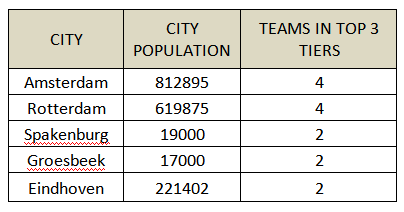
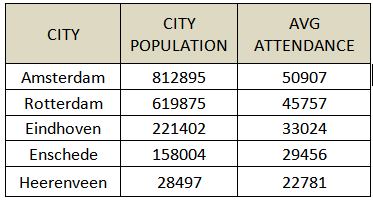
The top 5 results for each metric are as follows:
Teams per city/town in the Top 3 divisions of Dutch Football
Total Number of Season Ticket Holders per city (for main club located within)
Number of Season Ticket Holders in Proportion to Town/City Population (for main club located within)
Total Average Attendance for Main Club in Town/City
Average Attendance for Main Club in Town/City as a Percentage of Total Population
Average Attendance for Main Club in Town/City as a Percentage of Stadium Capacity
THE CONTENDERS
So let’s take a look at what this all means and who the contenders are for the title of Best Football City in the Netherlands.
Firstly let’s have a look at those cities that could be awarded the ‘Worst Football City’! There are major cities such as Amersfoort, Haarlem and Apeldoorn that don’t have professional football teams but that’s not necessarily a reflection of the football lovingness of its citizens. No, the joint mantle of Worst Football City in the Netherlands goes to Den Haag and Utrecht. These two cities are the lowest in the categories of Average Attendance per Population, Season Ticket Holders per Population and Average Attendance by Stadium Capacity (ie they have the emptiest stadia in the land). Den Haag and Utrecht are the thirdand fourth most populous cities in the Netherlands but also have higher than average incomes amongst its citizens and perhaps this explains the reluctance to support their teams.
So taking out Utrecht and Den Haag the other two big cities in the Netherlands fare very well when it comes to their football loving prowess. Certainly the Dutch city that most people relate to is Amsterdam, and not only do its citizens enjoy art, music, weed and sex but they also enjoy football, or more specifically Ajax. Amsterdammers have the largest average attendance and most season ticket holders for a football club in the land as well as almost packing out a 52,000 seat stadium every second week. Amsterdam also has four clubs in the top three divisions, although three of these clubs are related to Ajax. Amsterdam is also notionally home to the Oranje and most big matches are played in the city and when the national team does well the canals of Amsterdam are a sea of orange. There’s no doubt about it that Amsterdam is a proper football city.
Amsterdam’s traditional rival in all aspects of Dutch life is Rotterdam and Holland’s second largest city is also a mad keen football city. Its working class reputation resonates well with the simplistic roots of football and it’s no surprise that Rotterdam has more professional teams (Feyenoord, Sparta & Excelsior) than any other Dutch city. The main stadium in the city, De Kuip, is legendary in Dutch football circles but although it’s almost the same size as the Amsterdam Arena, the Rotterdammers do not fill De Kuip to the same extent. Rotterdam and Amsterdam do have the same amount of season ticket holders as a percentage of total population whilst Rotterdam’s average football attendances also shade Amsterdam’s as a percentage of total population. The Dutch National Team also plays in the city.
Not only are the big cities in the Netherlands football crazy but the provincial cities are as well and none more so than Eindhoven. This industrial city, renowned for being the home of the Philips Corporation is the fifth largest city in the country but has 2 professional teams (PSV and FC Eindhoven). It is also the smallest city to host a UEFA Cup Final since neutral venues were introduced for the Final. On the pitch its main club, PSV, is more than a match for the big Amsterdam and Rotterdam sides, but it’s in the stands where this city trumps its bigger rivals. Eindhovenaars support their teams in bigger numbers, proportionate to its population, than both Amsterdam and Rotterdam, from both a season ticket and average attendance metric. In fact over 12% of the city’s 220,000 residents are season ticket holders at PSV. So outside of the big cities football is alive and kicking and the next few cities are further evidence of this fact.
Enschede is a small city out near the German border that is home to 150,000 residents and although it only has 1 professional team that team is none other than FC Twente. Twente is the name of the region that Enschede is in and in part the team belongs more to the region than the city, but nonetheless the passion of the Enschedeers when it comes to football is tremendous. When comparing average attendance and season ticket holders, as a percentage of the city’s population, Enschede sits 2nd in the nation on both fronts. The average attendance of FC Twente (29,456) equates to a whopping 18.5% of the city’s population. It’s fair to say that FC Twente’s rise over the past decade has certainly helped whip up football passion in the city. Its small neighbour Almelo is also well represented and wins the mantle of packing out their stadium the most of any other Dutch city. Average attendance at the Polman Stadium for Heracles matches equates to 98% of the stadium’s capacity.
Before we move on to arguably the best football city/town in the Netherlands there are also a few other worthy contenders. Alkmaar, home of AZ, has a population of just over 90,000 but has double-digit percentages for season ticket holders and average attendance by population. Even some of the smaller cities in the Netherlands are very passionate about football and a classic example of this is Spakenburg. Spakenburg is a small town of 19,000 people but is home to 2 of the most successful amateur sides in the land, Ijsselmeervogels and SV Spakenburg. When these 2 sides meet the attendance at the stadium equates to almost half the town’s population. If we take a look away from supporting football to playing football then surely the small town of Groesbeek needs to be mentioned. This small rural town of 17,000 people has no fewer than 6 football clubs, with 2 of these in the top 3 divisions.
THE WINNER
When looking at the best football city in the Netherlands the places mentioned above are very worthy candidates, but there is only one clear winner and that is Heerenveen. Heerenveen is so small that it’s not technically a city and with 28,000 residents it’s only the 4 largest city in the Province of Friesland. What Heerenveen lacks in terms of number of residents it more than makes up in football passion and specifically its support for SC Heerenveen. The numbers are astounding! The average attendance of the club (22,700) equates to 80% of the town’s population. This figure is equivalent to Ajax having an average home attendance of 650,000! Furthermore the number of season ticket holders for SC Heerenveen also comes out as being 50% of the town’s population and in fact the club’s stadium could almost fit the entire town if completely full. There are many and varied reasons on why Heerenveeners love their football side so much, which will be explored in future articles, but one thing is clear that Heerenveen wins the title of The Best Football City in the Netherlands.
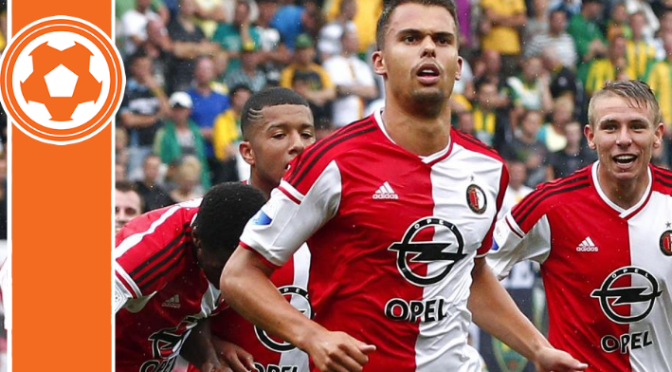
A few weeks of struggling for Feyenoord had one positive upside. The silver lining in their poor start is Mitchell te Vrede, who is responsible for five of the six goals Feyenoord has scored in all competitions. Is he good enough to be the first striker? Martijn Hilhorst does not think so…
Te Vrede started his career at AFC, an amateur club who is known for their connections with Ajax. In 2008, he was snatched away by AZ Alkmaar who saw some potential in the big striker. His first season at a professional club was partially successful, as he was selected to make his debut for the Netherlands Under-18. Although he was not performing well on a club level. He was an official member of the first squad at AZ in 2010/11 (he was already 20 years), but he did not played one minute for them.
AZ still wanted to extend his contract after a year like Mitchell had, but he decided to sign a year deal at Excelsior where he was promised to play more. It could have been a season for him to gain experience, responsibility as a first striker for a Eredivisie club. Eventually playing nineteen matches in which he scored twice, but his greater performances were in the second squad of Excelsior which was a team in combination with the Feyenoord youth. Scoring tons of goals for Excelsior/Feyenoord that season.
Feyenoord’s Technical director Martin van Geel then decided to give him a chance – a free, scoring striker behind your first striker. Who does not want that? During the 2012/13 season, Graziano Pellé made jaws drop all across the Netherlands with his staggering amount of goals so, Te Vrede only played in one match that season.
The season afterwards (last season) was one more successful for Mitchell. Due to injuries, match bans from Pelle he was given more minutes to show off his icy veins. He played in fourteen matches (eleven of them not 100%), playing mostly a substitution and he then managed to score on four occasions.
Not bad, but surely not enough to be the first striker after the departure of Pellé to Southampton. Feyenoord have been looking for months now to buy a top class striker in which they did not succeed in yet. Manchester City’s John Guidetti won’t be their new forward and Wolfsburg’s Bas Dost does not seems to be eager for a return to the Eredivisie. However, they still need a striker.
Yes, he did score three goals in the same amount of Eredivisie matches this season, but looking more detailed to him you could clearly see that Te Vrede is simply not good enough for the way Feyenoord plays. His first-touch is not brilliant while his passing this season haven’t been impressive (69%) and in three matches he only managed to create one single chance. It’s a bit unfair to compare him with Pellé, but the Italian created 57 chances in 28 matches previous season – an average around two per match.
All in all, that is the problem with Mitchell te Vrede. He isn’t capable of controlling the ball and see what is happening around him. His technical abilities are not the required level you would expect from a striker at such a big club. For example, Lex Immers is invisible in the ‘number ten’ position due to constant bad decision-making from Te Vrede.
The opinions around him did shift around because of his great start this season, but it is obvious that he is not the player who will make your team better. Feyenoord did make some bad decisions on the transfer market in the past. So they have to be careful with their next move. With all the news around Feyenoord it is hard to predict if they even will buy a striker. Their focus seems on a replacement for Jordy Clasie who will leave for Southampton or FC Porto.
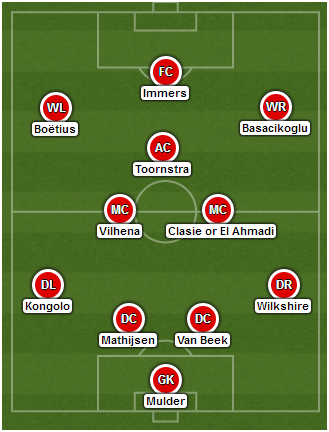
A internal solution could be the following: Mulder, Wilkshire, Van Beek, Mathijsen, Kongolo; Clasie/El Ahmadi*, Toornstra, Vilhena; Basacikoglu, Immers, Boetius.
* Most likely the replacement for Clasie.
So in a 4-3-3 formation with new signing Jens Toornstra as a ‘number ten’ and Immers as a striker. Feyenoord is known for their brilliant youth and the departure of Pellé isn’t one to panic about. In the price range Feyenoord are currently in they could not buy a striker who is significantly better than Mitchell te Vrede, but in my opinion this seems like a great solution and that even without over-paying on the transfer market, because there is only one week left.
Feyenoord slowly becomes the team they used to be. Footballers such as Schaken, Vormer, Kazim-Richards and Te Vrede are perfect bench material. And with the transfers they already did it is inevitable that they will be a serious contender with Ajax and PSV to become champions.
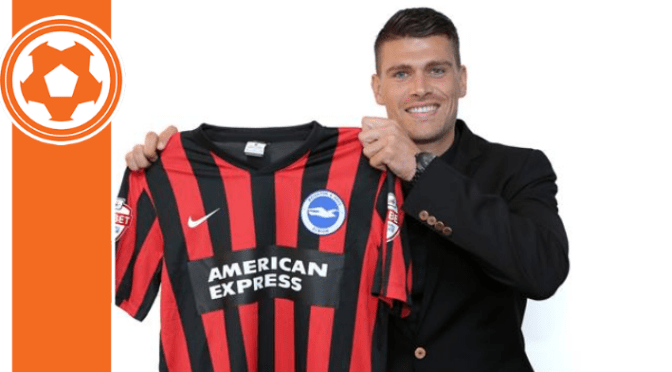
This past Tuesday night, Brighton and Hove Albion handed a debut to midfielder Danny Holla at Elland Road in a 2-0 win over Leeds United in the English Championship. However, in Brighton not much as known about the tenacious Dutchman, Will Burns is here to tell all…
Danny Holla is only 26, however it feels he has been around Dutch football for a long time after making his debut at FC Groningen aged 18 with six appearances in his first season. With over 100 Eredivisie starts, he will bring a lot of big game experience to Brighton this season in the Championship.
I have primarily been watching Holla over the last two seasons at ADO Den Haag where the battling midfielder has been a leading figure in the side notoriously known for their participation in relegation battles, year after year. Over the last two campaigns, Holla helped Den Haag be safe consecutively making it into 9th position just outside the European playoff places.
Although he is classed as a defensive midfielder, Holla will surprise a few people with his attacking prowess. With a great right-foot from long range he found the net 14 times in 54 appearances in Den Haag and I think in the Championship he could find more. ADO were disappointed when trying to secure Holla to a new contract in the summer, however he decided to continue his career elsewhere.
The hard-working 26-year old has a great knack in gaining the interception and controlling the play. When he has the ball, he is very comfortable and with a strong upper body, he can shrug off the majority of challenges. His stocky physique is ideal for the English game, as he loves to stick his boot and succeed in the tackle. He will protect the defence as well arriving late on the edge of the area, to combine with the attacks to provide goals or assists. The forwards at Brighton will love being able to link up with Holla with his varied range of passing capability.
After his successful debut on Tuesday night, Holla spoke to Brighton’s official website Seagulls.co.uk: “It was good to get out on the pitch again. I haven’t played a game for three months and I’m a little bit tired now, but it’s a great feeling to get the three points.
“Everything has happened really quickly. On Saturday I went to the hotel with the team, before training on Sunday and Monday and then helping the team to victory on Tuesday.In the first-half, especially in the first 30 minutes, I was pleased with how I played and felt I showed a good range of passing.
“I still have to play a few games to get back to full fitness, so it was good to be involved last night. I hope I can play on Saturday and if I play in the next two or three games, then I will be fit. I hope I can play a lot of games. With this team we want to play good football from back-to-front. I want to help the team play good football, win games and score a lot of goals.”
I can see Holla fitting in very well at Brighton and possibly help the Seagulls fly up the league.
Jos Boesveld returns to discuss the amazing talents of PSV Eindhoven winger Memphis Depay.
What makes the Eredivisie our Eredivisie? Is it the combination between young talents and footballers who are at the end of their career? Is it the constant battle between Ajax, Feyenoord, PSV, FC Twente and maybe even Vitesse and AZ? If I had to make a choice, I would say the Eredivisie stands for a few exceptional talents every season. Kevin Strootman, Christian Eriksen, Dries Mertens, all very decent players who are being respected at their new clubs.
And we’ve got one again. His name? Memphis Depay.
I reckon he is the best attacker in the Dutch competition right now. Maybe even the best player overall, but then there’s still Daley Blind and that’s a different story for a different time. Depay shows his skills every week. If even I can see that, how will scouts, who are being paid to watch a lot of football players, look at Depay?
His first big test in the new season will be next Sunday, when he faces Ajax with his PSV. But in his last game against NAC Breda, he showed that little bit extra what makes a player interesting for bigger clubs. It’s no coincidence that it was first ‘only’ Tottenham Hotspur that was linked with Depay and last week the name of Juventus came to my ears.
With two beautiful free kicks he helped PSV get a victory over NAC Breda. It’s moments just like that which decide if a rumour is happening or not.
So all that I’m asking is simple: Memphis Depay, please stop performing in the upcoming matches. Don’t make us lose one of the biggest Dutch talents so soon. I want to enjoy the Eredivisie, with all of her talents. That’s what makes us special, that’s what gives us attention.
Petrus Ferdinandus Johannes Pierre van Hooijdonk or Aziz Pierre, as he is known to Turkish football fans, is yet another Dutch player who has made a huge impact wherever he has played. Not only was he a prolific striker, especially dangerous at free-kicks, but at a height of 6-foot 4-inches not easy to man mark or compete with in the air writes Andries Oosterveen.
Van Hooijdonk was born in 1969 in Holland in the small town of Welberg, which is located near to Steenbergen. As a youngster, he was a big fan of NAC Breda but began his life as a footballer by playing for the youth team of SC Welberg. Eventually after attending an open day at NAC, he was spotted by the club scouts and signed for them where he would play as a right-sided midfielder. Three years later at the age of 14, he was released and played amateur football as a striker for five years, two of which were in the actual first team.
In 1989, RBC Roosendaal were having financial problems and highly reliant on youth players. It was here that Van Hooidjonk got his first chance initially with appearances off the bench, where he would score goals. As confidence grew in him and RBC´s main striker was suffering with injuries, Van Hooijdonk ended up playing two seasons there between 1989 and 1991, and would go on to play a total of 69 games and scoring 33 times. His boyhood team NAC Breda, eventually took notice and in 1991 he signed up without a second thought for NAC Breda, for an astonishing price of four Dutch Guilders.
At Breda, Van Hooijdonk would play there between 1991 and 1995 for 115 games and score 81 goals. He had extra determination to show them what he could do and had not forgotten being told he was not good enough years before whilst playing in their youth teams. He helped the team gain promotion to the Eredivisie and set a goal scoring record of 11 consecutive games whilst also receiving his first international call up. All this was to be rewarded with a transfer to Scottish footballing giants Glasgow Celtic in 1995.
At Celtic, Van Hooijdonk´s incredible goal scoring would continue. In Britain, he was not well known but by the end of his time at Celtic it would be far from that. He played for Celtic between 1995 and 1997, making 84 appearances and scoring 52 goals. Not a bad way to introduce yourself to Britain. Sadly towards the end of his time there he did not have a good relationship with Celtic owner Fergus McCann and a transfer to the English club Nottingham Forest quickly followed in 1997.
Despite Nottingham Forest battling against relegation his two year spell there between 1997 and 1999 led to him making 71 appearances and scoring 36 goals. Despite this, he was not able to stop the club from being relegated and his decision to go on strike after certain promises were broken to him in regards to investment in the team did not go down well with fellow players, fans, the media and the club’s owners. After finally being allowed to leave he decided to return to Holland.
Between 1999 and 2001, Van Hooijdonk played for one season at Vitesse Arnhem and one season in Portugal at Benfica. Both periods were successful for him and allowed him to shake off the bad reputation he had achieved whilst at Nottingham Forest. At Vitesse, he played a total of 29 games scoring 25 and at Benfica playing 30 games and netting 19 times. As with Forest, internal problems within the administration at Benfica forced him into having to move. So in 2001 Van Hooijdonk signed for Dutch giants Feyenoord and brought with him, his trademark free-kicks and superb goal to game ratio. Between 2001 and 2003, he scored 52 goals in 61 games. One of the most memorable games in which he had a great influence on with his free-kicks was the 2002 UEFA Cup Final which was held in Rotterdam against Bundesliga side Borussia Dortmund. He scored two special goals in the final which would go down in Feyenoord folklore. However as still is the story today, Feyenoord´s financial position was not nice reading and they were forced to sell him to Fenerbahce in Turkey.
Until then Van Hooijdonk did not stay at any one club for long but at Fenerbache he was able to win his only two league titles and his figures of 32 goals in 52 games between 2003 and 2005 earned him the nickname of Saint Pierre or Aziz Pierre with the Fenerbahce faithful. He was now slowly coming to the end of his career and in 2005 returned for the final time to Holland where he had two short spells with NAC Breda, scoring 5 goals in 17 games before leaving in 2006 and finishing his career at Feyenoord where he played until 2007, 37 games and scoring 8 goals.
Internationally he made 46 appearances for Holland and scored 14 goals. Wherever he went he made an impact and clearly is one of the best strikers Holland has ever produced. Besides commentary work it is good to see that he is not lost from the game and is strongly involved with coaching youngsters at Feyenoord’s Varkenwood Academy in Rotterdam.
Click on Andries name above to follow him on Twitter.
PEC Zwolle’s on-loan Czech attacker Tomáš Necid announced his arrival this past Saturday creating the winning goal in a 2-1 win over FC Dordrecht in the last kick of the game. Will Burns spoke to two Czech football experts to get the lowdown on the Blauwvingers new addition.
Tomas Necid – image copyright Henry Dijkman of PECZwolle.nl
On Saturday evening, PEC Zwolle were down to ten-man and Eredivisie new boys FC Dordrecht had equalised with ten minutes to go. The 3,800 fans inside the GN Bouw Stadion were urging the home side on and Zwolle were against the ropes. Necid emerged with his strapping 6ft 3 inch figure as goalkeeper Diederik Boer launched a long punt forward. The big Czech shrugged off any challenge as he collected the loose ball and ran into the box. A powerhouse of a man, he surged into the area and with great awareness, checked back for Mustafa Saymak just arriving on the edge of the box. Saymak recieved the inch perfect pass and blasted home the winner. The 150 Zwolle travelling fans in the south-east corner of the stadium exploded. Saymak took the plaudits, however Necid earned instant respect and created a buzz for the local press.
Total Dutch Football searched for some expert insight on the player and firstly we asked Czech football expert Chris Boothroyd of the excellent CZEFootball.com website for his opinion…
For Necid, he really will be hoping that it’s third time lucky. Once seen as one of the brightest prospects in Czech football, this generation’s Jan Koller but more adapt playing on with the ball at his feet, the 6ft 3 striker is now in the last chance saloon as injury and poor form has blighted his career in recent years.
Signed by CSKA Moscow in 2009 after a breakout calendar year in his native Czech Republic, Necid quickly settled into his new Russian surroundings and became a consistent presence at the tip of CSKA’s attack and an international regular. To use the cliché, the world was at his feet: still young and with a raw talent that was being refined with every passing season, Necid looked set to become one of the most prolific Czech forwards in history. But in June of 2011 against Terek Grozny, just eight minutes after coming on as a second-half substitute, he ruptured his cruciate knee ligaments.
His return, sadly, did not last too long. Despite making his way back into the fold at CSKA Moscow and receiving a surprise call up to the Czech Republic squad for Euro 2012, his knee flared upon again and yet another extended period out of action beckoned. The best part of eighteen months had been lost, as has his career with the five-time Russian Premier League champions.
Since making his second comeback he has been forced into a nomadic lifestyle in order to secure first-team football, but his two temporary stints so far have offered little to suggest that he will be able to recapture the form and scoring touch that saw him move for a reported £4m some five years ago now. A short stint with PAOK was followed by another six-month loan, this time to boyhood club Slavia Prague where it was hoped that he would be able to bully opposing defence just as he had done years earlier when he helped the Vrsovice club to their second successive Czech league title. Sadly, with Slavia in turmoil Necid failed to offer much, if anything, and recorded just three goals in fifteen appearances in what was a disappointing spell back in his homeland.
With his contract with CSKA supposedly running out next summer, his third loan spell is likely to determine his long term future. It’s unlikely that he’ll remain in Moscow, but after two poor spells in Thessalonki and Prague he really needs to perform well with Zwolle if he is to salvage his career, especially on the international front. Strong and capable in the air, Necid should work well if he’s supported by those around him.
In addition, we asked Czech football journalist Karel Haring of ISport.czand here’s his thoughts…
Necid is not the kind of player who you could call lucky, if he would have been lucky, he would probably lead the attack of CSKA Moscow now or another one of Europe’s top sides.
He was only 19, when he shone in Slavia Prague, the club where he had grew up. During 16 league matches in the 2008/2009 season, he scored 11 goals and Necid confirmed the reputation he had.
He is natural goalscorer with good position in penalty area, strong in the air, confident and tough even though he faced much more experienced defenders. That is why CSKA Moscow paid almost €5 million for him. Having scored 16 goals in first two seasons, his importance in the Russian side was growing bigger but in June 2011 he suffered a serious knee injury which ruled him out for nine months. This was not the end of his nightmare, as after EURO 2012, he underwent another surgery and did not return until May 2013.
Last spring, he spent a spell on loan at Slavia and he only manage to score three times but it was not only his fault. Slavia went through very tough period and were almost relegated.
Necid is 25 now and Zwolle have signed on loan a really good striker who has a big motivation to rise again. As for the following matches against Sparta, the Czech international forward will have special motivation as Sparta are eternal rival of his beloved Slavia. If he helps to eliminate them, it would be a sweet start of his another attempt for real comeback.
CONCLUSION
It looks like Zwolle could have themselves a profilic striker if he can find form and stay fit. Many strikers have appeared in the Eredivisie to revitalise their careers (Graziano Pelle for one) and Tomáš Necid has all the credentials to fire Zwolle to the next level.
There have been many young stars who have failed to make the cut at Chelsea over the years – Kevin De Bruyne and Daniel Sturridge to name just two – but, and whisper it quietly, that is a pattern that could be about to change with Gullit-lookalike Nathan Aké writes Sam France.
The young defender, 19, has turned down numerous loan offers and has made several first-team appearances, evidencing a will to succeed and to better himself that belies his precocious youth. He signed a new contract with the Blues last summer, so his future is guaranteed until 2018; with new addition Kurt Zouma, he could form part of a fearsome future defensive lineup.
Having started his career with ADO Den Haag, Aké made the step up to Feyenoord as a twelve year old and remained there for much of his development. Varkenoord, the Feyenoord youth academy was voted the best youth set-up in the Netherlands during Aké’s time there, and some of its recent graduates include Robin van Persie and Norwich’s Leroy Fer. He moved on again after four years at the club having broken into the Dutch under-15 and under-16 squads, and has continued to represent his nation at every youth stage up to the Jong Orange (under-21), however he is yet to receive a full international call-up.
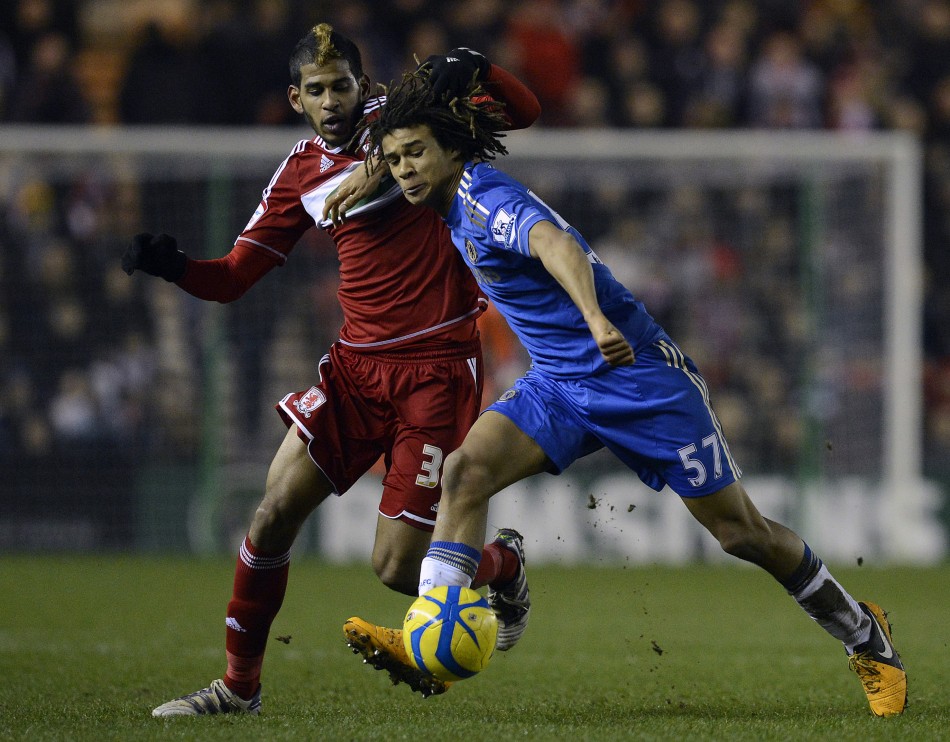
Aké’s first Chelsea start came against Championship side Middlesbrough in last year’s FA Cup, and it took some a while to realise that the wild-haired youngster in the centre of midfield was a teenager rather than Brazil’s David Luiz. It was not just a matter of the hair; Aké’s performance was composed and fluent, and although he did not set the world on fire, in his position that is just what you want – he was barely noticed, but passed the ball like a veteran and constantly broke up the attacks of a pacey, highly-motivated young team at a packed Riverside Stadium. He was entrusted with the same position in the Europa League quarter-final against Rubin Kazan, so then-manager Rafa Benitez must have had a great deal of faith in the youngster. His first European appearance ended in defeat, but an aggregate victory eventually saw Chelsea lift the Europa League trophy – Aké was an unused substitute in the final.
He clearly has a bright future, but there are some question marks about his best position. Throughout his youth, he has been mainly used in a purely defensive capacity, but given his size – only 5’11” – he may not be suited to the physical nature of being a Premier League centre-half. He has been deployed on the left of defence, a position soon to be made vacant by either the departure or possibly retirement of Ashley Cole, but his passing and reading of the game would be wasted out wide. It seems that his best position is the ‘Makelélé’ role, but it is a position occupied by Nemanja Matic and sometimes Ramires. Getting into this Chelsea side will be no mean feat.
With his position already well-filled, a loan spell would seem a good option with the window fast approaching. Vitesse Arnhem and Middlesbrough are Mourinho’s preferred destinations with links with both clubs, but Aké has reportedly demanded his choice of club. He clearly has the confidence and the mentality to make it at the top, but does he have the ability? At this point in time, there are few who would bet against him.
Earlier this week, Heerenveen coach Dwight Lodeweges signed the highly-rated Swedish winger Sam Larsson from IFK Göteborg for around €1.4m. Will Burns spoke with Swedish journalist Markus Wulcan of Aftonbladet about the 21- year old starlet.
New signing Sam Larsson ready to take Eredivisie by storm – image courtesy of sc-Heerenveen.nl
After selling Bilal Bascikoglu to Feyenoord earlier this month, Lodeweges went out shopping for a new creative force to provide opportunities for new Danish striker Thomas Dalgaard. On Wednesday evening, it was announced that Larsson had swapped the blue and white stripes of Allsvenskan side IFK Göteborg for the blue and white stripes of De Superfriezen.
Swedish writer Wulcan predicts big things for Larsson and expects the young Swede to take to straight the Heerenveen fans hearts. Many pundits in Swedish football are angered by the low amount that Göteborg received for Larsson and think that his value could rise up to €10m within a few seasons.
Larsson began his career at the small club of IK Zenith before joining Swedish giants Göteborg in 2010. In this teens, he was also a great floor-ball player and has said that he “could have been one of the three best players in the world.”
Larsson is primarily a right-footed left-winger although Markus thinks he is better utilised behind the striker: “In my opinion, Larsson’s best position is as a second striker, a number ten. He has a very good sense of playing with his excellent technical skills. He likes to dribble and is good one and one. The Heerenveen crowd will love him.”
Wulcan states that Larsson has progressed so much over the last year, but at just 21 there is still improvements to be seen from the new Heerenveen signing: “Sam has been much stronger this year and more consistent. The hard work in the gym did pay off and he used this to his advantage. But of course, he is a young guy and can improve a lot of things. He could be more active over 90 minutes, not just a few good flashes of skill.”
Wulcan continued to say, although he was possibly the most skilful player in the Swedish top flight last term, he could improve in front of goal: “He could also score more goals and contribute with more assists and become a more determined player and the left foot is not the best.”
Heerenveen is a well known club for nurturing great footballers like Jon Dahl Tomasson, Ruud van Nistelrooy, Klaas-Jan Huntelaar and more recently Alfred Finnbogason. Marcus suggests that this move for the young Swede could be an excellent move for him: “I think the Eredivisie is a perfect step for Larsson, he is a future Swedish star and will be soon ready for the national team, just give him some time.”
By the sounds of things, Sam Larsson could prove to be one of the bargains of the summer.
He has put our country on the International Football map
Henk Kesler, KNVB Director 2000 – 2010
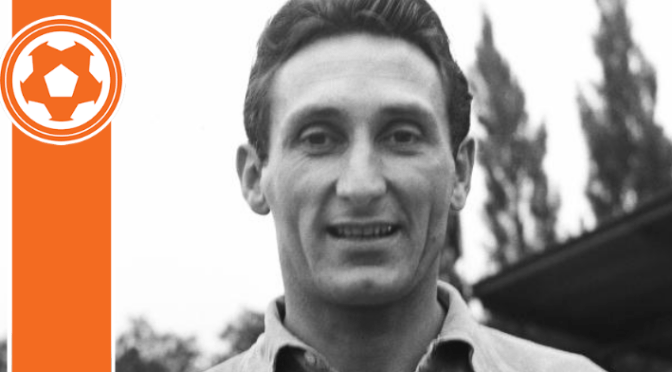
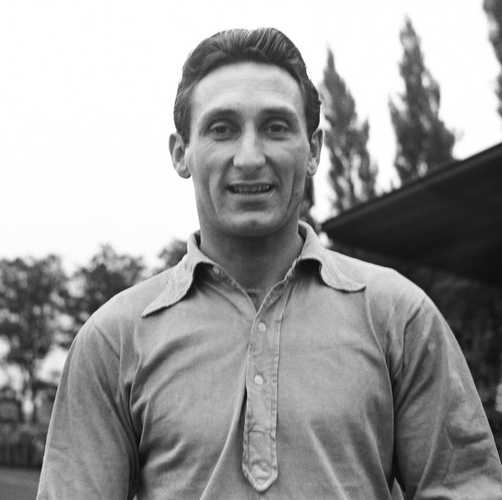
Holland throughout it’s footballing history is blessed in having many special and talented players who have always made a difference to each club they have played for. Faas Wilkes was a success on and off the field in each team and country he played in, and along with Gerrit Keizer, Beb Bakhuys and Gerrit Vreken were responsible for putting Holland on the map football-wise. In order to achieve this Wilkes had to leave Holland due to the strict rules of the Dutch football association KNVB who did not allow professional players to play in Holland and were against any player moving abroad to play.
Between 1947 and 1964 as a striker, Faas Wilkes played for a variety of teams. In Holland, he played for Xerxes Rotterdam, VVV Venlo and Fortuna 54. He played a total of 183 games and scored 79 goals. His talent was obvious. Faas was very skilful, fast and comfortable with the ball. He enjoyed beating several players at once and was clinical in front of goal. Despite the five-year ban he received from the KNVB for deciding to move abroad, Wilkes ended up playing for Levante, Valencia, Torino and Inter Milan where his goalscoring exploits continued. However, it is at Valencia and Inter, where even today, he is still remembered with a lot of affection and photos of him can be found in the clubs museum. At Valencia, he became the first foreign idol of the club.
Between 1949 and 1952, Wilkes played for Inter where he played with legends such as Benito Lorenzi, Amedeo Amadei and Istvan Nyers. In 95 games, he scored 47 goals. Despite all his goals and the quality of the team he played for, Inter and Wilkes were unable to wrestle the Serie A title from Juventus. In his last season, he managed 7 goals in 23 games and it became clear that injuries were starting to take an effect. Despite the problems of a knee injury, Wilkes decided to sign for another Italian team who were rebuilding at the time. In 1952, Wilkes was approached by Torino who were building a new team at the time and despite the knee damage, he decided to sign for them where he stayed until 1953 and only managed to score once in 12 games.
In 1953, Wilkes moved to Spain and joined Valencia whom had expressed an interest in him after playing a friendly earlier against Torino. Along with his stay at Inter Milan, his time at Valencia would also be a huge success. Wilkes played a total of 62 games and scored 38 goals which till today, cemented his place as a hero in the club’s history. It is at Valencia where Wilkes would win his only ever trophy, the Copa Del Rey or Copa del Generalisimo as it was known then. Valencia beat a Barcelona side led by the Hungarian great Laszlo Kabala 3-0 but due to rules which did not allow foreign players to play in the final he had to watch from the sidelines.
In 1954, football finally became professional in the Netherlands and when his five-year ban had been spent, Wilkes played for the national side again and in a special team boasting the likes of Kees Rijvers and Abe Linstra. It is his record for Holland that Faas Wilkes is well known for and has his rightful place in Dutch footballing history. Wilkes scored an amazing 35 goals in 38 goals, which was a national record until Dennis Bergkamp broke it 36 years later in 1998.
Wilkes was now 33 and combined with continuing problems with injuries he decided to return to Holland in 1956 and joined Limburg football team VVV Venlo where he played for two seasons between 1956 and 1958. He played a total of 64 games and scored 23 goals. VVV Venlo were only able to reach seventh in the league and in the end, Wilkes decided to leave his homeland again and return to Spanish football, joining Levante.
At Levante, Wilkes played one season between 1958 and 1959 and played a total of 34 games scoring 20 goals. Considering his age and injury problems, this was a good goal-to-game ratio. Despite this, Levante were not able to gain promotion and lost the playoff to rivals Las Palmas. Wilkes was 36 and returned finally back to Holland where he would finish his playing career at Fortuna 54 where he would play for three seasons between 1959 and 1962. He played 88 games and scored 33 times. However before retiring, Wilkes would return to play for his first team Xerxes Rotterdam until his retirement in 1964 at the age of 41.
Faas Wilkes was one of Holland´s first international stars and played at a time when football was in a very different period of it´s history compared to today. Many cup competitions were still in their infancy, to many it was still an amateur game and Holland was seen as a minnow of the game.
In Holland Faas Wilkes received in 1983 from his hometown of Rotterdam the Freedom of the City in 1983 and in 1995 he received the Freedom of the City of Milan in 1995. Johan Cruyff is even known to have called Faas Wilkes “my idol”.
Click on Andries name above to follow him on Twitter.
Jos Boesveld makes his debut for Total Dutch Football explaining his excitement when he heard the news of Samuel Eto’o linked with a move to Dutch champions Ajax.
When I first heard the news I was shocked. Almost literally, because I wasn’t thinking straight when I returned to working in our house with the electrics. Maybe stunned is a better word. Samuel Eto’o, striker, world class player and god, could complete a transfer to Ajax.
I always like to find the original source of the news. This time, it was UK tabloid, The Sun. They describe their news as ‘The Best for News, Sport, Showbiz and Celebrities’. News and sport comes first, but showbiz and celebrities are pretty close-by. I’m never sure what to think of such news. So after my first reaction I had to explain to a lot of friends that this is a too-good-to-be-true-story and so on.
But still, wow. Even if there is just a small chance that Eto’o will come to Amsterdam, it would be amazing. I found myself thinking about some man on man combat in the Eredivisie, where Ramon Leeuwin, currently playing for FC Utrecht, would have to take on this beast of a striker. Last season, as Leeuwin played with ADO Den Haag against FK Tauras Tauragė in the Europa League qualifications, Eto’o thought it was funny to score a hat-trick against Manchester United.
I was doing my work just as usual, but Eto’o kept my mind busy. I did not realise it, but he was. Maybe he was the only reason I checked my newsfeed late at night. I immediately saw updates about the Cameroonian legend. This time it wasn’t an English source, De Telegraaf and the Voetbal International both said that Ajax was indeed talking with Eto’o and his management. Mind was, and still is, blown.
The small chance just became a whole lot. I trust both Dutch sources, because not only they have that reputation, they both had quotes from Marc Overmars, who handles transfers at Ajax. Wow. Did I mentioned that Eto’o has played over 500 games, in which he scored a little bit less than 300 goals?
Of course I do understand that bigger clubs than Ajax are interested in Eto’o, who is a free agent now. I do understand that Ajax cannot pay his salary and I do understand that outsiders laugh about our Eredivisie. However, I also know that Ajax is participating in the Champions League and that their goal to finally survive the group stage. With Eto’o, this can be realised. Oh yeah, and Ajax will be champions in the Dutch Eredivisie for the fifth time in a row. I feel like six years old again. In Holland we say ‘Een kinderhand is snel gevuld’, which is best translated as the fact that young children are easily satisfied. Apparently, only the name Eto’wow can satisfy me.
When one think’s of Dutch football both past and present it is usually the same players and managers names such as Cruyff, Michels, Neeskens, Van Hanegem and Van Basten for example that come up. They are often talked about for special moves, goals, trophies won or a magnificent pass in a game. Andries Oosterveen says what about remembering, respecting and acknowledging a man who created a system some thirty years a go which changed the way the game was being taught and till today is being used by coaches all over the world at all levels of the game?
Wiel Coerver is a very strong candidate for being Holland’s greatest and most influential footballing export. Known as the “Einstein of football“, Coerver was born in 1924 in the town of Kerkrade in Limburg. He managed several football clubs between 1959 and 1977 including teams such as Go Ahead Eagles, Sparta Rotterdam, NEC and the Indonesian national team. But it was not until the 1970s and with Feyenoord that he achieved his most famous success where in his two year stay he won the UEFA Cup in 1974 against Tottenham Hotspur and the Eredivisie title.
The coaching method that Coerver developed in the 1970´s has been taken on worldwide and grown thanks to Alfred Galustian and Charles Cook. Many well known coaches have and still use the methods and include household names such as Bobby Robson, Alex Ferguson, Ricardo Moniz and Rene Meulensteen for example. It is now one of the most widely adopted training methods in the world. To Coerver football was more of a science than an art.
WHAT IS THE COERVER METHOD?
During the 1970s Will Coerver took inspiration for designing this coaching system by spending hours and hours studying some of the world´s greatest players of the time especially Pele and Johan Cruyff. This led him to believe that whilst some players are naturally born with great skill levels others can be taught from a very young age such skills but in a structured academic way. By dissecting the moves of great players Coerver made it possible to teach such moves to young players.
Training systems include a variety of aspects such as ball mastery, the Cruyff Turn, the step over, the feint, 1 vs 1, 2 vs 2, 3 vs 3 and 4 vs 4 situations, and learning how to trick a defender into thinking you will do one thing and you do another. Being extremely comfortable with the ball was essential. The whole idea behind the system was to catch defenders off guard as one cannot always rely only on outrunning an opponent as if you are being marked very tightly you will need to have a way to get out of that situation for example. Passing drills, receiving drills and a strong emphasis on speed of play fast counter attacking was also focused on.
Sadly within Holland, Will Coerver despite his obvious strong and passionate dedication to the game was never used in any aspect by the KNVB. Such a role would have been perfect for him and the game as a whole in the country. Despite not getting the respect he deserves with football historians his legacy lives on and his influences are clear to see.
Will Coerver – A great Feyenoord coach and an amazing planner and thinker of the game. I will leave it to you the reader, Holland’s most influential football export?
Click on Andries name above to follow him on Twitter.





















 At Celtic, Van Hooijdonk´s incredible goal scoring would continue. In Britain, he was not well known but by the end of his time at Celtic it would be far from that. He played for Celtic between 1995 and 1997, making 84 appearances and scoring 52 goals. Not a bad way to introduce yourself to Britain. Sadly towards the end of his time there he did not have a good relationship with Celtic owner Fergus McCann and a transfer to the English club Nottingham Forest quickly followed in 1997.














 totaldutchfootball.com