Category Archives: FEATURE

AFC – Amsterdam’s Oldest Club

Amsterdamsche FC logo.pngEindhoven has one, Rotterdam has two, and in fact every large footballing city across Europe has at least one. That is until you turn your eye to Amsterdam because on the face of it they have none.

What am I talking about? Answer a second club, a club who live in the shadow or share the spotlight with their near neighbours. Amsterdam though only has room for Ajax.Despite being the largest city in the Netherlands it only has room for the juggernaut that are the Godenzonen.

However when you thrall your way through the Dutch league system you do find another. A tiny club who can lay claim to being the oldest still in existence in the city having been founded five years before there illustrious city residents.

AFC Amsterdam were founded on the 18th of January 1895 after a group of young men met in the basement of a house on the Koninginneweg, a street in the southern part of the city. The name Amsterdam Football Club was promptly chosen and the clubs 125 year journey was about to begin.

In October the following year the club decided on the Red and Black colour scheme, in homage to the city that they call home, they still wear to this day. Funnily enough though it wasn’t until two years after AFC’s foundation that they entered an official competition having spent their formative yearsplaying friendly after friendly.

The competition they did enter was the second division of a league run by the Amsterdam FA. In the end the movement to competitive football completely backfired and very nearly brought about the destruction of the club.

In their very first campaign the team only picked up three points from 12 matches, finishing rock bottom after only scoring nine times whilst conceding a hefty 69. The results proved such an embarrassment to some club members that at the end of the year assembly a motion was put forward to change the team’s name.

The proposers felt that there was now too many negative connotations to go with the clubs moniker and that they had been reduced to a laughing stock. However the motion was voted down by the 42 members of the club.

The decision to retain their same identity eventually bore fruit as results on the pitch slowly began to improve and reach respectable standards. In 1906 the club won its first title, infuriatingly for them though they were denied promotion on bureaucratic grounds by the AFA.

Undeterred they came back and won the league again the next year. However again promotion wasn’t forthcoming. This time due to solely football related matters, as AFC went down to Leiden Ajax over two legs in the play-off.

A little over eight years later they finally achieved that long awaited promotion and with that came the onset of perhaps the most successful period in Amsterdamers long and vibrant history.

The season following promotion the club remarkably upset the odds and managed to win Division 1E class B and earn themselves a shot at the national Dutch title. Unlike today where there is only one league and the team at the top are crowned champions, back then the top flight was split into numerous separate groups with the winner of each one advancing to the final championship group.

As such AFC were joined by Be Quick, Go Ahead, Willem II and none other than Ajax. Sadly for AFC the title would remain elusive, though they did give account of themselves. Against their city neighbours they only went down by a single goal having been four-nil down with only ten minutes of the match remaining.

The Red’s as they had by now become known went and achieved the seemingly impossible again the next season, 1918/1919, once more winning their regional division and earning a crack at national honours.

Yet again though Ajax stood in the way and while the city’s most famous club would win the league for the second year in a row AFC achieved something arguably even sweeter. In front of 20,000 people the club from the south of the city overawed Ajax and came away with a staggering two-nil win. To this day it remains one of the biggest results achieved by the club.

The golden era alas was not here to stay and with the calendar turning into the 1920’s the club entered almost terminal decline. Large debts incurred dragged the team down and relegation was not long in following.

AFC were even forced to uproot and move their home to another part of the city, this in turn saw an out flux of members. The club had reached its lowest ebb, with survival now being the main objective.

Like any prized fighter though it is near impossible to knock them to the canvas for too long. After nearly 20 years in the doldrums they emerged the other side unbroken. In 1943 the won the AROL Cup beating AGOVV two-nil in the final.

With the 1950’s came the introduction of professional football to the Netherlands. Nonetheless AFC decided to maintain their amateur status.

AFC has elected in the amateur spirit to continue playing as it has done the past 60 years.”

The 60’s brought about renewed success for the club as they won regional amateur titles in 1961, 1963, 1967 and 1969. Much like after their previous successful period at the start of the century however an era of stagnation was to follow during the 70’s and 80’s.

In 1995 the club celebrated its centenary with a match against the Johan Cruyff managed Barcelona. Today the club currently plays in the Topklasse Zondag, the third tier of Dutch football, with their last success coming in 2010 with victory in the Hoofdklasse.

Currently managed by Stanley Menzo, a six time internationally capped goalkeeper with the Netherlands, the club as of near the end of April sit 11th in the 16 team Topklasse Zondag.

Many may think that there is only one club of note in Amsterdam, but they would be wrong, while Ajax will always monopolise the limelight AFC will carry on their 125 year history. For they are Amsterdam’s oldest club and not even the mighty Ajax can take that away from them.

Name-KevinNolan

Click on Kevin’s name above to follow him on Twitter

Ryan Babel – The Forgotten Talent

“Thierry Henry is an idol for me, I used to watch him a lot on the TV.”

It may be crazy to think now but the player who uttered those words was once considered another Henry in waiting. This player seemingly had the world at his feet but for one reason or another in never clicked.

Ryan Babel was born on December 19 1986 in Amsterdam. Like many in the city he grew up with a passion for football. At a young age he joined his local youth side SV Diemen before moving on to represent Fortius Amsterdam.

In 1997 he tried out for Ajax and a place in their famous youth academy. However despite making it as far as the first selection round his initial attempt proved unsuccessful. Undeterred Babel came back the following year and this time made his mark.

Blessed with fast and explosive pace coupled with lashings of skill alongside plenty of strength and just enough aggressiveness, Babel soon made a name for himself within the Ajax set up. At 15 his talent had developed to such a level that the club organised one-on-one sessions with Marco van Bastan for him.

Van Basten himself had only just qualified as a coach and the club felt the two together would bring out the best in one another. Whatever Babel did in these get together’s the former Dutch maestro was clearly impressed.

“He has all the potential to become the next Henry, the pace, the movement, finishing, feel for the game – it’s all there.”

That wasn’t all Van Basten continued to enthuse about this potential Dutch prodigy, “If he keeps developing and improving there is no saying what he might achieve.”

While Van Basten would eventually move on Babel stayed put. Two months after his 17th birthday he made his debut in the Ajax first team against ADO Den Haag. The Godenzone ran out comfortable four-nil winners on the day.

A new talented generation of Dutch players was also emerging around this timeframe that included the likes of Robben, Van Persie, Sjnieder, Van Dar Vaart and Huntelaar. Babel although younger than the rest was considered by many in the Netherlands to be at the forefront of a new golden generation.

13 months after his Ajax debut, Babel was making his first appearance for the national team. He soon became the countries youngest goal scorer in 68 years with a strike against Romania.

By the time the u21 European championship rolled around in 2007, Babel was an old hand at this international lark having already played 14 times for the senior side. Nonetheless he did his job for the under 21’s inspiring them to victory in the competition.

It wasn’t long before clubs with money to burn started sniffing around this prodigious talent. Rumours abound that Premiership side Arsenal were all set to make an offer. Babel himself even spoke about how it would be an honour to play under Arséne Wenger.

However he was forced to backtrack slightly on those remarks when in fact it was fellow English club Liverpool who agreed a deal with Ajax to sign him. Babel was Merseyside bound, in a deal that would see him join the Reds for a substantial fee in and around £11.5m.

The 2007/08 season his first in England started well for Babel. Former Reds defender and well known TV pundit Mark Lawrenson immediately compared him to another former Anfield great in the shape of John Barnes. Kenny Daglish was also said to be a fan.

Babel’s transition into the English game appeared to be progressing smoothly. He even won the clubs young player of the year in his first season for the club.

However scratch the surface and you soon found that all was not as cosy as it seemed. Babel struggled to command a starting spot week in week out and found himself quite often sprung from the bench rather than playing from the first minute each week.

Also being played out wide rather than down the middle as he preferred contributed to a growing frustration, “Benitez knows I like to play up front and hopefully one day he will give me a chance to play there.”

Try as he might though Babel failed to nail down that starting spot and the times he was given a chance to impress in his favoured striking role he flattered to deceive. With game time becoming patchy his development also began to stagnate.

Dropped from the Dutch squad for a Euro 2008 qualifier for oversleeping for a second time and also being fined £10,000 by the FA for posting a picture of Referee Howard Webb in a Man United jersey on his twitter page painted Babel in an unfavourable public light.

A perception emerged that he was someone who didn’t really care enough about his profession and was more interested in creating Rap music (He had a Dutch number one hit) and goofing off. All of this though could not have been further from the truth as Babel was extremely dedicated professional who always gave his all.

With the departure of Benitez from Liverpool, Babel was presented with another chance to get his career back on track. However the chance went a begging as he slipped further down the Reds pecking order. It even reached a point where David N’Gog was chosen in front of him.

Despite his troubles in England Babel continued to be called up to the Dutch squad, but injuries stunted his impact. In January 2011, after four hit and miss years on Merseyside, it came time for Babel to move on.

His career had taken a turn down a dark alley and he needed fresh impetus to get it back on the right course. The place he hoped he would find that spark was with Bundesliga side Hoffenheim. Who he joined for €8m.

Even though things may not have worked out as planned for him at Liverpool he continued to retain a fondness for the city and the clubs fans. He even continues to retain a house there. On leaving however he couldn’t resist a final parting shot a former manager Benitez.

“Rafa Benitez promised me a certain development, but very quickly he took away that promise and it was a totally different situation.” “I don’t think I ever played more than three times in a row.”

If Germany was to be the land of new opportunities for Babel, it proved a massive let down. Over a stop start year and a half Babel failed to make the desired impact. Playing 51 times scoring only six and in August 2012 he and the club agreed to terminate the rest of his contract.

By now his international career had also disintegrated into obscurity. He was part of the Dutch squad for the 2010 World Cup, but failed to make a single appearance as the Netherlands made it all the way to the final.

It had been an alarming decline for Babel who was still only in his mid-twenties at this stage. The World Cup in South Africa should have been his introduction to the world stage, yet he spent it all sitting on a bench.

In 2012 he returned home to Ajax signing a one year deal. Some saw the move as a step back but not Babel who was just delighted to be home, “Some people will see my 1 year deal with Ajax as a step back, but that’s not how I see it. This is a step in the right direction for me after a difficult period.”

Yet again though Babel’s fresh start proved a false dawn. He only managed nine starts in the league during his one season back. Making nowhere near the impact he hoped. He cited his wish to leave the younger generation come through as a reason for leaving.

Although his substantial wages must surely also have been a factor. The question of where to next for this mercurial talent quickly arose, England again, Italy, France maybe. In the end he plumped for the footballing outpost that is Turkey.

Now when we think of the Turkish league three clubs usually spring to mind, Galatasaray, Fenerbache and Besiktas. Babel joined neither of the three but instead signed for the unheralded Kasımpaşa. A team located in the Beyoglu district of Istanbul.

Still only 28 years of age Ryan Babel should be entering the peak of his powers, instead he is playing in the wilderness that is the Turkish Super Lig. There is still time for him to turn it all around and realise a fraction of his talent that he undeniably has. That time however shrinks considerably with each passing day.

Potential can only get you so far and nobody knows that better than Ryan Babel.

I don’t think I’ve shown my full potential yet, we can’t all be Lionel Messi even if we want to – RYAN BABEL

Bibliography:

Articles used to research feature:

http://www.theguardian.com/football/blog/2010/sep/16/ryan-babel-liverpool

http://bleacherreport.com/articles/251821-the-enigma-that-is-ryan-babel

http://www.dailymail.co.uk/sport/football/article-468047/Liverpool-signing-Babel-new-Henry.html

http://soccerlens.com/why-liverpools-ryan-babel-is-the-next-world-superstar/3011/

http://www.fifa.com/world-match-centre/nationalleagues/nationalleague=germany-bundesliga-2000000019/news/newsid/170/708/5/index.html

http://sports.yahoo.com/news/babel-ajax-not-step-back-114400206–sow.html

http://www.irishexaminer.com/sport/soccer/international/dozy-babel-faces-dutch-axe-nightmare-45264.html

http://www.mirror.co.uk/sport/football/news/ryan-babel-exclusive-former-liverpool-1389854

http://www.ryanbabel.co.uk/ryan-babel-biography

http://www.mirror.co.uk/sport/football/ryan-babel-im-the-new-thierry-726108

Name-KevinNolan


Click on Kevin’s name above to follow him on Twitter

South Africa’s Influence On The Dutch Game

Dutch football has long had a productive relationship with its South African counterpart. Through the years, South African players have made the pilgrimage north to the Netherlands in ever-increasing numbers, while Holland has provided the odd player, but also coaches and financial backing to the South African game. Paul Gellard tells all…

In recent seasons there have been numerous Dutch players who have tried their luck in the country’s Premier Soccer League. Ajax Cape Town are, perhaps unsurprisingly given their relationship with their famous Amsterdam counterparts, the popular stop for players from the Netherlands. The club can list the likes of Sander Westerveld (still a Goalkeeper Coach at the club), Koen van de Laak, Marciano Vink, Geert Brusselers and Roelf de Boer among their alumni.  As well as coaches in the form of Leo van Veen, Henk Bodewes, Jan Pruijn, Maarten Stekelenberg and Foppe de Haan. The latter took over the club in 2009, fresh from winning the European Under-21 Championships with Jong Oranje.

Other clubs in South Africa have also benefited from Dutch influence on and off the pitch. This season’s PSL campaign also features the likes of former Utrecht defender, Alje Schut, at Pretoria side Mamelodi Sundowns while Kees Kwakman, once of Groningen and NAC Breda, is now turning out for BidVest Wits of Johannesburg. Former Ajax and Oranje defender also won a league title with Soweto giants, Orlando Pirates, in 2011.

But what of South Africa’s contributions to the Dutch domestic scene? Well it won’t surprise readers to know that the club from Ajax have been the main beneficiaries of emerging South African talent, predominantly through their link with Cape Town.

In 1997, a young striker by the name of Benni McCarthy was signed by Ajax from Seven Stars (a pre-cursor to Ajax Cape Town), following a strong performance at the FIFA World Youth Championships for South Africa. McCarthy, a pacy striker, went on to manage 20 goals in 36 appearances for the Amsterdammers before moving onto Spain with Celta Vigo. He also went on to win the Champions League with FC Porto in Portugal. This was followed by a successful spell with Blackburn Rovers in England before moving onto West Ham United and, finally, returning to South Africa with Orlando Pirates.

Hot on the heels of McCarthy were defender Aaron Mokoena in 1999 and Steven Pienaar, a midfielder from Johannesburg. Signing for Ajax from their Cape Town counterparts as an 18-year-old in 2001, Pienaar went on to spend 5 seasons in Amsterdam, scoring 15 goals in 94 games before his departure to the Bundesliga with Borussia Dortmund. He has since had successful spells with Everton, punctuated by a largely uneventful time in London with Tottenham. Mokoena, on the other hand, made just 7 appearances for Ajax and was twice loaned out to Belgian club, Germinal Beerschot of Antwerp, before moving permanently to that country with Racing Genk in 2003.

Perhaps one of the most recognisable South African face for Dutch fans is former goalkeeper, Hans Vonk. The tall shot-stopper was a slightly different proposition to other South African players in Holland by virtue of the fact he began his career in the country having been brought up there. Born to Dutch parents in Alberton, South Africa, it was not until just prior to the 1998 World Cup in France that Vonk switched allegiance to the nation of his birth, having played in one friendly game for Jong Oranje previously. It was then left to South African journalist, Peter Auf Der Heyde and Soccer News magazine, to make contact with Vonk who found the lure of playing at the World Cup hard to resist. He was at that time playing for Heerenveen for whom he played just shy of 270 games over two spells, but he also had two spells with Ajax (26 games) and RKC Waalwijk (just over 100 games), as well as a single spell for Den Bosch. He finished his playing career back in South Africa with the second of two spells back at Ajax Cape Town, with whom he also made just over 100 appearances.

Moving away from the Ajax theme which has featured so strongly in this piece, we move south to Rotterdam and, specifically, Feyenoord. De Club Aan De Maas’ relationship with South Africa can be traced back to 1975 when two brothers from Pretoria were signed by the Rotterdam giants. Steve and Geoff Wegerle made a total of 6 and 2 appearances for the club, respectively. Steve even managed 2 UEFA Cup appearances in the 1975-76 campaign after signing from Arcadia Shepherds in the South African capital.

And in more recent seasons, Rotterdam has seen South African influence on the local scene with the likes of Kamohelo Mokotjo and Kermit Erasmus. Mokotjo, who today plies his trade with FC Twente, began his Dutch career with Feyenoord in 2009 and went straight on loan to satellite side, Excelsior, where he made 25 appearances and scored once from midfield. This was the catalyst for his return to Feyenoord where he made a total of 35 appearances until 2013, when a lack of playing time and a recent call-up to the Bafana Bafana squad encouraged him to move on to PEC Zwolle. An impressive sole season at the club saw a return of 2 goals in 27 games and a subsequent move last summer to Enschede where he has been a regular in the Twente midfield three.

Erasmus, on the other hand, had only a short spell in the Netherlands after signing with Feyenoord  as an 18-year-old in 2008. The Port Elizabeth-born striker made 4 appearances for the Rotterdamers before going on a season-long loan to neighbours, Excelsior, where his return of 12 goals from 30 games, including one on his debut against Telstar, was deemed much more satisfactory. Upon his return to Feyenoord however, he was deemed surplus to requirements and moved back home to sign for Supersport United of Pretoria.

Pioneers such as Steve Mokone (Heracles 1957-1958), Mich d’Avray (NEC Nijmegen 1990-1992) and later players such as Glen Salmon (NAC Breda & FC Groningen 1999-2007), Stanton Lewis (Ajax 2006-2010), Daylon Claasen (Ajax 2008-2010) and Bernard Parker (FC Twente 2009-2011) have all played their part in today’s breed having their chances in the Netherlands. Kamohelo Mokotjo has been joined at FC Twente by Nhlakanipho Ntuli, the young Durban native who is this season gaining experience in the Jupiler League with Jong Twente. And there are also PEC Zwolle’s young South Africans – Dean Patricio and Ricky Lourenco – who will be looking to make their marks in the coming seasons. They were also temporarily joined at the club on trial by Capetonian midfielder, Fagrie Lakay, towards the end of 2014.

But it is perhaps best to end this piece by mentioning the South African whose current impact is surely the most noticeable. Ajax midfielder, Thulani Serero could well be leaving the Dutch borders this summer, with AC Milan rumoured to be strongly interested in acquiring his services. The 24-year-old Sowetan joined Ajax in 2011 and served time in the Jong Ajax side before graduating to making the holding role his own for the first team. It’s fair to say there was a collective sigh of relief from the F-Side when Bafana Bafana coach, Shakes Mashaba, did not announce Serero’s name in the AFCON 2015 squad for January / February. And South Africa’s loss has undoubtedly been Ajax’s gain as the defending Eredivisie champions look to close the 11-point gap between themselves and PSV.

South African and Dutch football have become ever closer in recent years and, with the likes of talented youngster Rivaldo Coetzee reportedly interesting Ajax, that doesn’t look like ending any time soon.

Name-PaulGellard

Click on Paul’s name above to follow him on Twitter.

Tactical Analysis: The Netherlands different options

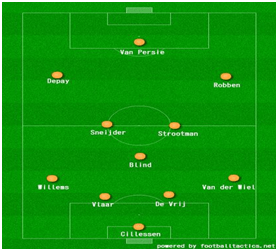
Total football, an attacking, exciting, possession based style of play. The Dutch were renowned for playing like this for many years, since Johan Cruyff and Rinus Michels introduced it in the 1970’s, and have gained many plaudits for it. However, in more recent major tournaments, the Oranje have moved away from this style. Since 2008 the Dutch played a more direct 4-2-3-1, before implementing a 5-3-2 in the 2014 World Cup. Louis Van Gaal did play a Dutch 4-3-3 in the qualifying process but decided that the injury of Kevin Strootman left the team unbalanced, and thus decided to put 5 at the back to accommodate for this. Since Guus Hiddink has taken over he has played three different formations, with each of them failing to bring a huge amount of success, up until the 6-0 drubbing of Latvia. So, with a fully fit squad, which tactics could the Dutch implement? Fin Crebolder investigates…

433

4-3-3

The bread and butter of Dutch football. Nearly every Dutch manager will look to play 4-3-3 at their club or country if they can. Based on the total football of the 70’s, it focuses on fast attacking football whilst also prioritising possession. However, as already stated, the Netherlands have stopped playing this style of play, although Van Gaal did use it in the qualifiers for the World Cup. When Hiddink was announced to be the successor to Van Gaal, he said that he intended to bring back “the Dutch school” style of football, and has tried to play a 4-3-3 in the majority of games. The Dutch have dominated possession in most of their games, but have often struggled to find an end product, and also look shaky in defence. However, 4-3-3 is a formation that is at the heart of Dutch football, and will always be an option for the Oranje.

442

4-4-2

4-4-2. Not a formation hugely associated with Dutch football, despite the number of world class strikers that the nation has produced. Since 2010, the two Dutch managers have both refused on playing two out and out strikers, therefore meaning that Klaas-Jan Huntelaar has had to play second fiddle to Robin van Persie for the last four years. The main advantage of playing a 4-4-2 is that it enables the team to field both Huntelaar and Van Persie, with Van Persie operating as a second striker behind Huntelaar, meaning it sometimes changes to a 4-4-1-1 formation. Fielding two strikers also allows for the inform Bas Dost to play alongside one of Van Persie and Huntelaar. In attack, the wingers and full backs bomb forward, with Blind dropping between the two centre backs, thus changing it to a 3-3-4 formation. The main problem with this formation is that, with only two central midfielders, it leaves the team at risk of being overrun in the midfield, leaving the defence exposed. Despite this, it is a flexible formation that enables Hiddink to utilise all his best players.

532

5-3-2

The Dutch never utilised a 5 man defence in their history, up until the 2014 World Cup. Van Gaal had played a classic 4-3-3 in the qualifying process, but felt that the untimely injury to Kevin Strootman left the team too unbalanced, after seeing them be torn apart by France in his absence. After the match, he spoke to Robin Van Persie and Arjen Robben, and decided to change to a 5 man defence. This worked excellently, and got The Netherlands to the World Cup semi-finals, when pre-tournament, most doubted that they would even escape the group stages. Arjen Robben excelled in his role as a striker, and almost single handedly destroyed Spain with his excellent pace, dribbling and shooting. Ron Vlaar thrived in a 5 man defence, and Daley Blind was brilliant at wing-back. However, Hiddink has proved reluctant to use this formation, only playing it once, in the first half of the Euro qualifier against Czech Republic. Despite it proving the be successful during the World Cup, it was just a short term fix, and most Dutch managers are unlikely to play it, due to the fact that it goes against the fundamental beliefs of how Dutch football should be played.

Name-FinCrebolder

Click on Fin’s name above to follow him on Twitter.

Southampton’s Eljero Elia: The Saints’ story so far

In September 2009, a vital World Cup qualifier between The Netherlands and Scotland was locked at 0-0 with a little over 15 minutes of the match left. At this point, Arjen Robben, the Netherlands star man, and most dangerous player on the night, was somewhat surprisingly replaced by a largely unknown 21 year old, his name? Eljero Elia. Elia went on to expertly round the keeper and grab an 82nd minute winner for the Dutch, maintaining their 100% record. Since then, Elia’s career has had its ups and downs, but he is now back in the spotlight after his move to Premier League side Southampton. So, what is the story so far, of the player once dubbed The Netherlands golden boy? Fin Crebolder tells all…

THE BEGINNING

Lets go back to 2004, where Elia was a 17 year old prodigy playing at ADO Den Haag. He had been at ADO since 1996, although he spend did two years at Ajax from 2000 to 2002, before returning to ADO Den Haag. He had excelled in the youth team for many years, and made his long awaited debut in 2004 against Groningen. He went on to make 4 appearances for the club that season, scoring his first goal for the club in a 2-1 win over AZ Alkmaar. After this breakthrough season, he established himself as a consistent starter for the club, making 56 appearances, scoring 8 goals and getting 4 assists. At the end of the 2006/07 season, it became apparent that Elia was to leave the club. He had conflicts with the coach, Lex Schoenmaker, and also had no intention of playing in the Eerste Divisie (ADO had been relegated). Ajax showed in interest in him, but the deal involved him being loaned back to ADO Den Haag for a season, which he had no intention of doing.

FC TWENTE

Elia joined FC Twente on July the 1st, 2007, for a fee of around €180,000. He made his debut in a 2-2 draw against Utrecht in August, but didn’t score his first goal until February, in a 2-1 win over Heracles Almelo. He made 36 appearances that season, scoring two goals and assisting two. The 2008/09 season proved to be a pivotal one in Elia’s career, largely due to the appointment of Steve McClaren. McClaren managed to create a side capable of winning the Eredivisie title, and Elia was pivotal to the sides success. He scored 14 goals in all competitions including 9 in the league, and also got 10 assists, a vast improvement on his previous season. Over the course of the season, Elia also made his Champions League debut and scored his first European goal in the Europa League against Manchester City. In the January of the season, Ajax stated their interest in him and had two offers rejected. Elia ended the speculation by signing a contract keeping him at the club until 2013. At the end of the season, Elia was named Dutch Football Talent of the Year.

HAMBURG

Despite signing a new contract, Elia stated that he wanted to leave the club at the end of the season. After his excellent season, many clubs around Europe showed interest in him, and on the 5th of July 2009, Hamburg signed him for €8.5 Million. He made his debut a month later, coming on as a substitute in the opening game of the season against Freiburg, and scored his first goal for the club two weeks later, in a 4-2 win over Wolfsburg. He made 35 appearances over the course of the season, scoring six and creating nine goals. This impressive debut season in Germany earned him a place in The Netherlands 2010 World Cup squad. He made a large impact in South Africa, coming off the bench to good effect in six of seven games in the Dutch run to the final, including a 50 minute appearance in the final, where The Netherlands lost 1-0 to Spain in the dying minutes of extra time. However, this season proved to be the peak of Elia’s career so far, as his career began to take a downhill trajectory. In his second season at Hamburg, Elia was often rotated, playing a full 90 minutes only nine times over the course of the season. This left him considering his options, and his future at the club looked to be in further jeopardy when he claimed to the press that the club’s style of play didn’t suit him, and also said that the club didn’t look after him when he was sidelined through injury. He was subsequently fined for his comments, and it appeared inevitable that he would leave the club sooner or later.

JUVENTUS

On the 31st of August 2011, four games into his third season at Hamburg, Elia signed for Juventus for a fee of €9 Million. This proved to be Elia’s worst career move by a long way, as he struggled to make any impact at all in what was an incredible season for “The Old Lady”. Due to Conte’s preference to play a 3-5-2 formation with wings backs, Elia very rarely found a place in the team, and made just five appearances all season, starting just one game, despite the fact that he didn’t have any injuries or suspensions throughout. Due to this catastrophic season for him, Elia missed out on a spot in The Netherlands Euro 2012 squad.

WERDER BREMEN

In an attempt to revive his now stalled career, Elia requested a transfer on the 11th of June 2012, and returned to the Bundesliga a month later, this time playing for Werder Bremen, who paid €5.5 Million for his services. He struggled in his first seven appearances, and admitted that he was finding it difficult to adapt to the teams style of play. He went on to make 25 appearances in his first season, but only scored one goal, in the DFB-Pokal. He was also suspended by the club after he was caught speeding. Despite a disappointing first season, the club decided against selling him, and he made an encouraging start to the 13/14 season, scoring two goals in  a 3-3 draw with Nuremberg. He also found the back of the net in two consecutive games against Mainz and Hoffenheim in late November. He ended the season with four goals and four assists, and became a fan favourite due to his exciting and eccentric style. Elia started the 14/15 campaign in the starting line-up, and got an assist in the opening day fixture. However, illness coupled with a controversial tweet in the build up to the derby against his former club, Hamburg, meant that he was dropped from the first team, and he struggled to cement a spot in the starting lineup after that, largely due to his attitude, along with the impressive form of winger Fin Bartels.

THE FUTURE: SOUTHAMPTON

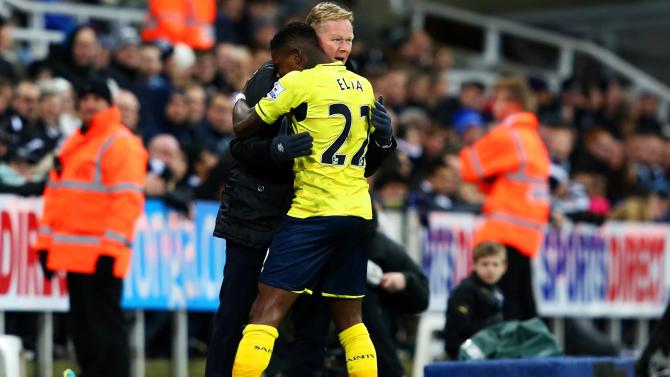
That brings us to present day, where Elia is currently plying his trade at Premier League side Southampton, following Ronald Koeman’s decision to bring him in on loan. Elia has had an impressive start at the club currently 3rd in the league, causing havoc for defences with his pace and trickery, and exciting fans and pundits alike. He scored his first goals for the club when he bagged a brace in a 2-1 brace over Liverpool. Whilst it is evident that Elia will never become the global superstar he once promised to be, at a rising club like Southampton, under the management of his compatriot Koeman, Elia still has time to surpass his previous achievements, and maybe even become a key player for the Oranje once again.

Name-FinCrebolder

Click on Fin’s name above to follow him on Twitter.

The Resurgence of a Fallen Dutch Striker – Wolfsburg’s Bas Dost

Bas Dost has seemingly begun the resurrection of his career after having a very underwhelming stint in Germany so far. This tall centre forward scored an impressive 32 league goals to top the scoring chart in the Netherlands just a few seasons ago. However, he has had a very difficult time playing in the Bundesliga as Rion Rodgers explains…

The Rise

It was in the summer of 2008 that a lanky Bas Dost moved to Heracles Almelo as a young prodigious striker from FC Emmen, and his stay at the home of the Polman Stadion showed sporadic flashes of brilliance and quality. He spent two seasons in Almelo and after using his first season to get acclimatised to the top flight, he was able to score 14 league goals in his second season.

After just two seasons with Heracles, he was on the move to SC Heerenveen where he showed his prolific goal scoring abilities by scoring 13 goals in his first season and a massive 32 goals in his second season. His style of play was that of the “old fashioned” centre forward who is tall and strong, and transforms into a goal scoring predator whenever he gets into the 18 yard box. Fantastic heading skills and a good first touch were some of the attributes he displayed on a weekly basis. He also showed pretty decent movement and linkup play, which  could be attributed to his experience of playing in the midfield a lot during his youth career. By the end of his second season at SC Heerenveen he had the full attention of Dutch fans. He unquestionably declared himself to be a reliable attacker who could no doubt become useful for the senior Dutch team.

The Fall

Inevitably, in accordance with the prevailing European football trend, a team from a big European league came calling for the giant striker in the summer of 2012. And expectedly, Dost was gone from the Eredivisie to fulfil his dreams and aspirations at VfL Wolfsburg.

His first season in the Bundesliga saw him scoring only 8 goals. His second season was even more dismal, as he scored only 4 league goals and made less than 15 league appearances as a result of persistent injuries and being benched a lot.

The current season started much like the previous one ended with Dost being marginalised by his club, troubled by injuries and his form being sorrowful. With the progression of the first half of the season, things just continued to look more hopeless for the striker. It seemed his career in Germany was destined to end unceremoniously. He was failing miserably and it didn’t appear the club, coach or fans were going to afford him the time to get fit and regain his form.

The Resurgence

Then in the last league game prior to the Christmas break, Dost made a rare appearance in the starting lineup and scored his second league goal of the season. In hindsight, that goal was the spark that lit the fire, because he unexpectedly followed up that goal with two beautiful ones against the table toppers, Buyern Munich, in the first game after the winter break. The second goal was especially impressive as it was scored from almost the half way line with an effort that seemed to poignantly turn a new page for the forgotten Dutch striker.  Such a shot showed outright confidence from a centre forward who has fleetingly showed real self belief or moments of such high quality, over the last few seasons. Since that game against Buyern Munich, he has went on to start the next two league games for Wolfsburg and scored one more goal.

It might be woefully premature or outright ridiculous to think that merely scoring four goals in the last four games could signal that this man’s career is rising from the abyss. However, the fact is that he is now the first choice centre forward for the team that currently sits second in the Bundesliga. Also, he is now fully fit and his current form is such that he has scored 5 league goals in just nine appearances. Taking all of these positives into consideration, it is clear that his career is finally showing signs of life once more.

Name-RionRodgers

Click on Rion’s name above to follow him on Twitter

In Dutch Football… What’s In A Name?

If you start thinking about all the European club names that you know of you’ll soon realise that the origin of names of these clubs is fairly uninteresting.  That is to say that they follow pretty much a similar pattern, in that more often than not a club is named after the locality of which it originated ie Manchester United, Chelsea, Real Madrid, Barcelona, Milan, Marseilles etc.  This is done to create a sense of tribalism of the inhabitants of that locality towards their ‘local’ side.  Naturally there are exceptions to this rule and some clubs have some originality, due to an historical aspect, in their names ie Arsenal, Celtic, Everton.  There is one nation, though, wherein considerable thought is given to the naming of its football clubs and that nation is the Netherlands. Rogier Waalder discusses…

It is very uncommon to find a football club in the Netherlands that is simply just named after its locality ie Heerenveen, FC Utrecht, FC Groningen.  When you start to look down the football pyramid of Dutch clubs you’ll soon realise though that there are a few different trends that have taken place when it comes to naming a club.

Abbreviation

The first noticeable aspect of Dutch football club names is that there are a LOT of abbreviated names ie PSV, NEC, NAC etc but this doesn’t tell the whole story as you need to delve deeper into what each letter in the abbreviated name stands for.

Association Name

A lot of abbreviated club names simply are acronyms for the sporting association that the football club belongs to, and a big clue here is the presence of a ‘V’ in the name.  The V will often stand for Vereniging (Association) as in the following examples:

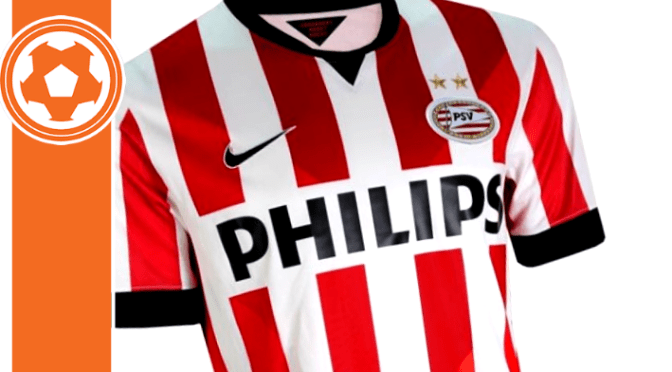
PSV – Philips Sporting Vereniging – the club was originally founded for employees of Philips Electrical

VVV – Venlo Voetbal Vereniging

MVV – Maastricht Voetbal Vereniging

Some clubs will even add the name of the main day that the club plays on ie AZSV – Aaltense Zaterdag Sport Vereniging (The Saturday Sporting Association of Aalten)

Religious Names

A lot of football clubs in the Netherlands were founded by churches, and in fact the lower divisions of Dutch football is still divided into Saturday (Protestant) and Sunday (Catholic) leagues.  It’s no surprise then that there are some religious based names appearing in the Dutch football pyramid:

RKC – Rooms-Katholieke Combinatie (Roman Catholic Combination)

ACV – Asser Christelijke Voetbalvereniging (Christian Football Association of Assen)

In fact there are a whole heap of clubs whose name start with RK, which is a fairly good indicator that they are a club with Catholic foundations.

Mythical

Who doesn’t like a bit of mythology and certain Dutch football club founders did and hence there are quite a few names of mythical persuasion i.e.

Hercules, Alcides and Heracles (named after the Greek hero of strength Hercules)

Ajax (named after the Greek hero of the same name)

Sparta (after the gladiator Spartacus)

Achilles (there are several clubs named after this Greek hero)

Olympia (there are also several clubs named after the site of the original Olympics)

Inspirational

For the acronymic club names that don’t into the Association category the other category is those with somewhat Inspirational names as their club name.  Not sure what I mean by Inspirational then try these:

PEC Zwolle  – Prins Hendrik Ende Desespereert Nimmer – ‘And Never Despair’

ADO Den Haag – Alles Door Oefenen  – ‘Everything Through Practice’

DVS 33 – Door Vereniging Sterk – ‘Through Togetherness Strong’

DOSKO – Door Ons Samenspel Komt Overwinning – ‘Through us Playing together comes Victories’

SDC Putten – Sterk Door Combinatie – ‘Strong Through Combination’

EDO – Eendracht Doet Overwinnen – ‘Harmony means Victory’

Longa 30 – Lichamelijke Ontspanning Na Gedane Arbeid – ‘Physical Relaxation Comes After Hardwork’

Further on this theme is the numerous clubs with the term Excelsior (Latin for ‘higher’) in their club name.

Patriotic

The Dutch are renowned for their love of the colour Orange and this is no accident as it refers to William I of Orange who organized the Dutch revolt against Spanish rule, which after the Eighty Years’ War led to an independent Dutch state.  The name ‘Oranje’ therefore is very frequently used in Dutch football club names.

Just Plain Weird

Therefore are also some just plain weird club names, try these:

Go Ahead Eagles – The eagle being on the crest of their home city, Deventer

Telstar – named after a satellite!!

Pelikaan  – Pelican – there are actually 3 clubs in Holland with this name

Any name with the word ‘Quick’ in it ie Be Quick, Quick Boys, Quick Steps.  Interestingly enough Go Ahead Eagles were originally slated to be called Quick but the Federation decreed that there were too many clubs with Quick in their name and hence Go Ahead was selected instead.

NAC Breda – NOAD-ADVENDO Combinatie NAC was founded when the two clubs ADVENDO and NOAD merged to one club. NOAD is a Dutch abbreviation for Nooit Ophouden, Altijd Doorgaan (Never give up, always persevere), while ADVENDO is a Dutch abbreviation for Aangenaam Door Vermaak En Nuttig Door Ontspanning (Pleasant for its entertainment and useful for its relaxation), the C stands for Combinatie (combination). The full name of NAC Breda expands to Nooit opgeven altijd doorgaan, Aangenaam door vermaak en nuttig door ontspanning, Combinatie Breda  and hence is the longest football club name in the world

So let us all rejoice in the quirkiness that is the Dutch and marvel in their originality when naming their football clubs!

Name-RogierWaalder

Click on Rogier’s name to follow him on Twitter.

Feyenoord – A Tactical Analysis

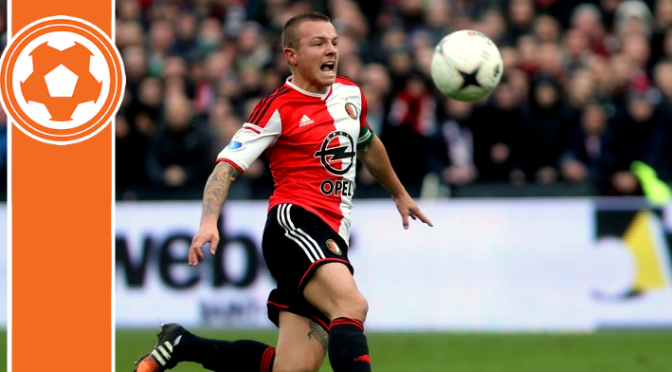
If you are an Eredivisie fan and you love the tactical side of the beautiful game, then you are probably very impressed with the tactical manoeuvres of Feyenoord this season. The Rotterdam giant saw a huge exodus of players at the end of last season and many people thought they would have had a very challenging time this season. Those people were partially right, since Feyenoord struggled at the beginning of the season and only won one of their first six games. However, since then, the 2002 UEFA Cup winners have made significant strides. They currently sit 3rd in the league and are playing some of the most dominant and invigorating football in the Eredivisie. Home games against Ajax, AZ and FC Twente as well as the away game against PSV have been some of the most stimulating and entertaining displays we have seen from any team in the league this season.

This relatively successful season so far is largely down to how well the players have been able to maintain the tactical set-up of this team. The 4-3-3 formation utilised is being executed with great discipline, hard work and skills by the players. The three main aspects of this Feyenoord system and strategy are as follows:

The Goalkeeping & Defensive Shake Up

Let’s start by looking at the goal keeper and the back four. Vermeer was brought into the team at the beginning of the season to bring more solidity to the defence and he has done just that. His experience, agility and calmness under pressure have not just curtailed the number of goals the team concedes, but it has also seemingly helped to bring confidence into the young centre backs of Van Beek and Kongolo.

The back four of Nilom, Van Beek, Kongolo and Wilkshire have all been playing very impressively. Van Beek brings great physicality and grit to the centre of the defence and Kongolo’s ball-playing and anticipation skills have been complimented by Wilkshire’s exuberant runs along the right full-back position. Nelom has also put in his best performances as a Feyenoord player this season. He has moved from being a very shaky, inconsistent and error-prone left-back last season, to becoming a much more solid and reliable full-back this season. There are still occasions of lapsed concentration and needless giving away of the ball by Nilom  this season, but they have been less numerous than last season and his reading of the game has evidently improved.

The Midfield Dynamics

The Feyenoord midfield has been very impressive this season. Clasie continues to be a pass-master and he even ramped up his tackling and overall work rate. El Ahmadi has looked much more impressive in the box-to-box role this season than he looked most of his time at Aston Villa. His very intelligent forward runs have been a great advert for how to play that running midfield position with balance and poise. Immers is the kind of attacking midfielder who runs all game and constantly puts himself in positions to receive the ball. This man is a maverick to some fans as he is not very fast and not particularly technical, nevertheless, he can be quite an effective attacking midfielder at times. Most people would probably agree though that it is his huge selfless work rate that makes him such a useful player.

These three midfield players at times behave as one dynamic organism with an almost telepathic relationship. When Clasie gets the ball he never takes too much time to pick out the runs of Immers or El Ahmadi, each player seems to be fully aware of the intentions of the others at any given time and in any situation. El Ahmadi seems to know when to make a rampaging forward run without leaving Clasie in too much of a vulnerable situation to provide cover for him and Immers is always looking for El Ahmadi’s position to ensure that he can assist with any required covering or forward run. In the recent home game against FC Twente, Immers was practically switching with Clasie as the holding midfielder on several occasions and he still managed to venture forward to score. This dynamic midfield system has been partly responsible for some of the most dominant displays we have seen this season.

The Strike Force

This Feyenoord system requires a fast, strong centre forward that is very good at holding up the ball and getting his teammates into the attacking third. Colin Kazin-Richards plays that role quite well. He constantly moves around the penalty box to pull his markers out of position and use brute strength to hold off central defenders. This holding up of the ball essentially allows his wingers and midfielder to get into the attacking third. And with very fast wingers like Manu and Boetius, it only takes a few seconds for these guys to make runs ahead of him and get into good positions to take a lay-off and cross into the box for Immers or El Ahmadi. Both Beotius and Manu are fast wide men and Manu in particular is deceptively strong. These guys provide very direct runs into the box and with improvements to their finishing, could become much more effective.

Toornstra is playing out of position on the right, but if one didn’t know his resume from his Utrecht and ADO Den Haag days, one could think he is a natural right winger. Toornstra isn’t the flamboyant speedy winger that we are used to seeing in the Dutch top flight. However, this man embodies hard work, dedication and drive for results. He is also, probably one of the better readers of the game in the entire Eredivisie. In fact, he is quite similar to Dirk Kuyt. Both players aren’t very fast, but they read the game very well, track back and defend astutely.

Conclusion

This Feyenoord team is playing an exhilarating, entertaining and dynamic brand of football where the young players are all improving constantly and each line of the team consists of well drilled vibrant players moving in a constant state of relative cohesion and discipline.

Name-RionRodgers

Click on Rion’s name above to follow him on Twitter

Two Dutch Talents in Arnhem

There are two midfield talents in the Vitesse Arnhem team that could become Dutch internationals in the very near future, Davy Propper and Marko Vejinovic.  Davy has already been called-up to the national team in the past and Marko could very well be just a few months away from his first call.

This Vitesse team has utilised a very sensible 4-3-3 formation for the first half of the season and frankly they should have achieved much more than they actually did. The team has some talented, skilful players who pass the ball very well and two of the most impressive of the lot are Davy and Marko says Rion Rodgers.

Marko Veijnovic, 24

Let me start by saying that I think Marko Veijnovic is the “real deal”. This man has everything to play at a much higher level than Vitesse. He is physically strong, has good technique and delivers very accurate set pieces. I particularly love to see his rampaging direct runs through the centre of the park towards the edge of the eighteen yard box. These runs usual culminate with a fierce shot at goal or a deft final pass to a teammate. Eight league goals and five assists so far this season says there is certainly some potential in this guy.

In fact, I see him as Ronald Koeman’s eventual successor for Morgan Schneiderlin. Am I crazy? Why Veijnovic? Why not Clasie? Well, I truly see this guy as having great potential as a strong, quick, smart and technically sound central midfielder. He has been the fulcrum of the Arnhem team’s midfield this season. Marko loves to break up plays in the middle of the field and constantly harasses oppositions using his tall strong frame, much like Morgan does for Southampton. Add his ability to keep the ball quite well to his impressive array of passing and one can see why I think he is made for the Premier League.

It is also worth noting that Marko is a multi-functional player who is very adept at numerous positions. During his Heracles days we saw him played all three midfield positions as well as centre back, full-back and striker.

If there is one flaw in this man’s game, it is that he isn’t the most agile of players. This is potentially due to his physical size. However, it has decidedly not posed too many limitations to his effectiveness.

Davy Propper, 24

Davy Propper is another midfielder with great qualities. He is physically strong, very intelligent, can score great goals and technically sound. This boy was seen as a huge talent in Arnhem before Marco Van Ginkel even broke into a regular first team spot. However, persistent injuries curtailed his rate of progression, while Van Ginkel was making serious strides. Today Van Ginkel is playing at a huge European club, while Davy still plies his trade in the modest confines of Arnhem. Nevertheless, he is on an upward trajectory and will quite possibly make it into one of Europe’s bigger leagues at the end of this Eredivisie season.

There is some amount of debate about what is Davy’s best position. Some people say he is best at the number 10 position, but having watched him since his debut for Vitesse, I am convinced he is more of a box-to-box midfielder. He can certainly do a decent job as a number 10, but his physicality, work rate and passing range makes him quite suitable to play just a little bit ahead of the holding midfielder. I however, believe that If he were a little faster and had better dribbling skills, then he could be a great number 10.

In conclusion, these two blokes will most likely be quite useful for the Dutch National team in the future. To what extent, is hard to say now. The road of a footballer is one made up of a myriad of dips and bends, and sadly some young players do not negotiate their way ahead with the kind of dexterity and determination that is required. One thing is for sure, we should all keep the proverbial eye on these two for the next season or two.

Name-RionRodgers


Click on Rion’s name above to follow him on Twitter

Three Eredivisie stars that could make an impact in the Premier League

After the successes of Graziano Pelle, Dusan Tadic and Daryl Janmaat to name just three, Premier League clubs may opt to look at players in the Eredivisie to strengthen their squads before the deadline. It is an attractive league to buy from due to the technical ability on show, but there are always risks as the physicality is nowhere near the levels of the Premier League. There have been successes and failures from the Eredivisie in England. It remains a gamble that clubs, especially in mid table, will make as the finances involved make it attractive. There still remains the opportunity to sign a potential star for a very modest fee. In this article, Jake Jackman discusses three players who could be on the radar of Premier League clubs.

Luc Castaignos (FC Twente)

Luc Castaignos has featured in numerous gossip columns over the past year. Although they aren’t the most reliable, it’s evident he is on the radar of English clubs. He was once regarded as one of the brightest talents in Holland, but a move to Inter Milan at the age of 18 stunted his development. A move to FC Twente saw the striker return to playing first team football, and he is now ready to leave the Eredivisie for a second time, with England an attractive possible destination. This season he has been more consistent, scoring 10 goals in 14 matches across all competitions.

His football intelligence is arguably his best attribute, as his positioning and off the ball runs often see him get the opportunity to shoot. The majority of his goals come in the penalty box, highlighting his ability to find space in the final third. He can also beat a man with his pace, while Castaignos is very effective when playing as a lone front man, with the ability to bring midfielders into play. Several sides in the Premier League should be looking at the forward. Swansea were rumoured to have agreed a fee for the Dutchman in the summer of around £6.5m. That is good value in the striker market and the likes of Newcastle, Southampton or even Swansea might be tempted with all three lacking in depth in the striking position.

Jeroen Zoet (PSV)

Holland have had an embarrassment of riches when it comes to goalkeepers. Tim Krul and Michel Vorm have both come to England and had success, compatriot Jeroen Zoet could be the next to do just that. His size is more suited to England, than that of Ajax keeper Jasper Cillessen who impressed in the World Cup. Zoet has been on the fringes of the Holland squad, but is yet to make his international debut. After a successful period on loan at RKC Waalwijk, he returned to PSV and has been their number one for 18 months, it’s clear to see he has the potential to move onto a bigger league.

The goalkeeper is a very impressive shot stopper, with a save percentage of 79.41% before the winter break, which was up there in the top ten goalkeepers in world football. In some matches this season, Zoet has shown his concentrations, pulling off crucial saves in games which his side have dominated. Several clubs will know about the PSV goalkeeper and could be looked at by Liverpool or Tottenham, if Hugo Lloris leaves in the summer.

Joel Veltman (Ajax)

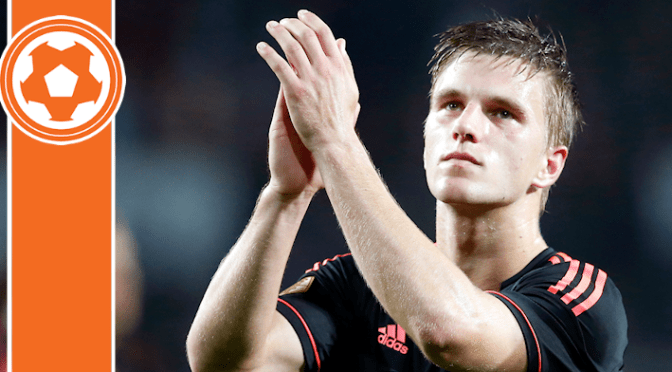
Joel Veltman has been consistent for Ajax this season at the heart of their defence. At the age of 23, he has already forged a reputation in the game, having played in the World Cup. This season he has shown his ability to contribute at both ends of the pitch, with three goals to his name. He has averaged 2.6 tackles and 2 interceptions per game, highlighting his ability to read the game and win possession back for his side.

As a Dutch player, it might be unsurprising to hear that he is good with the ball at his feet, and he likes to bring the ball out of defence. He is also capable in the air, although he may initially find the physicality of the Premier League difficult, given he is only 23 years old. Manchester United, Liverpool and Arsenal are all clubs in which he would fit in well, with a route into the first team mapped out, as none of those clubs have defensive strength in depth.

Name-JacobJakeman

Click on Jacob’s name above to follow him on Twitter.

TotalDutchFootball.com    WorldFootballWeekly.com

Why Feyenoord Must Sign Colin Kazim-Richards

As we near the end of the mid-season break, many supporters around the Netherlands (and indeed the world) are taking stock and hoping for better from their respective clubs in 2014-15 (Part II). Paul Gellard’s own belief is that there is better to come from Feyenoord in the second half of the campaign, and central to that will be Turkish striker, Colin Kazim-Richards.

When Kazim-Richards arrived in Holland on a season-long loan from Turkish club, Bursaspor, it raised a few eyebrows. The winner of 35 caps for his country, the man who originally started his career with English League Two side, Bury, had primarily been a winger in his early career in England and also for the Turkish national side. However, Fred Rutten has chosen to employ him as a lone striker, with often devastating effect.

Feyenoord’s season did not start well (an opening day win at ADO Den Haag aside) and the loss of Graziano Pelle to Southampton was keenly felt in Rotterdam. The Italian had netted 23 goals for “De Club aan de Maas” but it was hoped Mitchell te Vrede would step up to the mark in his absence. To be fair to the Dutch forward, 5 goals in the opening 8 Eredivisie games speaks volumes. However Feyenoord still lacked a real physical presence in the final third as their form remained erratic.

Enter Colin Kazim-Richards, who made his debut for Feyenoord as a 63rd minute substitute for the aforementioned te Vrede in a 2-1 defeat to Willem II at De Kuip. Indeed, it didn’t take long for the London-born Turk to open his account, scoring just 12 minutes later. This was then followed by a 1-0 home loss to bitter rivals, Ajax, but Kazim-Richards then grabbed his second Feyenoord goal with a 4-0 win at Go Ahead Eagles in Deventer on 27th September before going on what can be fairly described as a lean spell. Indeed, the next goal did not come until 6th December when he scored the opening goal in a 5-2 thrashing of neighbours, Excelsior.
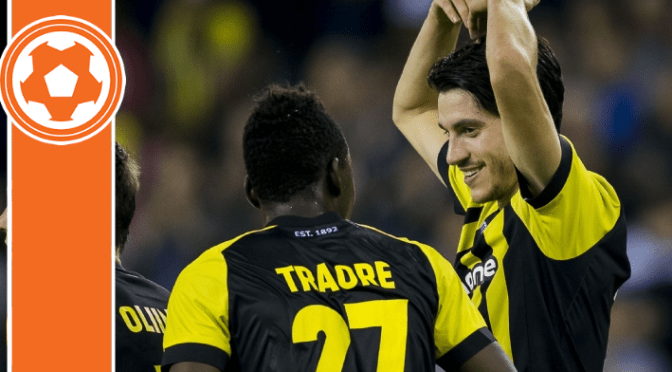
By the time of the Excelsior goal, the knives were sharpening for the striker and criticism of his lack of goals was deafening in some quarters. However it was always appreciated by the Feyenoord faithful his willingness to chase down a lost cause and put himself about opposition defences.

As it happened, the Excelsior goal seemed to kickstart Kazim-Richards’ form as he went on to score a goal in each of the remaining three Eredivisie fixtures prior to the mid-season break. Indeed, who can forget his 89th minute header at the Philips Stadion that appeared to have earned Feyenoord a well-deserved point when trailing 3-2? Only a 93rd minute winner by Memphis Depay ultimately rained on the Rotterdammers’ parade in a game many have named as their top moment of 2014.

And so a record of 7 goals from 13 Eredivisie appearances is how it stands at the mid-season point. It is quite possible that Kazim-Richards is cursing the break as he hit such a rich run of form. However, for this writer, it is key that Fred Rutten and Feyenoord attempt to sign Kazim-Richards on a permanent basis. Apart from his goalscoring, he has also shown he can play the lone striker’s role and sacrifice himself for the side. He has a powerful physique and pace and is the sort of striker a lot of supporters will hate when he plays against their side, but they’d secretly advocate having him wearing their club’s shirt.

Name-PaulGellard

Click on Paul’s name above to follow him on Twitter.

Evaluation of the 2014/15 Eredivisie Exports

In this piece, Jake Jackman focuses on five players who departed the Eredivisie this summer and determining whether they have been a hit or miss so far for their new club. Obviously it’s far too early to judge any player in his new environment, but these are initial reactions to the opening half of the season.

Graziano Pelle

The Italian has had a rather up and down career after failing to make it in his native Italy, but the past few seasons have been exceptional for Pelle, with his performances leading to a call up to the national side in September. The striker scored on his Italian debut, and he could be a late bloomer on the international scene becoming a top striker for Italy in the process. Many were doubting Southampton and some of their summer signings, but the side from the South Coast have been brilliant so far. The Italian has scored 9 in all competitions for Southampton so far, making him a great signing. He has scored 64 goals in his last 77 games in all competitions making him one of the hottest properties in football at the moment. Feyenoord struggled at the beginning of the season and it’s obvious to see why, any side would miss a goalscorer of Pelle’s class.

Verdict: HIT

Alfred Finnbogason

The former Heerenveen striker actually outscored Pelle in last season’s Eredivisie and many would have expected him to make a name for himself yet in Spain. He has only started twice for Real Sociedad and he is yet to break his duck. This is a player who had a lot of interest last summer, including some from the Premier League, and the Spanish league may not be the one best suited to him and it’s showing early in his Sociedad career. The Finn scored 29 league goals last season, his finishing ability is undoubted, which is why I expect him to make an impact in Spain once he has settled, but at the moment it isn’t going his way.

Verdict: MISS

Stefan De Vrij

Lazio got themselves a bargain when they signed the Dutch World Cup star from Feyenoord as the defender has slotted seamlessly into their defence and impressed over the opening matches of the Serie A. He may have already been sent off in Italy, but he has been very assured in the back line, making 3.3 interceptions per match. The organisational aspect of the Italian game will have a positive effect on de Vrij, who will continue to improve. It’s unlikely that this is going to be the biggest move of his career as he has the potential to become a top class player in one of the world’s major leagues.

Verdict: HIT

Daryl Janmaat

Another player that departed Feyenoord was right back Daryl Janmaat, who has become one of the first names on Alan Pardew’s team sheet in the North East of England. He has started every Premier League match for the Magpies this season, while he has yet to miss a minute of football in the league this season. The right back has started well in England, scoring a goal in his second match at St James’ Park. In every match he has played, he has been a massive threat going forwards, especially when he cuts inside and unleashes powerful shots from distance. He was signed to replace Mathieu Debuchy and at the moment, he looks like he has the ability to surpass the Frenchman’s achievements in the Newcastle side, already leveling Debuchy’s goal count.

Verdict: HIT

Dusan Tadic

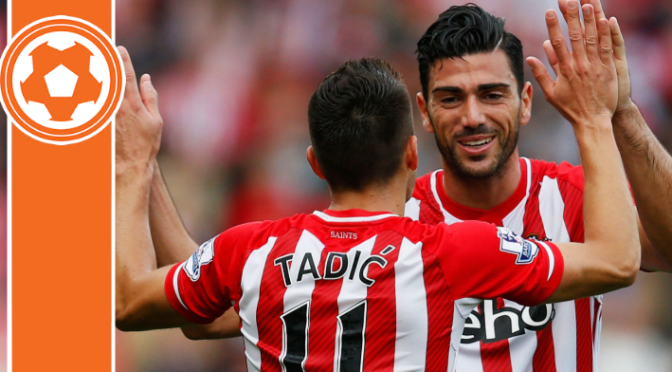
Southampton signed another one of the best players of last season’s Eredivisie in Dusan Tadic, who was known for his creativity in FC Twente’s side. Last season, he contributed 16 goals and 14 assists, which is an incredible return from midfield. He has already shown his incredible eye for a pass on the South Coast, contributing six assists to date, including four against Sunderland alone. The Serbian also has one goal to his name. He hasn’t shown the goal threat he showed in the Eredivisie, but that will grow as he adjusts to the division. He is having 2.7 shots per game, highlighting that he is getting in goalscoring positions, he is just yet to become clinical in front of goal in England, but there is no doubt he has been great for Southampton this season

Verdict: HIT

The players above highlight the quality in the Eredivisie and the successes of these players will only bring more scouts to Holland on a weekly basis, which is positive for the league, especially when it comes to finances. The new batch of players making a name in the Eredivisie will know that performing in Holland will see them get opportunities to move to bigger leagues and as the above players show, it’s possible to be a big success away from the Eredivisie.

Name-JacobJakeman

Click on Jacob’s name above to follow him on Twitter.

TotalDutchFootball.com    WorldFootballWeekly.com

When will Dutch football dominate in Europe once again?

When you think back twenty years people can familiarize themselves with Dutch football being successful both in Europe and also the national team but the iconic Eredivisie is now suffering from a lack of investment throughout the league that is damaging the competitiveness of the Dutch top-flight. Top stars that have come to prominence in Holland are quickly shipped on to clubs in richer leagues with for a high fee and in the vast majority of cases become a success at their new clubs.

Players such as Graziano Pelle and Dusan Tadic were sold on from Feyenoord and Twente respectively for a fees combined of €20million with minimal investment being reproduced into the game for teams to become more competitive in European competitions. Prior to the commencement of the new league season last August, Feyenoord began their qualification campaign to enter into the Champions League against Besiktas but the sales of key players such as Bruno Martins Indi, Graziano Pelle, Stefan de Vrij and Daryl Janmaat and lack of replacement was deemed a bridge to far for qualification for Europe’s premier competition.

Investment in young Dutch talents has been ever present in Holland and almost a tradition of the footballing history and philosophy of the three-time World Cup runners up. The infamous Ajax youth academy has a reputation throughout Europe as one of the greatest academies in football currently, but to what benefit will is that to the clubs of the Eredivisie and supporters of the national team? In a league lacking the competitiveness of clubs against some of the world’s most iconic teams, it’s difficult to see how players can develop and push onto the international stage.

The summer of 2014 took fans of all nations by storm when Louis Van Gaal took his unfancied Netherland’s team to Brazil to try and go one step better than their successes of the 2010 World Cup in South Africa. The Dutch national side were expected to fail miserably during the competition with the players and team humiliated by world champions Spain and South American supremo’s Chille whom they faced in their group. Critics were humiliated when Van Gaal took Holland to the semi-finals with a team full of youthful promise. All the young players who started for Holland were all produced through clubs in the Eredivisie but with the exception of Memphis Depay and Jasper  Cillessen, many of the Dutch top young stars were sold on for a large fees because of the potential witnessed in Brazil and their performances in domestically.

Where next for Dutch football and what is required to stop the out pour of players to other leagues people may ask, and it’s a question that has proved difficult to answer also. People may question that the league has had a tradition to sell their top stars to major European clubs but the last decade have proven that league is now suffering continentally. It may take investment of an Arab billionaire into a popular Dutch side to help with the attraction of foreign stars into the division to make it more successful. Should a foreign owner, and foreign stars with a mixture of Dutch youth products, would the Eredivisie become a larger success on a worldwide audience and re-create the famous European nights at the later stages of the UEFA Champions League.

Name-ShaneBurns

Click the name above to follow Shane on Twitter.